Showing posts with label firefighters. Show all posts

13 January, 2020

Taking action on climate is hard. Here are five questions to help Australia seize this moment

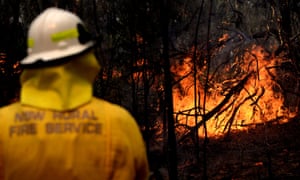
In late 2019, before the bushfires hit crisis level, concern about climate change in Australia was at record levels. Since then at least 27 people have lost their lives, millions of animals have died and the navy has been called in to evacuate beaches. The devastating impacts of climate change are tragically becoming real for many. And many, from bushfire survivors to business leaders to firefighters, are calling for action.
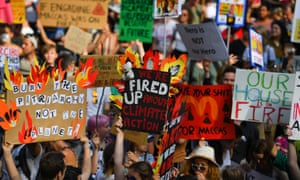
Protesters hold placards at a climate rally in Sydney on Friday
‘This is not the first time that public support for climate action has been sky high.’
As a result, we are in a moment where the opportunity to implement effective and long-lasting policy to lower Australia’s climate pollution could finally be within reach. Indeed, the independent MP Zali Steggall has announced her intention to introduce a climate bill into federal parliament in March. Meanwhile the New South Wales energy minister, Matt Kean, has asked the state’s chief scientist to identify opportunities for NSW to lead on climate action. Even the NSW Young Liberals have put forward a plan to act on climate.
To grasp this opportunity we must learn critical lessons from the past.


09 December, 2019

Victoria swelters, fire danger "extreme" - but the heat won't last

Victoria is feeling the heat for the start of the working week and firefighters are bracing for "extreme" fire danger before temperatures are set to nosedive, just in time for dinner.
Beachgoers seek a break from hot weather at South Melbourne last month.
Total fire bans have been declared for the north of the state on Monday, while V/Line trains will run to an altered, extreme heat timetable.
Victoria is feeling the heat for the start of the working week and firefighters are bracing for "extreme" fire danger before temperatures are set to nosedive, just in time for dinner.
Total fire bans have been declared for the north of the state on Monday, while V/Line trains will run to an altered, extreme heat timetable.

Read the story from The Age by Ashleigh McMillan and Paul Sakkal - “Victoria swelters, fire danger "extreme" - but the heat won't last.”

08 December, 2019

Australia fires: heatwave forecast amid calls for emergency meeting

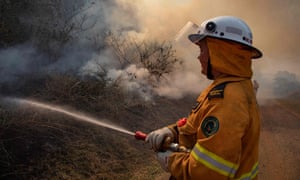
Firefighters have taken advantage of less extreme conditions to try to contain blazes burning across New South Wales ahead of worsening conditions and soaring temperatures expected on Tuesday.
A bushfire
More than 100 bushfires were still burning across
New South Wales on Sunday, including the massive
Gospers Mountain blaze.
More than 100 fires were still burning across NSW on Sunday, including the massive Gospers Mountain blaze, which is expected to burn for weeks.
Meanwhile, on Kangaroo Island, a bushfire burning at Newland was also posing a threat to lives.
Amid the ongoing bushfire crisis, which has claimed six lives and more than 1,000 homes, the federal opposition restated its call for an emergency Council of Australian Governments meeting to discuss a national response to the bushfire emergency.
Conditions eased on Sunday as a result of slackening winds and more moisture in the air, which allowed fire crews to conduct backburning before conditions deteriorate again.

Read the story from The Guardian by Lisa Cox and Amy Remeikis - “Australia fires: heatwave forecast amid calls for emergency meeting.”

11 November, 2019

Deputy PM slams 'raving inner-city lunatics' for bushfire climate link.

There's no end in sight to the bushfire crisis engulfing central Queensland and northern New South Wales, where firefighters are bracing for catastrophic fire conditions tomorrow.
Image result for michael mccormack
Deputy PM Michael McCormack has described those
calling for action on climate change as "raving inner-city lunatics".
Three people have been killed and 150 homes have been destroyed in NSW, while more than 45 fires are still burning in central Queensland. 
Deputy Prime Minister Michael McCormack has met with mayors and firefighters on the Sunshine Coast as they prepare for even tougher days ahead.
Editor's note: The office for Federal Minister David Littleproud says that the Minister has received no formal request for a meeting from Greg Mullins or the Emergency Leaders for Climate Action.
The Minister has now instructed his staff to reach out and set up a meeting.
Listen to this segment from Radio National - “Deputy PM slams 'raving inner-city lunatics' for bushfire climate link.


(And yes, we know who the “raving inner-city lunatics” are and it is not those referred to by our Deputy PM - Robert McLean)

08 November, 2019

NSW fires at unprecedented levels, with RFS fighting to protect lives amid 17 emergency blazes

Firefighters are in "uncharted territory" with a record number of fires burning at emergency level across NSW this afternoon and conditions set to worsen.
Image result for NSW fires leave people trapped, with RFS fighting to protect lives amid 17 emergency blazes
New South Wales' firefighters are in "uncharted territory".
The NSW Rural Fire Service (RFS) is desperately trying to protect properties around the state, with 17 blazes given emergency warning status and 50 burning out of control.
RFS commissioner Shane Fitzsimmons said parts of the M1 motorway and the New England Highway were closed and he warned other road closures could leave people trapped.
"You've got to understand a lot of the access roads in and around many of these fires are more dangerous than staying in a shelter or a safer place in your local community or your property," he said.
"The principal message is about sheltering and sheltering in place — it's simply too dangerous and too late to leave."

Read the ABC News story by Paige Cockburn and Bellinda Kontominas - “NSW fires at unprecedented levels, with RFS fighting to protect lives amid 17 emergency blazes.”

14 September, 2019

Temperatures 10C above average forecast as 130 bushfires continue to burn

Firefighters in New South Wales and Queensland are gearing up for a week of unseasonably warm weather as they continue to battle blazes across the two states.

A firefighter tackles a blaze at Canungra in Queensland
A firefighter tackles a blaze at Canungra in Queensland.
 On Friday, there were still 70 fires burning in Queensland
and 45 south of the border in NSW.
And the former head of NSW’s urban fire service says early Australian bushfire seasons are here to stay, as he urges the federal government to step in as resources and firefighting assets stretch beyond current capacity.
Greg Mullins served as commissioner of Fire and Rescue NSW from 2004 until his retirement in 2017 and currently sits on the Climate Council, a national climate change communications body.

With NSW bushfires making an early mark in 2019 – including the destruction of nine homes over the past week in the state’s north – Mullins says authorities should prepare for more of the same in coming years.

He says the entire Australian strategy of tackling bushfires – sharing firefighting resources between states as the risk moves from northern states in spring to southern states in summer – is under threat.


Read the story from The Guardian by Josh Taylor - “Temperatures 10C above average forecast as 130 bushfires continue to burn." 

01 September, 2019

We'll be bathing in salt water': At the epicentre of Australia's big drought

If Rod Barclay or other firefighters get the call that a house is ablaze in the north-western NSW town of Warren, chances are they won't bother to put it out.
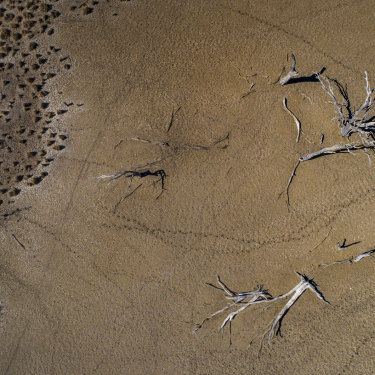
The town of Warren is a gateway to one of Australia's most important wetlands - the fast dessicating Macquarie Marshes.
The town of Warren is a gateway to one of Australia's most
 important wetlands - the fast dessicating Macquarie Marshes.
"Our priority is to save lives first, save water second," Barclay says on Thursday outside Warren's two-tanker fire station.
Should one of the town's typical three-bedroom weatherboard homes ignite, Fire and Rescue NSW crews will only turn their hoses on the fire if they have to rescue anyone inside. Otherwise it will be sacrificed and water used merely to spray neighbouring homes if flames threaten to spread.
"Warren is the first location in which we're undertaking this new strategy," says Gary Barber, the Dubbo-based Fire & Rescue commander. "We could easily waste a couple of thousand litres on a house that's going to be lost," he says. "That water can certainly be used much better elsewhere in the community."

Read the story from The Age by Peter Hannam - “‘We'll be bathing in salt water': At the epicentre of Australia's big drought.”

03 October, 2018

Rainfall tallies plummet after Australia's driest September on record

Australia has notched its driest September on record, with less than a third of the usual rainfall for the month, extending the dry spell that has farmers and firefighters increasingly desperate for rain.
Last month was Australia's driest September on record.
Victoria posted its second driest September, also collecting just a third of its typical September rain.

NSW also had another dry month, with less than half the normal rain, bringing the state's year-to-date tally lower than any year but 1902 and 1965, according to Blair Trewin, senior climatologist at the Bureau of Meteorology.


Read the story from The Sydney Morning Herald by Peter Hannam - “Rainfall tallies plummet after Australia's driest September on record.”

07 January, 2018

Melbourne weather: Saturday's scorcher puts the heat on firefighters

Firefighters battled more than 100 blazes across Victoria on Saturday as the mercury reached a high of 42 in Melbourne and residents in several suburbs on the city's south-eastern fringe were evacuated as a fire threatened homes.
CFA members fight a fire threatening
homes in Valley Road Skye.
There were 114 grass or scrub fires and 25 structure fires in the 24 hours to 6pm, State Control Centre figures show.


Read the story from today’s Melbourne Age - “Melbourne weather: Saturday's scorcher puts the heat on firefighters.”

18 October, 2017

Start planning for fire season now

Shepparton firefighters are urging people to be prepared with the Bureau of Meteorology forecasting an above-average fire season.

‘‘We haven’t really had a spring — it’s jumped straight into summer,’’ Shepparton CFA station officer Luke Waterson said.

Community warning: Shepparton firefighters
Mark Strack, Stephen Lewis, Bryce Willoughby,
 Rod Railton and station officer Luke Waterson.
‘‘It’s all about preparedness . . . have a fire action plan regardless of where you live, whether that be in town or out of town.’’

Launched on Friday, Fire Action Week is a time for households to increase their understanding of local fire risks, prepare their properties and plan how to stay safe.

‘We’ll get grass fires earlier in the year . . . a month earlier than normal,’’ Mr Waterson said.

‘‘All the fuel is dried out so the likelihood of fires starting and burning quickly is greater.’’

Bush fires are already impacting the Gippsland region and Mr Waterson said many resources from Shepparton had been called to help.

‘‘Now is the time to slash vacant blocks that could pose a danger to neighbouring houses,’’ he said.

‘‘Cut long grass, clear gutters and move unused winter wood piles . . . also try to provide a 4 m access for our firetrucks to enter your driveway.’’

Energy, Environment and Climate Change Minister Lily D’Ambrosio said the immediate focus needs to be on staying safe this bushfire season.

‘‘Talk to your family and friends about your plans, and make sure you know when to leave and where to go to stay safe,’’ she said. 
  • People are asked to register burn-offs ahead of the high fire danger period, by calling 1800 668 511. Victorians can stay up-to-date with emergency warnings throughout the fire season by tuning into local radio and Sky News broadcasts, phoning the VicEmergency hotline 1800 226 226 and downloading the VicEmergency App.

Story by Hayden Thompson from today’s Shepparton News - “Start planning for fire season now.”

14 October, 2017

Hundreds missing, dozens dead in California wildfires

Sonoma, California: Firefighters have begun to gain ground against the spread of wildfires that have killed at least 31 people in northern California and left hundreds missing in the heart of the state's wine country.
Smoke blankets Santa Rosa, California.  
The infernos burning across the region are now the state's deadliest wildfires on record, their collective death toll passing the 1933 Griffith Park Fire in Los Angeles that killed 29 people.

In Santa Rosa, the hardest hit by the fires, officials said they were stunned by the scale of the destruction. An estimated 2834 homes were destroyed in the city of Santa Rosa alone, Mayor Chris Coursey said.

Flames left entire suburbs and commercial districts in ruins and even destroyed the city's newest fire station.


Read Noel Randewich’s story in today’s Melbourne Age - “Hundreds missing, dozens dead in California wildfires.”

17 July, 2017

Massive California wildfire spreading

Firefighters are battling to gain control of a destructive wildfire burning near Santa Barbara, California that has mushroomed in size overnight, pushed by gusty offshore winds into dry brush that has not burned in decades.

The Whittier Fire continues to burn as seen from
 Los Olivos, California, during the weekend.
The Whittier Fire, which broke out on July 8 and has already destroyed eight homes, had been more than 50 per cent contained on Friday before so-called ‘‘Sundowner’’ winds picked up in the evening, according to a California Department of Forestry and Fire Protection website.

Nearly 3000 people who were forced to flee their homes near Cachuma Lake and the community of Goleta remained under evacuation orders as fire officials said another evening of Sundowners could drive the flames toward populated areas.

‘‘The fire continues burning in an area above the community of Goleta and crews continue to build containment and contingency lines to hold the fire in check,’’ Cal Fire said on the Inciweb fire-tracking website. ‘‘The east and west flanks of the fire continue to burn towards established containment lines,” it reported.

More than 1600 firefighters were working the blaze, assisted by water-bombing planes and helicopters.
Highway 154 was shut down in both directions and the Los Padres National Park was closed to the public.
Evacuation shelters were opened at a high school in Goleta.

The conflagration, which had blackened 7000 ha along California’s scenic central coast as of Saturday afternoon, was being fed by brush and vegetation that had not burned since 1955, according to fire officials.

The Whittier Fire is among more than 50 large, active wildfires burning across the US West as forecasters warned that hot, dry conditions could persist, creating tinderbox conditions.

Red flag warnings were issued for Northern California and parts of other states, where the National Weather Service said temperatures could reach above 32°C and winds to gust 80 km/h.


Read the story in today’s Shepparton News - “Massive California wildfire spreading.”

12 February, 2017

Unprecedented fire danger for NSW as heatwaves continue across south-east

Swimmers escape the heat at the Nepean
River Reserve in Sydney. Meteorologists
are predicting what could be the hottest
three-day spell ever for the city.
Firefighters are warning Sunday will present an unprecedented fire danger for New South Wales, as the prolonged heatwave creates conditions worse than Black Saturday.

The heatwave across south-east Australia continued to break records on Saturday. Parts of Western Sydney reached 47C on Saturday afternoon, including Penrith, which experienced its hottest day on record.

The outback town of White Cliffs, in NSW’s north-west, broke the record for the hottest minimum overnight temperature. Residents endured a stifling night with a low of only 34.2 degrees.


Read Christopher Knaus’s story in The Guardian - "Unprecedented fire danger for NSW as heatwaves continue across south-east.”

10 February, 2017

NSW weather: Fire warning as extreme heat and dangerous winds forecast for weekend.

The NSW Rural Fire Service says
 temperatures and winds will
 pick up on Saturday.
Firefighters are warning of dangerous conditions across many parts of New South Wales, with extreme heat forecast over the next few days.

Bureau of Meteorology (BOM) forecaster Olenka Duma said there would be widespread heatwave conditions with temperatures reaching the mid 40s over many inland areas and high 30s along the coast on the weekend.

"It is going to be very hot, particularly over the next couple of days," she said.

The NSW Rural Fire Service (RFS) said the state would experience the worst bushfire conditions in four years with severe and extreme fire dangers in widespread areas.

23 January, 2017

Chile forest fires: Troops join fight against worst fires in decades

The blazes destroyed more than
100,000 hectares of native forest
Some 1,200 troops and 500 firefighters have joined the effort to control Chile's worst forest fires in decades.

A state of emergency has been declared in a vast area south of the capital, Santiago.

The blazes began over a week ago and spread quickly in the dry and particularly hot summer that many South American countries are experiencing.

President Michelle Bachelet said she had asked for help from countries with experience of forest fires.

"The firefighters are doing all that is humanly possible," she said.

27 November, 2016

Calls for bushfire vigilance in eastern Australia follow hot December forecast

 NSW emergency services fight a fire near Port
Stephens in November. Forecasts of a hot
December underscore the need for ‘extreme
vigilance’ according to the Bureau of Meteorology.
Eastern Australia is in for a hot, dry December that will keep firefighters on their toes, forecasters say.

The Bureau of Meteorology has just released its latest outlook for summer, with good and bad news when it comes to the bushfire threat.

Australia had its second wettest winter on record this year, with above average rainfall continuing into spring. The good rainfall means there’s lots of water in eastern rivers and streams, helping them act as natural fire breaks.

Soils are also nice and damp, says Andrew Watkins, from the bureau’s climate prediction team. But the rain has also resulted in heavy vegetation growth that could fuel fires when it dries out in the hotter- and drier-than-average conditions now being forecast for December


(Dr Karl Braganza, the Manager of Climate Monitoring at the Australian Bureau of Meteorology, will present the bureau’s 2016 State of the Climate on Thursday at the University of Melbourne’s Lab-14).