Showing posts with label December. Show all posts

03 January, 2020

As a Young Liberal I know it's time to stop turning climate change into a culture war

In early December, delegates representing Young Liberal branches across the state voted overwhelmingly in approval of a motion recognising the reality of climate change and the need for action.
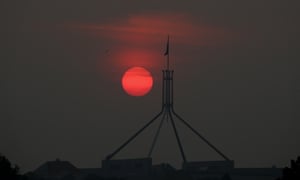
The sun sets through the he smoke haze over Parliament House Canberra
‘It should not be a matter of conservative vs progressive.
It should be a matter of science and economics.’
The NSW Liberal party’s youth wing recognises this a particularly important issue facing our generation, as our generation will have to face the risks brought about by climate change.
It is the duty of government to be awake to the challenges of the future. As the great conservative thinker Edmund Burke recognised, current generations hold the present in trust for the future. And climate change is a significant risk that will affect the future of my generation.
The climate change debate in Australia has unfortunately become a bit of a poisoned well. While Boris Johnson’s Conservatives went to the UK election with a commitment to achieve net zero emissions by 2050, any talk of climate change can spell the death of a Liberal leader in Australia.

29 March, 2019

How a 7th Grader’s Strike Against Climate Change Exploded Into a Movement

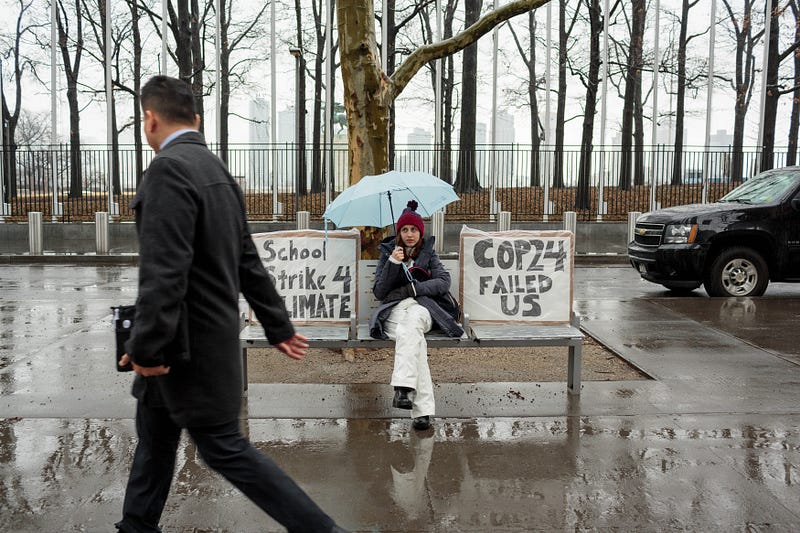
Every week since December, the seventh-grader has made a pilgrimage to the United Nations’ headquarters demanding action on climate change. She is one of a cadre of young, fierce and mostly female activists behind the School Strike 4 Climate movement. On March 15, with the support of some of the world’s biggest environmental groups, tens of thousands of kids in at least two dozen countries and nearly 30 U.S. states plan to skip school to protest.


Alexandria Villasenor, 13, skips school to strike in front of
the United Nations, with signs reading: “School Strike 4
 Climate” and “Cop24 Failed Us. 
On the ninth Friday of her strike, 13-year-old Alexandria Villasenor wakes to a dozen emails, scores of Twitter notifications and good news from the other side of the planet: Students in China want to join her movement.

Their demands are uncompromising: Nations must commit to cutting fossil-fuel emissions in half in the next 10 years to avoid catastrophic global warming.


Read the story from The Washington Post by Sarah Kaplan - “How a 7th Grader’s Strike Against Climate Change Exploded Into a Movement.”

19 May, 2018

Sarah Myhre: Scientist/feminist/activist, all in one

At the American Geophysical Union fall meeting in New Orleans last December, Sarah Myhre, PhD, joined with other scientists on a panel presenting and fielding questions on the science, economics, and politics of climate solutions.
Sarah Myhre, a veritable force of nature in addressing
 climate and other issues she is passionate about.
Myhre (pronounced my-ree) delivered a message that may have been startling to some in the audience – that climate change cannot fully be addressed without also grappling with the misogyny and social injustice that have perpetuated the problem for decades. Myhre characteristically delivered her talk with a sense of urgency, confidence, and polish.

After the presentations, an audience member directed a comment to panelist Stefan Rahmstorf, PhD, of the Potsdam Institute. Rahmstorf had illustrated just how quickly the world will need to stop burning fossil fuels if warming is to be kept to no more than 2 degrees C, about 3.6 degrees F.


Read the Yale Climate Connections story Karin Kirk - “Sarah Myhre: Scientist/feminist/activist, all in one.”

03 March, 2017

Climate scientists say likelihood of extreme summers surging due to global warming

New South Wales, which has just experienced its hottest summer on record, is 50 times more likely to experience another similarly hot summer and 10 times more likely to experience extremely hot days under climate change, according to a group of Australian climate scientists.
The mean temperature in Sydney was 2.8C above
average in December, January, and February,
 according to the Bureau of Meteorology, and
climate scientists say the probability of
extreme weather is increasing.

The mean temperature in Sydney was 2.8C above average in December, January, and February, according to the Bureau of Meteorology, and the three-day heatwave from 9 February to 11 was the hottest on record from Sydney to Brisbane, breaking records set in 1939.

It us the kind of weather event that would have been considered a one in 500-year occurrence before 1910, before global warming had a significant impact on the climate system, but had now become a one in 50-year event, according to a new analysis released on Thursday.


Read Calla Wahlquist’s story on The Guardian - “Climate scientists say likelihood of extreme summers surging due to global warming.”

27 November, 2016

Calls for bushfire vigilance in eastern Australia follow hot December forecast

 NSW emergency services fight a fire near Port
Stephens in November. Forecasts of a hot
December underscore the need for ‘extreme
vigilance’ according to the Bureau of Meteorology.
Eastern Australia is in for a hot, dry December that will keep firefighters on their toes, forecasters say.

The Bureau of Meteorology has just released its latest outlook for summer, with good and bad news when it comes to the bushfire threat.

Australia had its second wettest winter on record this year, with above average rainfall continuing into spring. The good rainfall means there’s lots of water in eastern rivers and streams, helping them act as natural fire breaks.

Soils are also nice and damp, says Andrew Watkins, from the bureau’s climate prediction team. But the rain has also resulted in heavy vegetation growth that could fuel fires when it dries out in the hotter- and drier-than-average conditions now being forecast for December


(Dr Karl Braganza, the Manager of Climate Monitoring at the Australian Bureau of Meteorology, will present the bureau’s 2016 State of the Climate on Thursday at the University of Melbourne’s Lab-14).

09 January, 2016

The wettest December ever in the UK


Ducks float by doorways in what was
the UK's wettest December ever.
December was the wettest month ever recorded in the UK, with almost double the rain falling than average, according to data released by the Met Office on Tuesday.

Last month saw widespread flooding which continued into the new year, with 21 flood alerts in England and Wales and four in Scotland in force on Tuesday morning.

The record for the warmest December in the UK was also smashed last month, with an average temperature of 7.9C, 4.1C higher than the long-term average.

16 April, 2015

Australia's renewable energy industry in investment 'freeze'


A

ustralia's large-scale renewable energy industry has entered an investment freeze, with just one project securing finance in the past six months amid political uncertainty, according to Bloomberg New Energy Finance.

The lone venture in the first three months of 2015 was worth just $6.6 million and following a complete drought during the December quarter, BNEF said. The project was a floating solar photovoltaic (PV) plant being developed in Jamestown, South Australia, by Infratech Industries.

Read the Peter Hannam story in the Sydney Morning Herald here - “Australia's renewable energy investment grinds to a halt”.

12 January, 2015

Simple, innocent video tells a tragic story


While most of the lower 48 states are shivering their way into 2015, in much of Alaska the concern is persistent warmth.

Fourth graders at the Kuinerrarmiut Elitnaurviat school in Quinhagak recently caught the attention of some news outlets and climate scientists with a clever video bemoaning a warm and snowless December. The town of about 660 residents, mostly Yup’ik Eskimos, is a mile from the Bering Sea coast.

18 December, 2014

The results are in - 'the hottest year on record'


For those of us fixated on whether 2014 will be the hottest year on record, the results are in.

At least, we know enough that we can make the call. According the global data from National Oceanic and Atmospheric Association (NOAA), 2014 will be the hottest year ever recorded.

A story on The Guardian headed: “2014 will be the hottest year on record” has made this prediction.

“The climate and weather models predict that the next week will be about 0.75°C above average. This means, December will come in around 0.6°C above average. Are these daily values accurate? Well the last two months they have been within 0.05°C of the final official results,” The Guardian reports.