Showing posts with label climate scientists. Show all posts

29 April, 2020

Climate experts call for 'dangerous' Michael Moore film to be taken down.

A new Michael Moore-produced documentary that takes aim at the supposed hypocrisy of the green movement is “dangerous, misleading and destructive” and should be removed from public viewing, according to an assortment of climate scientists and environmental campaigners.
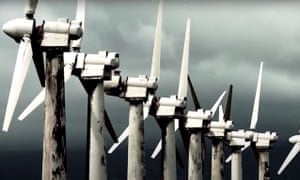
Planet Of The Humans - film still
A still from Planet of the Humans, which has provoked a furious reaction.
The film, Planet of the Humans, was released on the eve of Earth Day last week by its producer, Michael Moore, the baseball cap-wearing documentarian known for Fahrenheit 9/11 and Bowling for Columbine. Describing itself as a “full-frontal assault on our sacred cows”, the film argues that electric cars and solar energy are unreliable and rely upon fossil fuels to function. It also attacks figures including Al Gore for bolstering corporations that push flawed technologies over real solutions to the climate crisis.
Read the story from The Guardian by Oliver Milman - “Climate experts call for 'dangerous' Michael Moore film to be taken down.

09 March, 2020

‘I'm profoundly sad, I feel guilty': scientists reveal personal fears about the climate crisis

In 2014, Joe Duggan started reaching out to climate scientists to ask them a question: how did climate change make them feel?
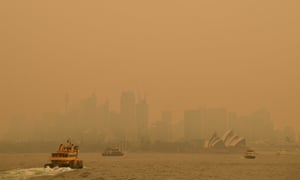
Sydney shrouded in dirty orange smoke haze
Joe Duggan returned to his website Is This How You
 Feel by asking scientists how their feelings on the
climate crisis had changed since he launched it
in 2014. Many were frustrated, angry and scared.
“I was just blown away when I started getting the letters back,” he says.
Duggan, a science communicator at Australian National University, set up a website and starting publishing the mostly handwritten responses.
“[Professor] Katrin Meissner was one of the first, and her letter really hit me. It was so ... unscience-y. Almost poetic.”
“It makes me feel sad. And it scares me,” Meissner wrote.
“It scares me more than anything else. I see a group of people sitting in a boat, happily waving, taking pictures on the way, not knowing that this boat is floating right into a powerful and deadly waterfall.”


16 December, 2019

Dire predictions for future Kimberley heatwaves, but climate scientists warn against 'crying wolf’

Climate scientists have cautioned against "crying wolf" on the unfolding impacts of climate change, as new research suggests a dramatic upswing in heatwaves across northern Australia.
The sun sets over bushland in the Kimberley.
Research suggests WA's north could have
 60 days a year above 40 degrees Celsius.
Released by think tank The Australia Institute this week, the Kimberley HeatWatch report pointed to an unprecedented rise in hot weather across the West Australia's Kimberley by the end of the century.
The paper, commissioned by local conservation group Environs Kimberley, suggested that without adequate policies to reduce global temperatures, the number of "extreme heat days" where temperatures reach 35 degrees Celsius and over would increase dramatically each year.

12 December, 2019

University of Sydney Law School declares climate emergency

Accepting the warnings delivered by climate scientists about the dangerous state of the earth's climate, the Board of The University of Sydney Law School has voted unanimously to declare a climate emergency.

Image result for university of sydney logoThe declaration highlights the important role that legal scholars and legal institutions have to play in addressing and adapting to the climate emergency.

The motion was moved by Professor Rosemary Lyster, Professor of Climate and Environmental Law and Co-Director of the Australian Centre for Climate and Environmental Law (ACCEL), and seconded by Professor Tim Stephens an Australian Research Council Future Fellow who has a particular research focus on international environmental law.

“In passing this motion, the members of Sydney Law School recognise that as legal academics we have a moral duty to stand up, speak out and express our concern, from a justice perspective, for all of the people, ecosystems and species across the world facing an existential threat,” Professor Lyster said.


Read the story from The University of Sydney - “University of Sydney Law School declares climate emergency.”Aerial view of Sydney Law School's new law building.Aerial view of Sydney Law School's new law building.

27 March, 2019

The Road to Climate Catastrophe Runs Through a City Called Commerce

All around Los Angeles this month, little orange-and-black butterflies were flying stubbornly north, a vast migration of Vanessa cardui, aka painted ladies, their numbers swelled by the exceptional lushness of the spring. Last season’s fires were nearly matched in exuberance by this winter’s rains. That’s how it’s going to be from now on, the climate scientists say—long spells of extreme drought punctuated by years of unusually heavy rainfall. For now, the mountains above the city are white with snow and every unpaved patch of earth gleams an almost-electric green.
Trucks spew pollution into communities like Commerce,
California, as they make their way along the Long Beach Freeway.
The butterflies seem to favor the open channels of the freeways. Thousands flitted between the semis clogging the Long Beach Freeway in the well-named southeast LA city of Commerce. I saw a few on Atlantic Avenue too, just outside the small storefront office of the grassroots-activist group East Yard Communities for Environmental Justice, which seemed like a good place to go for a more intimate perspective on the fossil-fuel economy than most mainstream environmentalist groups could hope to offer.


Read the story from The Nation by Ben Ehrenreich - “The Road to Climate Catastrophe Runs Through a City Called Commerce.”

09 February, 2019

The green new deal shows just how grand climate politics can be

If it’s hard to imagine the sweeping changes proposed in the “Green New Deal” actually happening, don’t blame the Green New Deal. It’s just that it has been so long since any politician suggested something so grand. The wildfires, hurricanes, droughts, and sea level rise that climate scientists have long promised are here, but we could get accustomed to that. We could forget that the world of five years ago or a decade ago was any different. And we got used to elected representatives saying predictable things about it too—doubt and denial, or expressions of concern that climate change is too complicated and too expensive to deal with. We grow accustomed to their farce.

US representative Alexandria Ocasio-Cortez
 (D-New York), along with Senator Ed Markey
(D-Massachusetts), introduced the ambitious
 "Green New Deal" resolution on Thursday.
So it’s jarring when something breaks the pattern. A resolution from the US House of Representatives that proposes national, urgent action on climate change and more—well, we’re not used to that. A vast set of policies to fight climate change, prepare for its effects, address income inequality, and save working-class jobs, fronted by a brand-new congressperson with a national profile—Alexandria Ocasio-Cortez, New York’s AOC? That’s new. The so-called Green New Deal reads like a wholesale reset to the Democratic Party platform, weaving the existential threat of a warming planet into old-school liberal themes. Defend the working class. Clean up pollution. Give people health care and housing.


Read the Wired story by Adam Rogers - “The green new deal shows just how grand climate politics can be.”

10 January, 2019

Advocates Shouldn’t Be Afraid to Tell the Truth About Climate Change

It has been a tough few months for climate change. In October, an international body of climate scientists declared humans have a little more than a decade to make the drastic changes needed to keep rising temperatures reasonably in check. In November, federal scientists released an equally grim assessment detailing the unprecedented floods, droughts and wildfires expected to hit the United States. Then, this month, with the world ablaze, diplomats gathered in Poland to bicker over how much water each country should pour on their respective fires and, in some cases, whether scientists were exaggerating the size of the flames.
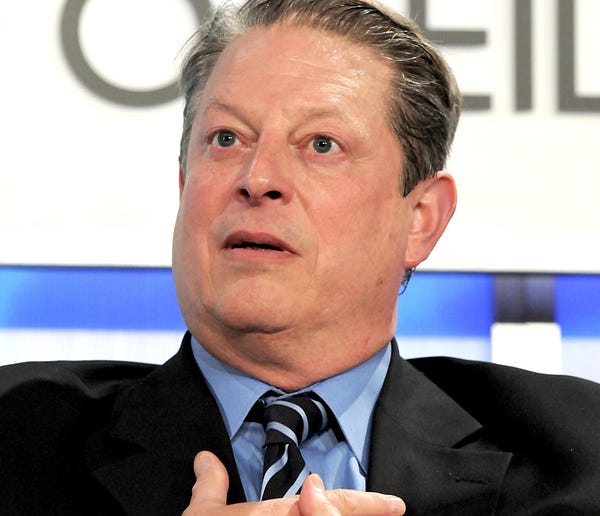
Al Gore - he's always told the truth about climate change.
It’s bad, for sure, and worse than most people realize. Many scientists and advocates go to great lengths to keep sanguine about the carbon crisis, even when the news is certifiably grim, and this threatens to undermine public understanding of climate change. Too many spoonfuls of sugar blunt the effect of the medicine.

Read the story from Nexus Media by Jeremy Deaton - “Advocates Shouldn’t Be Afraid to Tell the Truth About Climate Change.”

28 December, 2018

The Nobel Prize for Climate Catastrophe

Many people were thrilled when they heard that the Nobel Memorial Prize in Economics this year went to William Nordhaus of Yale University, a man known for his work on climate change. Finally, the economics profession is giving climate the attention it deserves, just as the world is waking up to the severity of our ecological emergency. Media outlets have taken this positive narrative and run with it.
William Nordhaus - the Nobel Prize for climate catastrophe.
But while Nordhaus may be revered among economists, climate scientists and ecologists have a very different opinion of his legacy. In fact, many believe that the failure of the world’s governments to pursue aggressive climate action over the past few decades is in large part due to arguments that Nordhaus has advanced.

It’s a blazing controversy that hinges on the single most consequential issue in climate economics: the question of growth. The stakes couldn’t be higher. After all, this isn’t just a matter of abstract academic debate; the future of human civilization hangs in the balance.


Read the Medium story by Jason Hickel - “The Nobel Prize for Climate Catastrophe.”

16 April, 2018

No, you’re not entitled to your opinion

Patrick Stokes speaking today
at a special function staged
by The Conversation.
Patrick Stokes has an opinion about opinion, or does he?.

No, rather he has an argument about the process and whether or not we are entitled to an opinion.

The Senior Lecturer in Philosophy from Deakin University, who wrote about opinion on The Conversation, referencing climate scientists.

Commenting about “enthusiastic amateurs” seem to think they are entitled to disagree with climate scientists and yet still have their views respected 


Read the piece by Patrick Stokes published on The Conversation in 2012 - “No, you’re not entitled to your opinioNo, you’re not entitled to your opinion.

26 July, 2017

A Defense of Climate Tragedy, or What the Scientists Got Wrong about ‘The Uninhabitable Earth’

This is an essay about the furor over David Wallace-Wells’ New York Magazine article “The Uninhabitable Earth,” which conjures a specter of a planet so ruined by global warming in our children’s lifetimes that it no longer sustains, but destroys human life. 

By his own account, Wallace-Wells (DWW from here on out) wrote “The Uninhabitable Earth” to frighten people out of their complacency and to inspire them to clamor loudly for immediate action to halt climate change in its petrifying tracks. Yet instead of welcoming DWW as an ally, some climate scientists attacked him, roundly criticizing his article for supposedly inspiring paralyzing sense of doom in its readers and, more importantly, for lacking scientific credibility. 
In a lengthly post on Climate Feedbacka site that publishes scientific assessments of representations of climate change in the popular pressthese scientists condemned DWW for making factual errors, for exaggerating the projected impacts of unmitigated climate change, and for downplaying the low probability of those impacts occurring even under the high-emissions “business as usual” path that we are currently on. It is this Climate Feedback post, entitled “Scientists explain what New York Magazine article [sic] on ‘The Uninhabitable Earth’ gets wrong,” that I want to discuss.


Read the piece by an author and climate activist with a PhD in Renaissance Literature who is also a member of Al Gore’s Climate Reality,  Genevieve Guenther  -  “A Defense of Climate Tragedy, or What the Scientists Got Wrong about ‘The Uninhabitable Earth’.”

27 June, 2017

Climate scientists reveal their fears for the future

Climate scientists rarely speak publicly about their personal views. 


But in the wake of some extreme weather events in Australia, the specialists who make predictions about our climate reveal they're experiencing sometimes deep anxieties. Kerry Brewster reports.


Watch the ABC Lateline story - “Climate scientists reveal their fears for the future."

24 June, 2017

A look at the '97%' science consensus meme

About 97 out of every 100 climate scientists regularly publishing in peer-reviewed journals accept scientific evidence that Earth is warming primarily because of human emissions. True or False.

Skeptical Science founder John Cook,
now at George Mason University.
And according to research in 2016, roughly 11 percent of the public understands that about 97 percent of the climate scientists agree on those two points – happening and substantially human-caused. True or False?
(Answers to both questions: True.)

Researchers* in 2014 published a report in an open access peer-reviewed scientific journal, PLOS-ONE, that public understanding of the extent of the agreement among climate scientists is a “gateway belief”: knowing and accepting that level of agreement is key to increasing general understanding of, and willingness to address, human-caused global warming.


Read/watch the story from Yale Climate Connections - “A look at the '97%' science consensus meme.”

01 June, 2017

Map: These are the cities that climate change will hit first

Climate scientists sometimes talk about something called "climate departure" as a way of measuring when climate change has really changed things. It's the moment when average temperatures, either in a specific location or worldwide, become so impacted by climate change that the old climate is left behind. It's a sort of tipping point. And a lot of cities are scheduled to hit one very soon.


A city hits "climate departure" when the average temperature of its coolest year from then on is projected to be warmer than the average temperature of its hottest year between 1960 and 2005. For example, let's say the climate departure point for D.C. is 2047 (which it is). After 2047, even D.C.'s coldest year will still be hotter than any year from before 2005. Put another way, every single year after 2047 will be hotter than D.C.'s hottest year on record from 1860 to 2005. It's the moment when the old "normal" is really gone.


Read The Washington Post story - “Map: These are the cities that climate change will hit first.”

26 April, 2017

Using data science to understand global climate systems

Climate scientists at the University of Rochester are using data science to understand what drives the global climate system—from deep in the ocean to high in the sky.
Tom Weber uses data from NASA satellite images,
 such as the image above. The color of the surface
 ocean reflects how much phytoplankton biomass
 there is, with the greener color indicating more
 chlorophyll and therefore more phytoplankton. 
Xiaoxuan Wang ’18, a computer science major, is working with earth and environmental sciences professor Tom Weber on a project that combines data science and environmental science to look at the daily concentration of chlorophyll—and therefore phytoplankton—in the Great Lakes from 2002 to 2016.

The project mirrors Weber’s work on ocean carbon cycles by using NASA satellite data. Freshwater and seawater reflect light differently, and generally algorithms to sort this data have been designed for ocean waters. However, Weber and Wang are working with new satellite data from the Great Lakes, which is, Weber says, “the first attempt to visualize plankton growths in the Great Lakes from space.”

Wang uses a computer application called MATLAB to process and organize the large satellite data sets.


Read the Science and Technology Research News story - “Using data science to understand global climate systems.”

03 March, 2017

Climate scientists say likelihood of extreme summers surging due to global warming

New South Wales, which has just experienced its hottest summer on record, is 50 times more likely to experience another similarly hot summer and 10 times more likely to experience extremely hot days under climate change, according to a group of Australian climate scientists.
The mean temperature in Sydney was 2.8C above
average in December, January, and February,
 according to the Bureau of Meteorology, and
climate scientists say the probability of
extreme weather is increasing.

The mean temperature in Sydney was 2.8C above average in December, January, and February, according to the Bureau of Meteorology, and the three-day heatwave from 9 February to 11 was the hottest on record from Sydney to Brisbane, breaking records set in 1939.

It us the kind of weather event that would have been considered a one in 500-year occurrence before 1910, before global warming had a significant impact on the climate system, but had now become a one in 50-year event, according to a new analysis released on Thursday.


Read Calla Wahlquist’s story on The Guardian - “Climate scientists say likelihood of extreme summers surging due to global warming.”

18 February, 2017

Climate change: Scientists sad, frustrated as extreme weather becomes the new norm

Call it fatigue, call it frustration, but some of the best brains in the country are fed up.

Australia's leading climate scientists joined their New Zealand counterparts in Canberra for a four-day conference last week, but dark clouds lingered over their discussions.

The theme of the conference was "Australasian weather, climate and oceans: past, present and future”.

And global warming was never far from the guests' lips.

"There is definitely what you would call 'climate fatigue' on the part of scientists," said Dr Andrew Glikson, from the Australian National University's School of Archaeology and Anthropology.


17 February, 2017

Why claiming climate scientists are in it for the money is absurd.


If you are reading the comments on basically any climate change related article, it won't take long to get to one (or more!) commenters boldly claiming that "climate scientists are only in it for the money". 

This will often be accompanied by outrageously high $ amounts to really get anybody's hackles up but without any real evidence for their statement.

This article is intended to be a repository listing resources you can use to counter this unsubstantiated claim whenever it crops up somewhere. Some are blog posts, some are videos while others come from social media postings.


17 January, 2017

Trump warming to reality of climate change, says senior Chinese official

 A protest in New York against climate change
sceptics in Donald Trump’s cabinet.
China’s chief climate negotiator has attempted to calm fears that Donald Trump’s arrival in the White House will spell disaster for the fight against climate change.

Trump, who has dismissed climate change as “bullshit” and a Chinese hoax, will become the first climate sceptic to occupy the highest office in the US when he is sworn in on Friday.

Climate scientists and campaigners have expressed alarm at the impact the presence of so many climate deniers and environmental enemies in Trump’s cabinet could have on efforts to prevent catastrophic and irreversible global warming.

But speaking to the government-run China Daily newspaper, China’s special representative for climate change, Xie Zhenhua, played down such concerns.

Read the story on The Guardian by Tom Phillips in Beijing - “Trump warming to reality of climate change, says senior Chinese official.”

14 January, 2017

Northeast warming more rapidly than most of

Sarah Coughlin from Dorchester practiced
 her yoga routine on a dock on the
 Charles River Esplanade on Thursday.
New England is likely to experience significantly greater warming over the next decade, and beyond, than the rest of the planet, according to new findings by climate scientists at the University of Massachusetts Amherst.

The region’s temperatures are projected to rise by an average of 3.6 degrees Fahrenheit above pre-industrial levels by 2025, according to the study, published this week in PLOS One, a journal published by the Public Library of Science.

The scientists found that the Northeast is warming more rapidly than any other part of the country except Alaska — and that the 3.6 degree Fahrenheit rise in the region is likely to come two decades before the rest of the world gets to that point.

Read David Abel’s story in the Boston Globe  - “Northeast warming more rapidly than most of US.”

14 December, 2016

Report helps scientists communicate how global warming is worsening natural disasters

Fire fighters monitor a back burn near Mount
 Victoria in the Blue Mountains on October 21,
2013. The intense Australian summer heat
 was made five times more likely by
human-caused global warming.
Climate scientists have done a great job winning the scientific arguments about climate change. To be clear about what I mean, we have done a very good job investigating whether or not the Earth’s climate is changing (it is), what is causing the change (humans), how much will it change in the future, and what will be the impacts.

There are no longer any reputable scientists who disagree with the principle view of that human emissions will cause climate change that will lead to societal and human losses (they already are). So, I use the term “win” here not to indicate it was a battle of “us” versus “them”. Rather, I mean “win” in that we have faithfully followed the scientific method, explored alternative hypotheses, checked and rechecked our work, and have come to a truth that is unassailable. We’ve done our job.

In the past, that is where our job ended. I mean maybe we would help with a press release on a breaking study, do an interview. But only rarely.