Showing posts with label more people. Show all posts

28 December, 2019

Rise In Climate-Related Deaths Will Surpass All Infectious Diseases, Economist Testifies

More people will die from climate-driven temperature changes in 2100 than the number who die today from all infectious diseases combined, a leading economist told members of Congress last week.
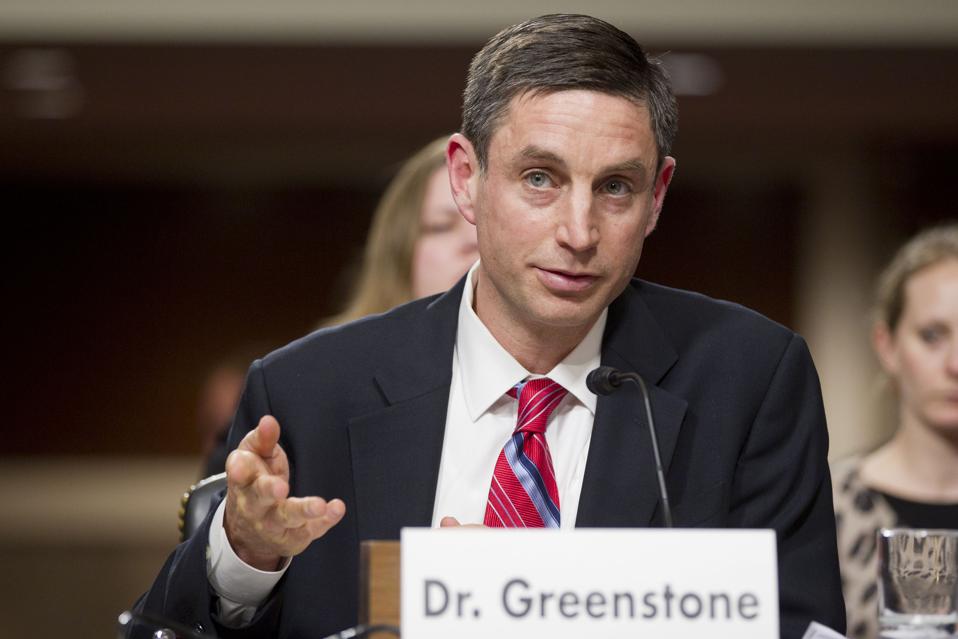
Portrait of Michael Greenstone
Michael Greenstone, the Milton Friedman professor
of Economics at the University of Chicago. 

Michael Greenstone is the Milton Friedman Professor of Economics at the University of Chicago and the co-director of the Climate Impact Lab (CIL), a collaboration of climate scientists, economists, computational experts, researchers and analysts at multiple universities who are working to establish a precise data-driven estimate of the impact of the climate crisis.


22 June, 2019

Temperature rises will make Brisbane a 'difficult place to live' within 30 years, report finds

An alarming report has found temperature increases from climate change and urban growth will make Brisbane "a difficult place to live" within the next 30 years, and more people will be at risk of dying from extreme heat.
The study found the number of hot days and nights would double.
The long-term climate modelling also found the number of hot days and nights will double in Australia's third largest city by 2050, and people will need to avoid outdoor activities throughout most of summer.

The peer-reviewed study, which was published recently in the International Journal of Climatology, investigated the impact of urban growth and climate change on heat stress during summer in Brisbane, from the present day to 2050.


02 January, 2019

Millions in Australia's east face natural disaster risk

More than 400,000 Melbourne residents face high risks of flooding, bushfires or both, new analysis shows, with warnings that without pre-emptive action even more people will face threats posed by natural disasters.
Governments need to do more to mitigate natural
disasters, says SGS principal Terry Rawnsley.
CREDIT:
Analysis mapping insurance data and risk levels from natural perils across local government areas in Victoria, NSW and Queensland reveals millions of residents across the three states are living with some sort of risk from floods, storms, bushfires and earthquakes.

Compiled by SGS Economics and Planning and released exclusively to The Age, the data breaks down the risk to local council areas and the potential economic impact from natural disasters.

SGS national partner Terry Rawnsley said much of the Australian population was at some form of natural peril.


Read the story from The Age by Shane Wright and Felicity Caldwell - “Millions in Australia's east face natural disaster risk.”

08 March, 2018

Off to Munich for the International Passivhaus Conference

We have to rebuild our cities to use less energy and house more people, and Passivhaus design is a useful tool for both problems.
The Passive House (Passivhaus) will be discussed
at an international conference in Munich.
Starting on Friday, the leaders of the Passive House movement around the world are meeting in Munich for the International Passive House conference. Passive House, or Passivhaus, is probably the toughest energy efficiency standard anywhere; houses that meet the standard have super insulation, minimal thermal bridging, high quality windows and controlled ventilation. They are comfortable to live in and cost almost nothing to heat and cool.

I am a huge fan of Passive House, and am attending the conference in Munich, but I am increasingly convinced that it simply isn't enough anymore. Because what is really driving our energy consumption these days is transportation, where we are going backwards. It's sprawl, and it's the form of our housing. It is how we get between our houses and where we work or shop. Passivhaus can be applied to any kind of building, but expensive single family designs out in the country are not going to move the needle on our problems.


Read the TreeHugger story by Lloyd Alter - “Off to Munich for the International Passivhaus Conference.”

12 February, 2018

Heatwaves send temperatures soaring in many parts of Australia, but what are they?

Heatwaves are Australia's deadliest natural disaster. They have killed more people than bushfires, cyclones and floods put together.
Because Earth is a sphere, there is proportionally more energy near the equator.
The Bureau of Meteorology defines them as "three days or more of high maximum and minimum temperatures that is unusual for that location”.

During the extreme heatwave that hit south east Australia in 2009, 374 people died in Victoria and evidence exists for up to 500 heatwave-related deaths all together.

Events like 2009 are rare — the last comparable event in south east Australia occurred in 1939.
But it doesn't have to be a once in a generation event to put people at risk.

So what are heatwaves exactly, and why do they happen?