Showing posts with label Despite. Show all posts

04 February, 2020

It is time to change the definition of refugee

Despite recent and increasing efforts by the United States and other governments to narrow their interpretations of the refugee definition and to shirk their protection responsibilities, the need to expand the grounds for asylum is becoming increasingly urgent as the consequences of climate change become more pronounced. 
With surrounding sea levels rising, it is estimated the island nation of Kiribati will likely become uninhabitable in 10-15 years [File: Reuters/David Gray]
With surrounding sea levels rising, it is estimated the island
nation of Kiribati will likely become uninhabitable in 10-15 years.
A desperate appeal for asylum by a family from a Pacific island may have far-reaching implications for protecting people forcibly displaced by the effects of climate change. It could cause countries around the world to reconsider their laws and policies concerning refugees.
The case involves the Teitiota family, who fled the island of Tarawa in the Republic of Kiribati in 2007 and sought asylum in New Zealand in 2013. Ms Teitiota told the New Zealand court that she feared for her children's health and wellbeing, that crops and coconut trees on the island were dying.

Read the story from Al Jazeera by Bill Frelick - “It is time to change the definition of refugee.”

30 August, 2019

Australia’s carbon emissions rise again, largely thanks to LNG industry

Australia’s greenhouse gas emissions continue to rise despite the Morrison government claiming it is taking “sensible, responsible action” to address the climate crisis, the latest official data shows.
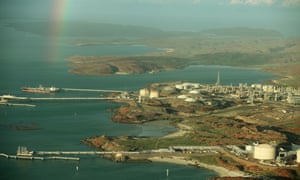
LNG industry in Western Australia
Part of the LNG projects in the north of Western Australia.
 The growth of the industry is primarily responsible for
 the recent rises in Australia’s greenhouse gas emissions.
National emissions increased by 3.1m tonnes in the year to March to reach 538.9m tonnes, a 0.6% jump on the previous year, the report released on Friday revealed.

Carbon dioxide emissions from electricity generation continue to decrease, reflecting the falling cost of solar and wind energy, but this is being more than cancelled out by the growth in emissions from the liquefied natural gas (LNG) export industry, mostly in northern Western Australia. Emissions from LNG were up 4.7m tonnes over the year.


Read the story from The Guardian by Adam Morton -  “Australia’s carbon emissions rise again, largely thanks to LNG industry.” 

09 July, 2019

G20 countries triple coal power subsidies despite climate crisis

G20 countries have almost tripled the subsidies they give to coal-fired power plants in recent years, despite the urgent need to cut the carbon emissions driving the climate crisis.
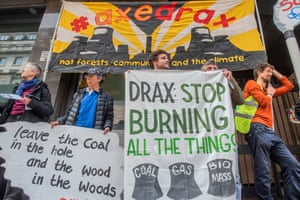
A protest against Drax, said to be the biggest carbon emitter and coal power station in the UK.
A protest against the Drax power station in North Yorkshire.
The bloc of major economies pledged a decade ago to phase out all fossil fuel subsidies.

The figures, published in a report by the Overseas Development Institute (ODI) and others, show that Japan is one of the biggest financial supporters of coal, despite the prime minister, Shinzo Abe, having said in September: “Climate change can be life-threatening to all generations … We must take more robust actions and reduce the use of fossil fuels.” The annual G20 meeting begins in Japan on Friday.


Read the story from The Guardian by Damian Carrington - “G20 countries triple coal power subsidies despite climate crisis."

03 August, 2018

Adapt or perish: UK leads the way in protecting citizens against climate change

Despite the distraction and political chaos of Brexit negotiations, the United Kingdom has just published a far-reaching and thoroughly impressive plan to manage risks from climate change.
To the World Health Organisation, climate change
 is the greatest health threat of this century.
This follows on from their broader 25-year Environment Plan, released in January. It aims to "help the natural world regain and retain good health", to enable it to better cope with climate change.

The recently released climate plan is a strategy to save lives from heat, flood and fire — yes, fire, even in the UK!

It should be compulsory reading for the Australian Government, because we have no such plan. Considering the lives that will be lost, this is negligence in medical terms.


Read the opinion piece from ABC News by David Shearman - “Adapt or perish: UK leads the way in protecting citizens against climate change.”

08 October, 2017

The Anthropocene: Has human impact changed Earth forever?

Despite our early existence compared to Earth’s age (humans have only been around for 200.000 years, whereas the planet emerged 4.6 billion years ago), the mark we are leaving on our world is already pretty obvious.

We’ve started by chopping down trees in order to clear the land for agriculture. Then we’ve settled permanently and created the first civilisations, that is to say, the first cities. We have also managed to develop complex technologies and learned how to use external sources of energy, including fossil fuels, with consequences we would soon find out.
And it was over the last two centuries which cover the Industrial Revolution (18th century) and “The Great Acceleration” onset around the 1950’s that the global effects of human activities have become clearly noticeable.

Humanity has brought about such a planetary change that Paul Crutzen, a Dutch Nobel laureate chemist, could no longer agree that he was living in the Holocene the current geological epoch which began around 10.000 years ago. So back in 2000, he and a colleague, Eugene Stoermer, decided to coin what they considered to be the new geological epoch we were entering as the Anthropocene the age of man.