Showing posts with label challenge. Show all posts

01 March, 2020

Why I'm introducing the people’s Climate Change Bill

My dream as a 13-year-old was to get to the top of my sport. As an Australian competing in a sport dominated by northern-hemisphere countries, the odds were against me and there were many who didn’t believe it was possible. But with ambition, a lot of hard work and resilience, it was possible.
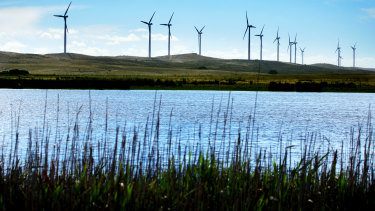
Government failure has increased the cost of the transition to clean energy.
My challenge now is to set Australia on a safer climate future, for my kids and future generations. That is why I will be introducing the people’s Climate Change Bill to the Australian Parliament in March, to end a decade of divisive politics over Australia’s future.
Sadly, the lessons of this summer already seem forgotten as Liberal backbenchers Jason Falinski MP and Tim Wilson MP couldn’t resist playing politics and misrepresenting the bill in an opinion piece in these pages last week.
So I am calling on all MPs to think carefully about the responsibility they owe to their electorates, their children and future generations and support this plan for the future with a conscience vote. Our country is crying out for certainty on climate policy and this is what the bill provides. As I write, more than 60,000 Australians have signed up to the website calling for a Climate Change Bill to be supported by all members of Parliament.

Read the opinion piece from The Age by Zali Steggall - “Why I'm introducing the people’s Climate Change Bill.”

26 February, 2019

Wrecking ball not needed to tackle climate change

No sole political or special interest group is the cradle of compassion for our environment. Our government acknowledges and accepts the challenge of addressing climate change. However, we do so not just with impassioned hearts – but also cool heads. We do not believe we have to choose between preserving our environment and keeping our economy strong.
Scott Morrison announces the government's climate
package at a function in Melbourne.
The Liberals and Nationals have a strong record of environmental vision and achievement. From the Menzies government that signed the Antarctic Treaty to the Howard government’s founding of the Murray-Darling Basin Authority, we understand that protecting and conserving our environment is a matter of intergenerational stewardship. Our land, air, oceans, reefs, fisheries and biodiversity are all vital parts of our inheritance. 

We hold them in trust today for Australians who will come after us. And reducing carbon emissions to address the real challenge of climate change requires practical policies.

We’re absolutely on track to meet our 2020 Kyoto emissions reduction target and that’s no small feat. In 2013, we inherited from Labor a 755 million tonne projected deficit on our Kyoto 2020 goal. We are now expecting to over-achieve on the target by 367 million tonnes – a 1.1 billion tonne turn around. We are one of a very small club that will exceed our 2020 target and we’ve done it through a combination of successful policies.


Read the story from The Age by Scott Morrison - “Wrecking ball not needed to tackle climate change.”

03 February, 2019

Mildura deputy mayor joins climate-driven challenge to Nationals in Mallee

The deputy mayor of Mildura, Jason Modica, will become the second independent candidate to challenge the National party in the seat of Mallee – running on the issues of water, climate change and people power.
 The deputy mayor of Mildura, Jason Modica, will become
 the second independent candidate to challenge the
National party in the seat of Mallee.
Known as “Jake the Tradie”, Modica served on Mildura council with Ali Cupper, who unexpectedly won the state seat of Mildura last year as an independent, a seat held by the Nationals on a 8% margin.

Modica enters the field after the sitting Nationals MP, Andrew Broad, a vocal supporter of traditional marriage, announced his retirement following New Idea allegations he met up with a younger woman in Hong Kong via a sugar daddy dating website.


Read the story from The Guardian by Gabrielle Chan - “Mildura deputy mayor joins climate-driven challenge to Nationals in Mallee.”

30 January, 2019

Josh Frydenberg defends Coalition's climate record as he faces challenge in Kooyong

Josh Frydenberg has defended the Coalition’s record on climate change and says he will work hard to earn the trust of his constituents in the face of a challenge from long-time Liberal and now independent Oliver Yates.
 Josh Frydenberg is facing a challenge from long-time
Liberal and now independent Oliver Yates. 
Yates, a former Macquarie banker and head of the Clean Energy Finance Corporation, confirmed on Wednesday he would run in Kooyong at the coming federal election, declaring Frydenberg deserved to be challenged because of a lack of action on the environment.

Yates told Guardian Australia that Frydenberg, now treasurer, “had plenty of opportunity to stand up in relation to the environment when he was minister, or even now, as a more influential person, but he’s failed to discharge his duty in relation to environmental responsibility”.


Read the story from The Guardian by Katharine Murphy - “Josh Frydenberg defends Coalition's climate record as he faces challenge in Kooyong.”

09 October, 2018

Overwhelmed by climate change? Here's what you can do

The challenge of avoiding catastrophic climate breakdown requires “rapid, far-reaching and unprecedented changes in all aspects of society”, according to a new IPCC report.
 Calling for change … New York climate activist
groups campaigning in January 2017. 
Experts say that although the challenges are huge there is still time to create a thriving, sustainable future. The main focus is on the decisions facing governments around the world but the IPCC acknowledges the role individuals can play.

Here are some of the things people can do.


Read the story from The Guardian by Matthew Taylor and Adam Vaughan - “Overwhelmed by climate change? Here's what you can do.”

14 September, 2018

Climate change will reshape the world’s agricultural trade

Ending world hunger is a central aspiration of modern society. To address this challenge – along with expanding agricultural land and intensifying crop yields – we rely on global agricultural trade to meet the nutritional demands of a growing world population.
Australia’s grain exports will suffer under climate change.
But standing in the way of this aspiration is human-induced climate change. It will continue to affect the issue of where in the world crops can be grown and, therefore, food supply and global markets.

In a paper published today in Nature Palgrave, we show that climate change will affect global markets by reshaping agricultural trading patterns.

Some regions may not be able to battle climate impacts on agriculture, in which case production of key commodities will decline or shift to new regions.


Read the story form CSIROscope - “Climate change will reshape the world’s agricultural trade.”

02 May, 2018

Emmanuel Macron calls on Malcolm Turnbull to show 'power of conviction' in fighting climate change

French President Emmanuel Macron has issued a challenge to Australia to lift its game when it comes to tackling climate change.
Macron (right) and Turnbull - France has deep interests in the Pacific.
Mr Macron, who arrived in Sydney last night, is only the second sitting French President to make an official trip to Australia.

The first stop on his whistle-stop tour was a dinner at the Sydney Opera House joined by politicians, business leaders and French expats.

During his speech, the President called on Prime Minister Malcolm Turnbull to show the "power of conviction" and display courage in confronting climate change, despite the ideological hurdles he may face in both the Parliament and his party room.


21 April, 2018

Sunburnt Country review: Joelle Gergis on a fraught future with climate change

Sunburnt Country by Joëlle Gergis.
More than half a century ago, the French historian Ferdinand Braudel issued a challenge to historians, arguing the time had come to look past the business of nations and empires and their narratives of progress, and instead engage with what he termed the longue duree.

Likening the social time of traditional history to "a surface disturbance" or "waves stirred up by the powerful movement of tides", he argued the time had come to try to explore what he called geographical time, in the hope of divining the deeper currents that flow through human affairs, shaping them across generations, centuries, even millennia.

As the historian Tom Griffiths has observed, Braudel's formulation has taken on new urgency in recent years. As our impact on the planet has grown the division between geological time and human time has collapsed, demanding we recognise the radical interconnectedness of processes, phenomena, even ideas we would once have regarded as separate. As temperatures rise and icecaps melt, it is no longer possible to pretend the business of our everyday lives and their dependence upon cheap energy does not have planetary implications, or that the planet's changing climate will not affect us personally and collectively.


Read the review by James Bradley from today’s Age - “Sunburnt Country review: Joelle Gergis on a fraught future with climate change.”

10 March, 2018

Laws that make land clearing easier ruled invalid by NSW court

Laws that make land clearing in New South Wales easier have been ruled invalid by the NSW land and environment court after a challenge filed by the Nature Conservation Council.
 In November 2016, NSW replaced three Acts
with its new Biodiversity Conservation Act.
In November 2016, the NSW Coalition government scrapped the state’s Native Vegetation Act, the Threatened Species Conservation Act and the Nature Conservation Trust Act, and replaced them with its new Biodiversity Conservation Act.

The government also introduced a suite of codes that exempted clearing in a range of circumstances from normal development assessment requirements.

The council, represented by the environmental defenders office NSW, argued in court in Sydney on Friday that the codes were invalid because the environment minister had not approved them before they were implemented.


Read Michael Slezak’s story from The Guardian - “Laws that make land clearing easier ruled invalid by NSW court.”

22 February, 2018

Veemo Veleomobile: the innovative electric vehicle by Velometro

Moving around busy cities is always a challenge. Doing so in a clean and environmentally friendly manner is even more challenging. Yet, this is what VeloMetro, an innovative company from Vancouver, British Columbia, is trying to do with its unique vehicle: the Veemo.
The Veemo Velomobile.
VeloMetro was founded by Kody Baker, John Stonier, Jonathan Faille, and Sean Boyd. The four met at an electric vehicle (EV) company back in 2010 and later created an EV engineering consultancy called Perkuna. Perkuna worked both to convert regular vehicles into electric vehicles and to develop innovative EV charging stations.

Deciding to focus fully on VeloMetro forced the founders to temporarily hibernate Perkuna, although many of the concepts they worked on there have found their way into the Veemo vehicle itself, including an innovative battery swapping technology. Today we speak with CEO and founder Kody Baker.


Read the Impackter story by Alessandro Du Besse - “Veemo Veleomobile: the innovative electric vehicle by Velometro.”

05 February, 2018

Shorten goes colder on Adani coal mine as the battle for Batman begins

Opposition Leader Bill Shorten has taken a further step toward opposing the proposed Queensland Adani coal mine as he starts campaigning for the Batman byelection, where Labor is fighting off a strong challenge from the Greens.
Bill Shorten said he had become increasingly
sceptical of Adani in recent months. 
Shorten was appearing with Labor’s candidate Ged Kearney, who on Friday resigned as ACTU president to contest the byelection.

Shorten seized on a Guardian Australia report that said Adani put in “an altered laboratory report” when appealing a fine for contamination of wetlands near the Great Barrier Reef.

Shorten said he had become increasingly sceptical of Adani in recent months.

If Adani was “relying on false information, that mine does not deserve to go ahead”.


Read the piece on The Conversation by Michelle Grattan - “Shorten goes colder on Adani coal mine as the battle for Batman begins.”


07 January, 2018

US weather: 100 million people affected by East Coast deep freeze following 'bomb cyclone’

About 100 million people are facing a new challenge after the whopping east coast snowstorm in the United States: a gusty deep freeze.
Jaw-clenching temperatures are expected over the weekend throughout the north-east.
Jaw-clenching temperatures are expected over the weekend throughout the north-east, having already hit Vermont, Philadelphia, New York and Connecticut.

Winds of more than 144 kilometres per hour swirled New Hampshire's Mount Washington, the north-east's highest peak, at a temperature of -38 degrees Celsius and a wind chill of -69C.

It tied for second place with Armstrong, Ontario, as the coldest spot in the world.


29 November, 2017

Solar success for school

Congupna Primary School sailed into second and third place at the Australian International Model Solar Challenge on Sunday.

Principal Adam Cleary said it was a great achievement for the Years 4, 5 and 6 students who worked hard to create the best solar-powered boats they could.

 Parent Corey Rogers, teacher Clark Pettigrew,
 parent Robert Morley, students Josh Rogers,
 Mason Papadopoulos, Danielle Jarman,
 Stephen Morley and Ryan Lee.
The school has been entering the Victorian Model Solar Challenge for a number of years and has consistently done well.

This year the school was fortunate to have two teams, Sea Shockers and Solar Smashers, make it through to the national competition in Adelaide.

Sea Shockers took second, while Solar Smashers came third.

Mr Cleary said the school was thankful to the community for their ongoing support in helping the students go to Adelaide.

‘‘For a lot of them it was the first time they left the state or boarded an aeroplane or left home,’’ he said.

Mr Cleary said taking second and third place in a national competition was a great way to finish the year.

‘‘They really have done a fantastic job this year and everyone’s been so supportive in the Goulburn Valley,’’ he said.

Congupna Primary School is thankful to the following sponsors: The Fairley Foundation, Goulburn Valley Trades and Labour, Deakin University, Scienceworks, Moretto Building, Zeerust Plumbing and Gas and Kiwanis Club of Shepparton Sunrisers.

Story by Sionnie Kelly from today’s Shepparton News - “Solar success for school.”

22 October, 2017

National energy guarantee: don't let Malcolm Turnbull bore you out of the climate debate

In the past decade, Australian climate policy has gone from "the great moral challenge" to the great acronym challenge. It's gone from John Howard and Kevin Rudd's bipartisan acceptance of carbon pricing to a tedious debate about what is, or isn't, a carbon price. And while public acceptance of climate science and support for renewable energy is at an all-time high, the public's patience with politicians is at an all-time low.

Don't let Malcolm Turnbull bore you out of the climate debate.
The Turnbull government's national energy guarantee (or NEG) comes on the back of the CPRS, the RET, the EIS and the CET. But while the public are disengaged from the policy detail, more than two million Australian homes now have solar panels. The cost of renewables is collapsing and there is genuine community enthusiasm for new initiatives like South Australia's installation of the world's largest battery. It's a risky time to play politics with renewable energy.


Read the story from The Canberra Times by Richard Denniss - “National energy guarantee: don't let Malcolm Turnbull bore you out of the climate debate.”

14 October, 2017

Tony Abbott dares us to reject evidence on climate, but reveals a coward

Tony Abbott titled his London speech on climate change “Daring to Doubt” – a challenge, if you will, to reject mountains of evidence and instead lick your fingers and shove them into the plug socket of denial.
In a speech to the Global Warming Policy Foundation, Tony Abbott
 went for the whole canon of tired climate science denial talking points. 
Go on, I dare you.

Throughout his speech, the former Australian prime minister urged listeners to think that dismissing decades of research backed by the world’s leading scientific institutions required bravery and fortitude, rather than other less celebrated human attributes.

But what would constitute bravery for a conservative politician like Abbott? Changing your mind when the evidence tells you you’re dead wrong, or saying what you’ve always said, using the logical fallacies that you’ve always used? One step is brave, the other is cowardly.


Read Graham Readfearn’s story on The Guardian - “Tony Abbott dares us to reject evidence on climate, but reveals a coward.”

23 August, 2017

Young Girls Keep Going to Town Halls and Owning Republicans—It’s Amazing

In the last five minutes of Sen. Cory Gardner’s (R-Colo.) town hall on Tuesday morning, an unlikely voice stepped up to the microphone. Haven Coleman, an 11-year-old Coloradan fighting for the courage to speak, urged the senator to start a climate solutions caucus in the Senate. “If all you need is more information, I can come visit the energy committee and do a PowerPoint for you,” she said. Coleman had done this at a town hall before when she pushed Rep. Doug Lamborn (R-Colo.) to support clean energy in April.

Senator Cory Gardner.
What’s more: She wasn’t the first to see a public forum as the perfect chance to pressure politicians to act on climate change. During several recent town halls, there’s been a trend of young women seizing the opportunity to challenge their leaders:


22 June, 2016

GV Community Energy endorses 'good start' on renewable goal


(Today’s Shepparton News reports on a local response to the Victoria Government’s ambitious renewable energy targets in a story headed: “Renewable energy goal ‘good start’)

A local energy sector leader has applauded the Victorian Government’s announcement of ambitious renewable energy targets.
Geoff Lodge (front) talking with
Tatura's Terry Court.

Last week, the government said by 2020, it wanted 25 per cent of electricity generated in the state to come from renewable energy, and 40 per cent by 2025.

GV Community Energy chief executive Geoff Lodge said the news was ‘‘quite a monumental shift for the good’’.

‘‘I’m impressed. Sure, the devil is in the detail but it’s a very good start, a significant leap forward and I’m impressed with their initiative,’’ he said.

‘‘I think this is part of a significant tipping point but the challenge will be making sure these are followed through.

‘‘If you were going to script this, this is how you’d start the story.’’

Mr Lodge said about 14 per cent of the Goulburn Valley’s electricity came from renewable sources.

‘‘We’re certainly well placed for more penetration because of our solar resource,’’ he said.

‘‘We’re not well equipped for wind — only in specific areas — but the sun is very good.’’

Mr Lodge said the announcement was a positive step in working towards a transition to base load energy production from renewable sources.

‘‘There is a recurring criticism that renewable energy cannot provide a base load,’’ he said.

‘‘When you’ve got an integrated grid, the penetration rates increase and it increases the likelihood of being able to have reliable base grade power.

‘‘Today we can’t do it, but we’re not talking today, we’re talking moving forward to 2020, 2030 and 2050.’’

The government said by 2025, it was expected that up to 5400 megawatts of new large-scale renewable energy capacity would be built in Victoria, representing an estimated $2.5 billion of investment in the state.

It said that could create more than 4000 additional jobs in the renewable energy sector during the expected peak year of construction in 2024, and about a 12 per cent reduction in electricity sector greenhouse emissions by 2034-35.

Premier Daniel Andrews also announced an auctions scheme which will see project developers compete to be the lowest cost provider.

‘‘The world is shifting to renewable energy — it creates jobs, drives growth, and protects our environment — and Victorians want to be at the forefront of that,’’ he said

08 October, 2014

The challenge is to find room in a finite pool of worries for climate change


Prof Sir Brian Hoskins CBE Frs
We each have a finite pool of worries with the challenges of daily living taking up most of what space is available.

Therein however, is the challenge.

The competition for space might be fierce, but societal survival demands we find room to seriously consider our response to climate change.

We will all have the chance on Monday night (October 13) to think about where we are mentally and physically at when England’s Prof Sir Brian Hoskins CBE Frs delivers the Miegunyah Lecture at the Carillo Gantner Theatre  at six o’clock.

The free lecture, “Climate change: are we up to the challenge?", will help us see that we need to free up space in that finite pool to make room for the reality that is climate change.

16 March, 2014

Trio of senior economists question Abbott's climate change plans


The Tony Abbott-led coalition government is determined to dismantle any of Australia’s infrastructure aimed at mitigating climate change.

Maybe what Labor under Julia Gillard had set up wasn’t perfect (what is?), but it was at least a start in addressing what is the greatest challenge mankind has ever faced.

Mr Abbott was elected last year on the premise that he would be Australia’s “infrastructure Prime Minister”.

Well, it seems he will be known for that, but as one who tore it apart, rather than building it up.

Mr Abbott’s ambitious are contrary to the advice and thoughts of a trio of Australia’s senior economists and just this week the Sydney Morning Herald reported on that counter view in a story headed: “Economists back carbon pricing as effective tool against climate change”.

29 March, 2012

Complexities of climate change demand a 'war footing'


The challenges arising from human-induced climate change confronting humanity are so extreme and yet so little understood, that Australia, and the world, should immediately adopt a war footing – Robert McLean.


Australia, along with all other countries in the world, should be on a war footing.

However, that is not to confront each other, rather to gather our resources and build resilience into our communities for what will be the biggest single challenge humanity has ever faced.

A decade-long drought for south-eastern Australia followed by record rainfalls of which many Goulburn Valley people felt the impact of both were little more than an entrée to the main event.

The resolute skeptics of human-induced climate change continue their doubt-mongering even though conclusive findings by some of Australia’s most respected organizations, the Commonwealth Scientific and Industrial Research Organization (CSIRO) and the Bureau of Meteorology, point to significant and dangerous changes in our climate.

Both those organizations have considered what is happening to earth’s atmosphere and by implication our climate and subsequently our weather, is unquestionable attributably to human activities.

Honourary president of the United Kingdom’s Campaign Against Climate Change, George Monbiot, said: "Climate change is perhaps the gravest calamity our species has ever encountered. Its impact dwarfs that of any war, any plague, and any famine we have confronted so far. It makes genocide and ethnic cleansing look like sideshows at the circus of human suffering".

This is what being on a "war footing"
 looked like in World War One - we now
 need something of similar intensity,
but to sustain our offense against
climae change.
Considering what Monbiot’s observations what we are facing is as grim, if not worse, that what the world experienced at the beginning of World War Two.

It was then that all the great powers of the world took control of their economies and directed industry to make as many weapons as possible, as fast as possible, to kill as many people as possible and win the war.

Right now, the call to action is equally urgent.

When the US entered World War Two in December 1941, government expenditure exploded and GDP (now understood to be an inadequate measurement of a nation’s wellbeing) doubled in three years.

The Soviet Union, Germany and Britain all did the same. This rearmament boom did not bankrupt the governments. Instead, it created jobs and lifted the whole world out of the Great Depression.

That sweeping activity energized the people of the world to kill and destroy and now we need to do the same thing, but contrarily to save lives and protect property.

Individual efforts are honourable and need to be acknowledged, but only a society-wide, government backed initiative will create sufficient societal movement to help us endure.
That is alarming and catastrophic-like talk, but it is real and climate change being human-induced demands we behave differently and trust the science; the same science that puts froth on our beer.

Our lives of froth and bubble are about to end and although unhappy about that as I am, we should, unquestionably, prepare as if it is for war.