Showing posts with label business. Show all posts

05 December, 2019

Business, unions and farmers urge Australia to cut net greenhouse gas emissions to zero

Groups representing business, unions, farmers, investors, the environment and social policy advocates say Australia should adopt climate change policies that can put it on a stable path to net zero national greenhouse gas emissions if it is to play its part in the Paris agreement.
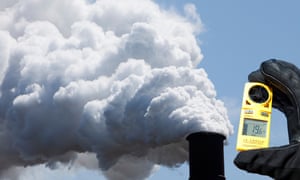
Emissions from a steelworks
The Australian Climate Roundtable
 warns unconstrained climate change
will have serious consequences unless
 net greenhouse gas emissions are cut to zero.
Launched to coincide with UN climate talks in Madrid, a joint statement by 10 groups under the Australian Climate Roundtable banner warns that unconstrained climate change would have serious economic, environmental and social impacts in Australia, and avoiding it would bring benefits and opportunities.
“Our overarching aim is for Australia to play its fair part in international efforts to achieve this while maintaining and increasing its prosperity,” the statement says.

Read the story from The Guardian by Adam Morton and Katharine Murphy - “Business, unions and farmers urge Australia to cut net greenhouse gas emissions to zero.” 

26 August, 2019

Regional ‘Climate Guides’ to inform on-farm risk management

Climate variability is one of the biggest challenges in agriculture. One season too dry; the next too wet. From frost to heatwaves, each extreme has its own risk. While it is impossible to control the weather, a better understanding of climate risk can help primary producers minimise its potential to impact on their business. 
The Climate Guides are being prepared in consultation
 with local stakeholder across the 56 Australia’s Natural
Resource Management regions.
A new series of region-specific Climate Guides are being developed to give producers the information they need to understand their environmental assets and reduce business risk.
The guides are being developed by the Bureau of Meteorology and CSIRO in collaboration with local stakeholders around the country. They will provide information on the local climate and its variability for each of the 56 Natural Resource Management regions across Australia. 
Each guide will give primary producers and regional communities facts about the likelihood, severity and duration of key weather variables that affect the resilience of their businesses and communities. 

Read the story from the Climate Kelpie Blog - “Regional ‘Climate Guides’ to inform on-farm risk management.”

06 August, 2018

‘The time for excuses is over': Energy ultimatum delivered to states

A high-powered coalition of business, energy and agricultural groups have laid down the gauntlet to Labor state governments, demanding they pass the National Energy Guarantee this week or voters will pay the price. 
Minister for Environment and Energy Josh Frydenberg.
The Labor led cabinets of Victoria and the ACT are set to debate their position on the contentious policy on Monday, days before Environment Minister Josh Frydenberg calls on them to sign up before it heads back to the Coalition party room.

The ultimatum from the Business Council of Australia, National Farmers’ Federation, Australian Energy Council and three other lobby groups warns "households cannot afford the costs of yet another cycle of political sparring, indecision and inaction”.


Read the story from The Age by Eryk Bagshaw and Peter Hannam - “‘The time for excuses is over': Energy ultimatum delivered to states.”

21 April, 2018

Sunburnt Country review: Joelle Gergis on a fraught future with climate change

Sunburnt Country by Joƫlle Gergis.
More than half a century ago, the French historian Ferdinand Braudel issued a challenge to historians, arguing the time had come to look past the business of nations and empires and their narratives of progress, and instead engage with what he termed the longue duree.

Likening the social time of traditional history to "a surface disturbance" or "waves stirred up by the powerful movement of tides", he argued the time had come to try to explore what he called geographical time, in the hope of divining the deeper currents that flow through human affairs, shaping them across generations, centuries, even millennia.

As the historian Tom Griffiths has observed, Braudel's formulation has taken on new urgency in recent years. As our impact on the planet has grown the division between geological time and human time has collapsed, demanding we recognise the radical interconnectedness of processes, phenomena, even ideas we would once have regarded as separate. As temperatures rise and icecaps melt, it is no longer possible to pretend the business of our everyday lives and their dependence upon cheap energy does not have planetary implications, or that the planet's changing climate will not affect us personally and collectively.


Read the review by James Bradley from today’s Age - “Sunburnt Country review: Joelle Gergis on a fraught future with climate change.”

23 March, 2018

Joining forces to accelerate low-carbon technology

Here is a copy of the webinar “Redefining the role of business and sport: How they can join forces to accelerate low-carbon technology resources across different sectors” the appeared to step around the elephant in the room - our proclivity to criss, cross the world, often taking tonnes of equipment with us, in pursuit of various sports.

The observations made on an earlier post, concluded that if we are serious about mitigating and adapting to the rigours of climate change, then a victim of that adaptation will be international sport, at least as it is presently played.


Watch the webinar here.

16 March, 2018

Coming soon: the Amazon of energy

What platforms like Amazon, WhatsApp, Spotify and Facebook have taught us over the last few years is that size matters. Once such a business reaches a certain scale, it produces customer benefits that cannot be matched by smaller platforms. This is often described as “network effects”.

These businesses then have almost monopoly power. Their access to huge amounts of data about their customers and their value chain enables them to continuously improve the user experience and/or extract more revenue from those users which, in turn, increases their market penetration and competitive advantage.

To date, we have not seen any platform businesses in energy, but my view is that we will see them soon. All that is needed is two things: a trusted customer-facing platform and a back-office platform that combines the purchasing and trading of energy together with the management of customer demand.


Read the EnergyPost story - “Coming soon: the Amazon of energy.”

02 March, 2018

Redefining The Role Of Business & Sport: How Can They Join Forces To Accelerate Low-Carbon Technologies Across Different Sectors.

Can you imagine a world where combating climate change is an exciting and inspiring opportunity, an opportunity to harness the power of the best, to raise the bar, to overcome hurdles and to redefine the role of business and sport in society?

Climate change is one of the greatest challenges facing our society, already affecting natural environments and people around the world. In 2017, global CO2 emissions have risen again, after being flat for 3 years. Hence, global greenhouse gas emissions in 2020 are likely to be at the high end of the range projected by scientists under the 2°C and 1.5°C temperature scenarios, making it increasingly difficult to be on track to meet the global 2030 emission goals.


11 December, 2017

Business sustainability and climate change discussion for Shepparton

A woman with an acute understanding of business sustainability and climate change will speak in Shepparton later this month.

Dr Sarah Birrell Ivory.
Dr Sarah Birrell Ivory will be a guest at a lunch on Wednesday, December 20, hosted jointly by the Committee for Greater Shepparton and La Trobe University.

Dr Ivory is an Early Career Fellow in Climate Change and Business Strategy at the University of Edinburgh where she recently established the Global Challenge for Business compulsory first-year course for all undergraduate students.

She is a member of the Centre for Business and Climate Change which develops dedicated educational and research material relating to aspects of business and management that impact, or are impacted by, climate change issues.

She is also a member of the Sustainable Business Institute which advises and engages with the business and wider community on sustainability issues.

Dr Ivory also teaches Climate Change and Environmental Policy in the Master of Science Carbon Finance as a part of a team delivering the strategic leadership module in the flagship MBA program at the Edinburgh University. 

She worked in Singapore and Australia before moving into academia and attended St Brendan’s Primary School in Shepparton and then the Shepparton High School before moving to the Presbyterian Ladies College in Melbourne.

The hour-long lecture at the Shepparton campus of La Trobe University starts 12:15 pm following a light lunch at 11:45n am.


More information from Rebecca White at the Committee for Greater Shepparton, phone 5821 9177.

21 November, 2017

Severe dry to cut grain harvest in half

The severe dry that has smashed crops in NSW and southern Queensland is expected to slash total grain production this season and affect business conditions in farming communities where grain is a key industry, the nation's largest agribusiness has warned.

GrainCorp's underlying net profit surged in fiscal 2017 to $142 million.
Discussing GrainCorp's bumper full-year results for fiscal 2017, including an underlying net profit that nearly tripled to $142 million, managing director Mark Palmquist said this year's harvest would be "tremendously smaller", and in response the company would run a leaner harvest operation, with some sites to stay closed because of the lower volumes.

GrainCorp, an integrated grains handler, exporter and processor, said while the crop would be substantially smaller than last year, production would be skewed towards Victoria and southern NSW.

Rabobank senior grains and oilseeds analyst Cheryl Kalisch Gordon said Rabobank had forecast a "national drop of 41 percent from last year's record grain harvest. This is also down 19 percent on the five-year average prior to last year, which really puts the drop in context.


Read Darren Gray’s story in the Melbourne Age - “Severe dry to cut grain harvest in half.”

29 October, 2017

Logging of Victorian old-growth forest ‘cannot proceed’, lawyers say

A Victorian government-owned business is poised to clear-fell hundreds of hectares of spectacular old-growth forest, in a move lawyers say is unlawful and which they intend to halt through the supreme court if necessary.

 VicForests is poised to clear-fell hundreds
 of hectares of spectacular old-growth forest.
The area about to be logged by VicForests contains countless trees that are centuries old. It is made up of two forest types that are required by law to have 60% marked by the government as “special protections zones” that can’t be logged – a step that has not been taken.

Environmental Justice Australia (EJA) has written to the Victorian Department of Environment, Land, Water and Planning, arguing that, in order to protect 60% of those forest types, the areas that are about to be logged must be included in the special protection zones.


Read Michael Slezak’s story on The Guardian - “Logging of Victorian old-growth forest ‘cannot proceed’, lawyers say.”

15 August, 2017

New CBA case a warning: Step up on climate change, or we’ll see you in court

In a global first, Australian mum-and-dad shareholders Guy and Kim Abrahams have launched a case against the Commonwealth Bank, arguing that the bank has breached the law by not disclosing the risks climate change poses to its business.

“Banks, investors and super funds have a choice: step up
on climate change today and become leaders, or face
similar action as more shareholders step forward to
 take them on over their failure to act.” 
Buying their shares over 20 years ago, Guy and Kim were making “an investment in their children’s futures”. A climate-changed world of financial risk, social upheaval and environmental degradation is clearly not the future they signed up for.

Climate change is an immediate threat to the entire global financial system. This was the ominous warning that came from the Australian Prudential Regulation Authority earlier this year. And they’re taking it seriously, declaring that they’ll be stress-testing the Australian financial system to force the financial sector to do more to transition to a clean economy. They’re right to do so.

Climate change is the “tragedy of the horizon,” governor of the Bank of England Mark Carney warned in a landmark speech in Berlin last year.

“We don’t need an army of actuaries to tell us that the catastrophic impacts of climate change will be felt beyond the traditional horizons of most actors – imposing a cost on future generations that the current generation has no direct incentive to fix”, he said.


Read John Hewson’s story in The Guardian - “New CBA case a warning: Step up on climate change, or we’ll see you in court.”

04 August, 2017

Feel the power: Malcolm Turnbull summons electricity retailers to Canberra for summit

Prime Minister Malcolm Turnbull has thrown the switch to brow-beating, calling in the nation's biggest electricity retailers for face-to-face talks next Wednesday in a bid to curb galloping household and business electricity bills, and improve their market sensitivity.

Prime Minister Malcolm Turnbull puts in ear
plugs during a visit to the Snowy Hydro plant. 
In comments that go some way to vindicating claims from one of his backbenchers that people would die this winter from not being able to afford heating, Mr Turnbull says the cost pressures from sky-rocketing energy prices are leading families to avoid turning on heating and lights, and that businesses are doing the same with plants.


Read  Mark Kenny’s story in today’s Melbourne Age - “Feel the power: Malcolm Turnbull summons electricity retailers to Canberra for summit.”

05 December, 2016

'Water for Victoria' - new report

One chapter is devoted to climate change.
The Victorian Government has set a new long-term direction for managing Victoria’s precious water resources.

Water for Victoria is a plan for a future with less water as Victoria responds to the impact of climate change and a growing population. The actions set out in the plan support a healthy environment, a prosperous economy with growing agricultural production, and thriving communities.

Water for Victoria was developed following extensive community consultation, including with the agriculture sector, business, Traditional Owners, recreational groups, water corporations and catchment management authorities.

The Water for Victoria discussion paper, published in March 2016, received 272 submissions. Over 700 people also contributed their ideas, knowledge and opinions on Victoria’s water priorities at 27 community and stakeholder workshops across Victoria in April 2016.

Check out the report - “Water for Victoria.”

16 July, 2016

British government axes its energy and climate change department

Closure decision by new British government
"plain stupid" - Ed Milibrand.
The government has axed the Department of Energy and Climate Change (Decc) in a major departmental shake-up.

The brief will be folded into an expanded Department of Business, Energy and Industrial Strategy under Greg Clark.

Ed Miliband, the former energy and climate secretary under Labour, called the move "plain stupid".

It comes at a time when campaigners are urging the government to ratify the Paris climate change deal.

Read the BBC story - “Government axes climate department.”

24 May, 2015

Partnership could influence energy-intensive companies to cut emissions


A

 partnership between CDP, UN Global Compact, World Resources Institute and WWF launches today, to encourage influential energy-intensive companies from around the world to set carbon emission reduction targets which are in line with climate science.

Announced today at the Business and Climate Summit during Climate Week Paris – which is convened by The Climate Group – the ambitious Science Based Target initiative aims to recruit 100 companies by the end of 2015, who by joining, will offer a leading example to their peers by setting emission targets compliant with the scientifically-acknowledged global temperature rise limit of 2 degrees Celsius.

The new targets are critical because even though 80% of the biggest 500 companies in the world told CDP they had emission reduction goals in place in 2014, only a few of those reached the scale required to properly address the threat of climate change.

'Open for business' - an ideologically conditional stance


T

exas, like Australia, is open business.

That is, of course, only if the incoming business has ideological approval.

Tesla, the maker of the world’s most advanced electric cars, brings to Texas a transport idea that contradicts the fossil fuel energy-based traditional car industry that has infiltrated every segment of Texas society.

Treehugger reports, in its story - “Texas to Tesla: Get off my lawn...”  - that “Tesla might have won a battle in the relatively small state of Maryland, but it was just served a defeat on the larger battleground of Texas.”

15 May, 2015

Climate change and the global coffee business clash


I

n the past, companies that dominate the global coffee business have managed their supply risk by diversifying their suppliers.

Now a quarter of production in Brazil, the largest producer of high-quality Arabica coffee, is under direct threat from climate change, and rising temperatures are expected to undermine the commercial viability of Arabica coffee in many of the world’s coffee-growing regions.

In the next two decades, this systemic failure across many regions will require companies to radically change their production models and sourcing relationships.

Yes, the price of your favourite coffee will increase due to climate change, but there is hope that the risks involved will change the entire industry for the better.

25 March, 2015

Neo-liberal 'open for business' plan misses renewable energy boom


O

n becoming Prime Minister, Tony Abbott declared “Australia was open for business.”

Maybe so, except that it was neo-liberal approved business he was referring to and did not accommodate or allow for Australia’s renewable energy businesses.

And now the Climate Council says that Australia is lagging behind the world's major economies when it comes to renewable energy generation.

This they point out, is the case despite the fact that Australia has enough renewable energy resources to power the country 500 times over.

The Climate Council story - “The global renewable energy boom: how Australia is missing out” – says: “Globally, renewable energy is now cost-comparative or cheaper than fossil fuels for generating electricity, and the cost of wind and solar in particular is projected to continue to fall steeply.”

19 March, 2015

Business savings through cutting greenhouse gas emissions


T

he debate about climate change in Australia has been hijacked in recent years by claims that reducing greenhouse gas emissions means unacceptable costs on business and consumers. Be it wiping out Whyalla or $100 roasts, the rhetoric has been overblown and absurd.

Sydney's Clover Moore.
Writing on The Guardian’s website, the Lord Mayor of Sydney, Clover Moore, has championed a partnership between business and government which has reduced city’s carbon emissions by 35 per cent and is saving $30m a year.

Ms Moore says, “The annual report of the Better Buildings Partnership released this week demonstrates what sensible businesses know is true: that action on climate change is not just good for the planet, it can be good for the bottom line.”

Her story - “Sydney businesses cotton on: climate change action is good for the bottom line” – said that in making these reductions, Partnership members have also slashed our collective energy bills by $30m a year.