Showing posts with label understanding. Show all posts

05 January, 2019

Why we’re so useless at cutting carbon.

If our success in mitigating climate change relies upon understanding it, our success must also rely upon our understanding of why we have been so bad at combatting it so far. We are partially in denial, as this piece in the New York Magazine highlights, but there are other key reasons, like a lack of technology (or cheap technology), obsession with economics, and political will to act. Here’s a look into some of them.
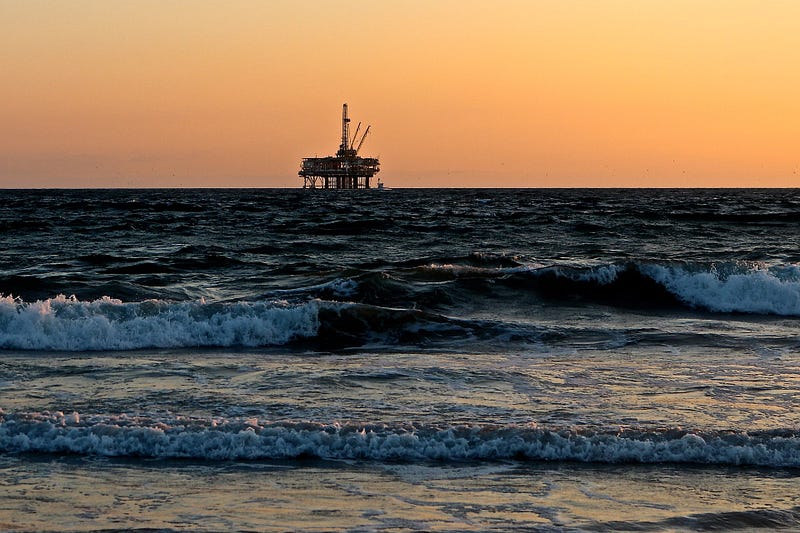
If we are serious about mitigating climate change,
we need to leave the oil in the ground.
When I say we are in denial, I mean not that we don’t believe, but that we aren’t willing to accept the reality or our duties. That’s because, to take the analysis of the linked article further, the model of climate change that we understand is so far removed from day-to-day reality. Take this as a basic model:
- humans emit lots of carbon dioxide:
- this carbon goes into the atmosphere and contributes to the enhanced greenhouse effect;
 - this means more heat is trapped within the atmosphere, warming the planet up.


Read the Medium story by Dave Olsen - “Why we’re so useless at cutting carbon.”

22 December, 2017

Bookchin on brute power and manipulation

Murray Bookchin, writing in “Post-Scarcity Anarchism”, said: “No less important is the fact that man can often produce changes in an ecosystem that would vastly improve its ecological quality. But these efforts require insight and understanding, not the exercise of brute power and manipulation.”

11 December, 2017

Business sustainability and climate change discussion for Shepparton

A woman with an acute understanding of business sustainability and climate change will speak in Shepparton later this month.

Dr Sarah Birrell Ivory.
Dr Sarah Birrell Ivory will be a guest at a lunch on Wednesday, December 20, hosted jointly by the Committee for Greater Shepparton and La Trobe University.

Dr Ivory is an Early Career Fellow in Climate Change and Business Strategy at the University of Edinburgh where she recently established the Global Challenge for Business compulsory first-year course for all undergraduate students.

She is a member of the Centre for Business and Climate Change which develops dedicated educational and research material relating to aspects of business and management that impact, or are impacted by, climate change issues.

She is also a member of the Sustainable Business Institute which advises and engages with the business and wider community on sustainability issues.

Dr Ivory also teaches Climate Change and Environmental Policy in the Master of Science Carbon Finance as a part of a team delivering the strategic leadership module in the flagship MBA program at the Edinburgh University. 

She worked in Singapore and Australia before moving into academia and attended St Brendan’s Primary School in Shepparton and then the Shepparton High School before moving to the Presbyterian Ladies College in Melbourne.

The hour-long lecture at the Shepparton campus of La Trobe University starts 12:15 pm following a light lunch at 11:45n am.


More information from Rebecca White at the Committee for Greater Shepparton, phone 5821 9177.

09 December, 2017

Cities of hope: Tim Flannery on tackling the challenge of climate change

Our understanding of the way the Earth’s system works has grown significantly over the past decade. Earlier this year, scientists published an equation called the Anthropocene Equation. For the past four billion years, the factors that have affected the Earth’s climate are listed in that equation. They are the astronomical forces, the geophysical forces, and the internal dynamics of the system. But over the past 40 years, we must add another factor into that equation, which is the H factor – the human factor. Because of that factor, the impact of industrialised societies, we are now driving Earth’s climate system at rates 170 times faster than the natural factors have done, historically. So, H is big. We are a big influence, now, on Earth’s climate system.

Tens of thousands of people around Australia have marched
 for credible climate change action, with over 10,000 taking
 to the streets in Melbourne in 2014.
Why are we such a big influence? Because we are shifting so much carbon from the Earth’s crust into the atmosphere. The atmosphere is one of the smaller organs of our planet – it’s about 1/500th the size of the oceans. So, it’s small, and very dynamic, and we are moving lots of carbon into it. As of 2010, we are emitting 49 gigatons of CO2 equivalent every year. Data that has just come out for 2016 shows that, in fact, emissions have grown again, by about three percent. So, we are well in excess of 50 gigatons of CO2 equivalent now.


Read the Fore-ground story by Tim Flannery - “Cities of hope: Tim Flannery on tackling the challenge of climate change.”

26 December, 2016

Inertia on the pathway to decarbonisation

One of the biggest challenges in understanding climate change is that the timescales involved are far longer than most people are used to thinking about.
Garvey points out that this makes climate change different from any other ethical question, because both the causes and consequences are smeared out across time and space:


Steve Easterbrook.
“There is a sense in which my actions and the actions of my present fellows join with the past actions of my parents, grandparents and great-grandparents, and the effects resulting from our actions will still be felt hundreds, even thousands of years in the future. It is also true that we are, in a way, stuck with the present we have because of our past. The little actions I undertake which keep me warm and dry and fed are what they are partly because of choices made by people long dead. Even if I didn’t want to burn fossil fuels, I’m embedded in a culture set up to do so.” (Garvey, 2008, p60)

Part of the problem is that the physical climate system is slow to respond to our additional greenhouse gas emissions, and similarly slow to respond to reductions in emissions. The first part of this is core to a basic understanding of climate change, as it’s built into the idea of equilibrium climate sensitivity (roughly speaking, the expected temperature rise for each doubling of CO2 concentrations in the atmosphere). The extra heat that’s trapped by the additional greenhouse gases builds up over time, and the planet warms slowly, but the oceans have such a large thermal mass, it takes decades for this warming process to complete.

Read Steve Easterbrook’s report on Serendipity - “Inertia on the pathway to decarbonisation.”