Showing posts with label risks. Show all posts

19 July, 2019

Great Barrier Reef authority urges 'fastest possible action' on emissions

The federal agency that manages the Great Barrier Reef has made an unprecedented call for urgent action to reduce greenhouse gas emissions, warning only the “strongest and fastest possible action” will reduce the risks to the natural wonder.
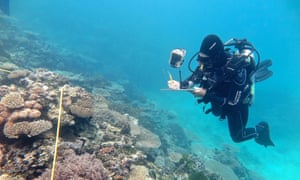
Great Barrier Reef
The Great Barrier Reef Marine Park Authority says it is ‘critical’ global temperature rises remain within 1.5 degrees.
The Great Barrier Reef Marine Park Authority has published a climate position statement that says the reef is already damaged from warming oceans and it is “critical” global temperature rises remain within 1.5 degrees.

The Coalition government has been criticised for overseeing four straight years of increases in national emissions and experts say it will not meet the country’s Paris target under current climate policy.


Read the story from The Guardian by Lisa Cox - “Great Barrier Reef authority urges 'fastest possible action' on emissions."

21 April, 2018

Super funds shy on backing climate change votes

Super funds remain reluctant to back shareholder motions calling for more transparency from Australian companies on climate change risks, despite supporting similar proposals targeting companies in the US, research suggests.
Australian funds backed a motion targeting Occidental
Petroleum, but many declined to support votes against local companies.
And the research, produced by NGO Market Forces, argues that super funds are also lagging on their own standards of transparency, with many making only limited disclosures about how they voted at company meetings - and some not revealing this information at all.

Market Forces examined the proxy voting records of Australia's 50 biggest super funds to track how they voted on 53 climate change-related shareholder resolutions at company AGMs in Australia and the US.

Such resolutions, which are common in the US and have become more frequently used in Australia, often call on companies to disclose more information about how climate change may impact their operations, and the steps they are taking to respond to its risks. Company boards usually recommend shareholders vote against the resolutions.


Read the story by Ruth Williams from The Age - “Super funds shy on backing climate change votes.”

15 November, 2017

High energy costs make vulnerable households reluctant to use air conditioning: study

The trifecta of rising electricity prices, soaring temperatures and concerns over possible blackouts risks increasing heat-related deaths and illness this summer, as households struggle to afford to run cooling appliances.
With a hot summer forecast, keeping cool will put
 a strain on financially vulnerable households.
Over the past year, our Heatwaves, Homes & Health research project has investigated the impact of electricity policy on heat-vulnerable and financially constrained households in Melbourne, Dubbo and Cairns. Many of these households live in poor quality homes that typically heat up quickly and cool down slowly.

Our findings reveal that schemes to reduce energy demand (like raising electricity prices during heatwaves and encouraging electricity conservation to avoid blackouts) could increase health and wellbeing risks, unless they take into account housing, health and socioeconomic disadvantages.


15 August, 2017

New CBA case a warning: Step up on climate change, or we’ll see you in court

In a global first, Australian mum-and-dad shareholders Guy and Kim Abrahams have launched a case against the Commonwealth Bank, arguing that the bank has breached the law by not disclosing the risks climate change poses to its business.

“Banks, investors and super funds have a choice: step up
on climate change today and become leaders, or face
similar action as more shareholders step forward to
 take them on over their failure to act.” 
Buying their shares over 20 years ago, Guy and Kim were making “an investment in their children’s futures”. A climate-changed world of financial risk, social upheaval and environmental degradation is clearly not the future they signed up for.

Climate change is an immediate threat to the entire global financial system. This was the ominous warning that came from the Australian Prudential Regulation Authority earlier this year. And they’re taking it seriously, declaring that they’ll be stress-testing the Australian financial system to force the financial sector to do more to transition to a clean economy. They’re right to do so.

Climate change is the “tragedy of the horizon,” governor of the Bank of England Mark Carney warned in a landmark speech in Berlin last year.

“We don’t need an army of actuaries to tell us that the catastrophic impacts of climate change will be felt beyond the traditional horizons of most actors – imposing a cost on future generations that the current generation has no direct incentive to fix”, he said.


Read John Hewson’s story in The Guardian - “New CBA case a warning: Step up on climate change, or we’ll see you in court.”

05 November, 2015

Short video clarifies danger, risks and costs of fossil fuels


T
his three minute YouTube from Carbon Tracker Initiative - “Fossil Fuels: A Risky Business?” – helps us understand a little about the danger, risks, and costs, associated with fossil fuels.