Showing posts with label increase. Show all posts

21 December, 2019

Australia 'absolutely' must take more action on climate change: Michael McCormack

Acting Prime Minister Michael McCormack has agreed Australia must increase its efforts to tackle climate change and says the bushfires gripping NSW and other parts of the country have increased community fears about global warming.
Michael McCormack says Australia needs to do more on climate change.
In a final press appearance while filling in for Prime Minister Scott Morrison - who is on his way home from an abridged family holiday in Hawaii - Mr McCormack agreed that "further action" was needed to contribute to global efforts to lower emissions.
"Yeah I do, absolutely - I do agree entirely," he told reporters in Wagga Wagga on Saturday.

Read the story from The Age by Dana McCauley - “Australia 'absolutely' must take more action on climate change: Michael McCormack.”

19 November, 2019

Huge Tesla battery in South Australia primed for big upgrade

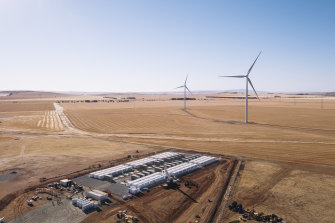
The largest lithium-ion battery in the world – Tesla's big battery in South Australia – will undergo a 50 per cent expansion in a move its owners hope will increase the stability of the grid and reduce power bills.
French energy giant Neoen has announced plans to expand the capacity of the huge Tesla battery installed at the Hornsdale Power Reserve in South Australia by 50 per cent.
French energy giant Neoen has announced plans to expand the capacity
 of the huge Tesla battery installed at the Hornsdale Power Reserve in
South Australia by 50 per cent.
Tech billionaire Elon Musk's Tesla built the huge battery in a remote area of South Australia in 2017. The battery system has the capacity of 100 megawatts and can store 129 megawatt-hours of energy from wind turbines nearby – enough to supply 30,000 homes for eight hours.
The battery system's capacity will now be increased to 150 megawatts under an expansion plan put forward by French energy giant Neoen, the owner of the site, with the support of Tesla and the state and federal governments.
Paired with the adjacent Hornsdale wind farm, Tesla's grid-scale battery, known as the Hornsdale Power Reserve, has helped reduce intermittency and manage increased demand during summer when the grid is under the most strain. In its first year of operation, it saved consumers more than $50 million, according to Neoen.

Read the story from The Sydney Morning Herald by Nick Toscano - “Huge Tesla battery in South Australia primed for big upgrade.”

22 June, 2019

Australia’s energy exports increase global greenhouse emissions, not decrease them

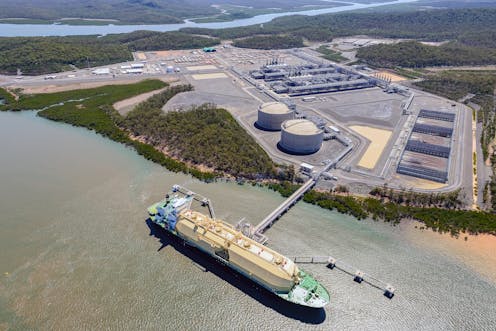
When unveiling government data revealing Australia’s rising greenhouse emissions, federal energy minister Angus Taylor sought to temper the news by pointing out that much of the increase is due to liquefied natural gas (LNG) exports, and claiming that these exports help cut emissions elsewhere.
Image result for Australia’s energy exports increase global greenhouse emissions, not decrease them
Australia’s LNG exports aren’t as good for the
planet as the government seems to think

LNG exports, Taylor argued, help to reduce global emissions by replacing the burning of coal overseas, which has a higher emissions factor than gas. In reality, Australian gas displaces a mix of energy sources, including gas from other exporters. Whether and to what extent Australian gas exports reduce emissions, therefore, remains unclear. Meanwhile, Australia’s coal exports clearly do increase global emissions.

The way Australia can help clean up world energy systems in the future is through large-scale production and export of renewable energy.


Read the story from The Conversation by Frank Jotzo and Salim Mazouz - “Australia’s energy exports increase global greenhouse emissions, not decrease them."

03 June, 2019

United Nations Says 80 Countries May Ramp Up Climate Pledges

UNITED NATIONS — About 80 countries want to increase their climate pledges ahead of schedule under the Paris climate accord, the United Nations said Tuesday, signaling that some of them would do so at a summit of world leaders in September.
United Nations Secretary-General António Guterres
 has made climate change a signature issue.
Luis Alfonso de Alba, a Mexican diplomat who is currently the United Nations Secretary General’s envoy on climate change, declined to say which countries were expected to announce higher climate ambitions, nor whether they would be enough to make a difference to the fate of the world.

Even if every country were to meet the pledges already made under the 2015 Paris agreement — and they are nowhere on track to do so — it would be insufficient to avert the worst effects of climate change. An “exponential increase in ambition,” Mr. de Alba said, is needed.


Read the story from The New York Times by Somini Sengupta - “United Nations Says 80 Countries May Ramp Up Climate Pledges.”

16 May, 2019

Coalition’s climate policy has allowed heavy industry to increase emissions by nearly a third

Heavy industry companies in Australia have been given the green light to increase their greenhouse gas emissions by nearly a third without penalty under the Coalition’s climate change policy.
The most recent data, for 2017-18, shows emissions
from large industry are up 12% since 2015. The
Coalition’s climate policy has allowed them to increase
by nearly a third without penalty.
An analysis of a scheme known as the “safeguard mechanism”, part of the Coalition’s Direct Action policy, found the government regulator has approved a 32% increase in how much large industrial facilities are allowed to emit each year since the policy was introduced.

While not every company emits up to their limit under the scheme, the most recent data, for 2017-18, shows emissions from large industry are up 12% since 2015.


02 May, 2019

Emissions from big polluters will 'fully erode' the benefits of Coalition's climate policy

Energy analysts Reputex say Morrison government rules that allow polluting companies to increase their greenhouse gas emissions will wipe out all environmental benefits claimed under its centrepiece climate change policy, the Emissions Reduction Fund.
Analysis by Reputex suggests emission increases from
big polluters will wipe out the benefits of the Coalition's
 investment in emissions reduction.
A so-called safeguard mechanism attached to the $2.55 billion fund is supposed to ensure that pollution reductions are not offset by emissions increases elsewhere. But Reputex says exemptions granted to industrial polluters will lead to huge emissions increases to 2030, effectively cancelling out carbon savings made under the fund.


24 March, 2019

How Japan became the world leader in floating solar power

How do you increase your solar energy output when you need all your land for agriculture and for housing? Answer: take to the water. That’s just what they are doing in Japan.

The world’s first floating solar plant was built in Japan, in Aichi Prefecture in central Honshu. The country’s many inland lakes and reservoirs are now home to 73 of the world's 100 largest floating solar plants and account for half of those plants’ 246 megawatts of solar capacity.


Read the World Economic Forum story by Douglas Broom - “How Japan became the world leader in floating solar power.”

27 February, 2019

‘A battery with no plug': Labor backs Snowy 2.0, but calls for more renewable firepower.

Opposition Leader Bill Shorten has put Labor behind Snowy 2.0 - the hydro-electric project green-lighted by Prime Minister Scott Morrison on Tuesday - but called for an increase in renewable energy to prevent the mega-project from being "a battery with no plug”.
Minister for Energy Angus Taylor, Prime Minister Scott
Morrison and Minister for Finance and the Public Service
 Mathias Cormann speak to the media during a visit to the
Snowy Hyrdo Tumut 3 power station in Talbingo, NSW.
Mr Morrison on Tuesday revealed that Snowy 2.0, a policy favourite of former prime minister Malcolm Turnbull that makes renewable energy more reliable by linking it up with hydro-electric power stations, will be given $1.38 billion in government funding.

With works set to begin next week, Labor has all but backed the plan, albeit with reservations over its effectiveness under the government's renewable energy plan.

"Yes, Snowy 2.0 is a good idea on paper, no question," Mr Shorten said, before claiming the government's conservative renewable energy target would make the project more inefficient.


22 December, 2018

Hot and Indigestible Carbon Dioxide

Last July, the concentration of CO2 in the atmosphere was 408 ppm. In the last 400 million years, a CO2 concentration 300 ppm was considered high. Therefore the high concentration of CO2 we are experiencing now was never reached in the last half billion year. This increase will for sure have an impact on how plants will be growing in the next decades.
History of the Earth atmospheric CO2 concentration.
Plants are actually happy to have more CO2 available in the atmosphere, more CO2 means more food. CO2 is the basic components of plants and it is actually the base for all biological molecules. Through photosynthesis, plants are able to catch the carbon from the CO2 and put it into chains of carbon also known as carbohydrates or sugar.

The rise of CO2 is expected to increase the rate of photosynthesis and therefore improve global vegetation growth. This greening of the Earth could potentially mitigate climate change by taking carbon out of the atmosphere and store it into trees. Various models have predicted the Earth to become more green in cold areas especially in high mountainous regions. However, even if CO2 is more abundant for plants to grow, water scarcity and soil nutrient deficiency can limit plant growth.


Read the Medium story by Thaûn Sarzynski - “Hot and Indigestible Carbon Dioxide.”

07 August, 2018

Earth at risk of 'hothouse climate' where efforts to reduce emissions will have no impact, study finds

If humans cause the earth's global average temperature to increase by a further 1 degree Celsius, the world could face a "hothouse" climate and trigger further warming — even when all human emissions cease, an international study has found.
Australia needs to stop pretending it is tackling climate change.
The study titled Trajectories of the Earth System in the Anthropocene, which involved researchers from around the world, was published in the international journal Proceedings of the National Academy of Sciences of the United States of America (PNAS).

It found the Earth was heading for a tipping point, known as a "hothouse" climate, which could lead to average temperatures up to 5C higher than pre-industrial temperatures and rises in sea level of between 10 and 60 metres.

Lead researcher Professor Will Steffen from the Australian National University (ANU) said at that point much of the earth would be uninhabitable.


28 April, 2018

Friday essay: recovering a narrative of place - stories in the time of climate change

Five years ago, I was invited to participate in a global project on climate change. The aim was to engage 15-year-old students with the challenges posed by climate change and the increase of extreme weather events. The students would be asked to respond to the challenge through creativity, initially through an introduction to the science underpinning climate change. In the following 18 months, I visited schools in Ireland, England, Germany and Poland, and also worked with a group of students at Footscray City College in Melbourne. The project would culminate in an environmental youth summit at the International Literature Festival Berlin.

Before the outsiders arrived in Wurundjeri country this billabong
 enjoyed a vital ecological connection with other waterways.
I consider myself an innovative and engaging teacher, and looked forward to the project. It took me only the one class to realise the challenge would be a difficult one. What I discovered in speaking to students was that while they were in no way “anti-science”, headline-grabbing climate change scepticism had impacted on their faith in their own ability to understand science, highlighting what I’ve always believed to be the motivation of sceptics: the undermining of our own confidence to think and grasp ideas.


Read the piece from The Conversation by a Lecturer in Creative Writing from Victoria University, Tony Birch - “Friday essay: recovering a narrative of place - stories in the time of climate change.”

14 April, 2018

Banking on solar power

Australian businesses investing in solar power for their own use will see a massive 400 per cent increase this year, according to the regulator. And Shepparton businesses are joining in, with hundreds of businesses having installed substantial systems, ranging from 10 to 500 kilowatts.


Clean Energy Regulator executive general manager Mark Williamson said the growth of businesses investing in solar plants had been underestimated.

Two years ago Mr Williamson predicted commercial and industrial solar sector would be cumulatively putting on a large scale renewable power station every year.

That milestone is set to be reached this year.

‘‘It’s really taking off . . . the capacity in applications for commercial and industrial-sized systems between 100 kW and 1 mW (for 2018) is going to smash last year,’’ Mr Williamson said.

‘‘In Shepparton, you now have five power stations (over 100 kW) with a capacity of 1.94 mW, that’s equivalent to about 400 households.’’

The Greater Shepparton region has a further 431 installations between 10 and 100 kW, with a total capacity of 9.66 mW, with more in the pipeline.

SCS Plastics business operations manager Andrew O’Sullivan said the installation of a 300 kW plant had been a game changer.

‘‘We’re quite a large consumer of power (and) we have noticed a significant reduction in our power bills, particularly over the summer months. We’ve seen a reduction of between $4000 and $6000 a month,’’ Mr O’Sullivan said.

‘‘The solar is basically driving our business for three to four hours a day.’’

When the Wheeler St, Shepparton, business closes its doors on weekends its solar plant continues to work, so 100 per cent of the generated power goes into the electricity grid, bringing in further Mark Williamson financial gains.

Mr O’Sullivan said SCS Plastic’s plant had been built with the help of a low-interest loan, sourced through the Greater Shepparton City Council.

SCS Plastic’s decision to invest in solar was a purely commercial decision.

The price of power and the skyrocketing percentage of total spend led to the investment, Mr O’Sullivan said.

And that investment is being copied across the country as the Clean Energy Regulator is inundated with applications, outpacing the growth in household solar installations.

‘‘Obviously there’s been a lot of focus on electricity prices and I think a lot of businesses as well as households have been looking at that,’’ Mr Williamson said.

‘‘It’s really a combination of electricity prices going up and cost of systems going down.

‘‘While we’re still seeing very steady growth in the household level, the economies of scale for industrial systems are much better.

‘‘We are looking at an exponential growth rate . . . Australia has the biggest penetration of rooftop solar in the world (and) the headline story here is that business is embracing solar in a really big way.’’

Story from The Shepparton News by Myles Peterson - “Banking on solar power.”

15 March, 2018

Warmer Arctic winters linked to more 'Snowzillas' in US north-east

The warming Arctic Ocean is linked to a two-to four-fold increase in the frequency of severe winter storms in the eastern US, according to a new study by American scientists.
Extreme snow storms have been on the increase in
north-eastern US, particularly since 1990, new research shows.
The massive storms regularly get dubbed evocative names such as "Snowzilla" or "Snowcopalypse" when they hit populated regions such as New York, stirring debate over the role of climate change.

The new study, published Wednesday in Nature Communications, noted human-induced global warming was "widely expected to increase certain weather extremes, including more intense and frequent heat waves and droughts”.


Read Peter Hannam’s story from The Age - “Warmer Arctic winters linked to more 'Snowzillas' in US north-east.”

19 February, 2018

Emissions increases approved by regulator may wipe out $260m of Direct Action cuts

Nearly 60 Australian industrial sites have been given the green light to increase greenhouse gas pollution, potentially cancelling out hundreds of millions of dollars of public spending on emissions cuts under the Coalition’s Direct Action climate policy.
Citic Pacific’s Sino Iron project in the Pilbara is
among the industrial sites that have been allowed
to increase emissions under the safeguard mechanism.
The increases have been quietly approved under the “safeguard mechanism”, which was introduced as part of Direct Action to ensure cuts paid for using the main part of the policy – the emission reduction fund – were not undone by emissions increasing in other parts of the economy.

Under the safeguard mechanism, government agency the Clean Energy Regulator sets an emissions limit for each large industrial site based on its highest level of emissions over the previous five years. But companies can apply to have the limit recalculated.


18 February, 2018

Sea Level Rise Is Accelerating: 4 Inches Per Decade (or More) by 2100

The rate of sea level rise is accelerating so fast that some coastal communities could confront an additional 4 inches per decade by the end of the century—a growing concern now confirmed by thorough measurements from space.
Rising sea levels increase the risk of storm surge flooding in coastal cities
like Charleston, South Carolina, shown here after Hurricane Matthew.
 
At that rapid pace of change, vulnerable communities might not be able to keep up. Storm surges will increase erosion and damage homes, businesses and transportation infrastructure in some areas. In other places, seawater will intrude on freshwater aquifers. In South Asia and the islands, people will lose the land where they live and farm. And the changes will arrive much faster than they do today.

Scientists have been warning about this speed-up for many years based on computer climate simulations. A new study released Monday confirms the modeled trend with a detailed analysis of satellite observations spanning a quarter of a century.


Read the Inside Climate News story by Bob Berwyn - “Sea Level Rise Is Accelerating: 4 Inches Per Decade (or More) by 2100.”

15 January, 2018

Electric cars are breaking our roads, here's how

In 2018, Australia's roads are plagued with problems: the long-term decline in the road death toll has slowed, congestion is tipped to increase and long commutes are linked to poor mental health.

And now a multi-billion-dollar road funding black hole looms.

It's caused by the growing popularity of fuel-efficient cars, prompting a multi-generational reset to national roads policy which will change how you pay to drive.

For the people who rely most on their vehicles, that means trouble.


Read the ABC News story - “Electric cars are breaking our roads, here's how.”

27 December, 2017

$180bn investment in plastic factories feeds global packaging binge

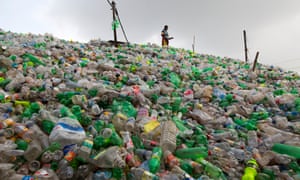
The global plastic binge which is already causing widespread damage to oceans, habitats and food chains, is set to increase dramatically over the next 10 years after multibillion-dollar investments in a new generation of plastics plants in the US.
One million plastic bottles are bought around the world every minute, with most ending up in landfill or in the sea.
One million plastic bottles are bought around the world every
 minute, with most ending up in landfill or in the sea. Photograph:
Fossil fuel companies are among those who have ploughed more than $180bn since 2010 into new “cracking” facilities that will produce the raw material for everyday plastics from packaging to bottles, trays and cartons.
The new facilities – being built by corporations like Exxon Mobile Chemical and Shell Chemical – will help fuel a 40% rise in plastic production in the next decade, according to experts, exacerbating the plastic pollution crisis that scientist warn already risks “near permanent pollution of the earth.”


Read Matthew Taylor’s story on The Guardian - “$180bn investment in plastic factories feeds global packaging binge.”

08 December, 2017

Water bills headed 'same way as energy' as population gains, climate change bite

Urban water users face water bills that will increase by half within a decade and continue to climb without "substantial" reform as rising population and climate change add stress to ageing networks, Infrastructure Australia said in a new report.

People could be paying a lot more for water in the future. 
The future surge will build on a steady run-up in costs in recent years even as total water consumption has stagnated since the 1980s, with consumers responding to calls for more thrifty use.

The paper, Reforming Urban Water, also argues poor planning processes led to an $11 billion splurge on desalination plants that – with the exception of Perth – have largely gone unused and precluded cheaper short-term measures.

Victoria earlier this year ruled out a second plant after its multi-billion dollar Wonthaggi was left on standby since its completion five years ago.


Read Peter Hannam’s story in today’s Melbourne Age - “Water bills headed 'same way as energy' as population gains, climate change bite.”

01 November, 2017

World greenhouse gas levels made unprecedented leap in 2016

Global average carbon dioxide concentrations rose by 0.8% during 2016, the largest annual increase ever observed. According to figures released overnight by the World Meteorological Organisation, atmospheric CO₂ concentrations reached 403.3 parts per million. This is the highest level for at least 3 million years, having climbed by 3.3 ppm relative to the 2015 average.
The unprecedented rise is due to carbon dioxide emissions from fossil fuels (coal, oil and gas) and the strong 2015-16 El Niño event, which reduced the capacity of forests, grasslands and oceans to absorb carbon dioxide from the atmosphere.


Read the piece on The Conversation by a trio of authors - “World greenhouse gas levels made unprecedented leap in 2016."