Showing posts with label oceans. Show all posts

27 September, 2019

IPCC report: extreme sea level events will be ‘once a year’ by 2050

The latest IPCC report ‘Ocean and Cryosphere in a Changing Climate’ highlights the damaging consequences of endured changes to our oceans and frozen waters.

The report, put together by more than 100 scientists from more than 30 countries, assessed the latest scientific knowledge about the impacts of climate change on ocean, coastal, polar and mountain ecosystems, and the human communities that depend on them.
The report says that even if emissions came to a halt immediately, extreme events will occur every year by 2050 in many regions, increasing risks for many low-lying coastal cities and small islands.
To limit the damage caused by the events, the IPCC warn that major investments in adaptation are required to reduce low lying costal islands being exposed to increased flood risks.
The report highlights that the ocean and the cryosphere play a critical role for life on Earth and on the human population. A total of 670 million people in high mountain regions and 680 million people in low-lying coastal zones depend directly on these systems.
Read the ClimateAction story by Rachel Cooper - “IPCC report: extreme sea-level events will be ‘once a year’ by 2050.”


26 September, 2019

PM’s claim ocean plastics are 'more immediate threat' disputed by scientists.

Prime Minister Scott Morrison's claim that plastic pollution in the oceans is a more immediate threat than climate change has been trashed by Associate Professor Nerilie Abram, an Australian scientist who helmed the United Nations' report on rising sea levels.
Prime Minister Scott Morrison delivers the Australian National Statement to the United Nations General Assembly in New York.
Australia's PM, Scott Morrison, attempts to distract
people with his discussion about plastics. 
In his statement to the United Nations early on Thursday (AEST), Mr Morrison promised more policies to clean up the ocean, deal with plastics recycling and crack down on illegal fishing.
"To protect our oceans, Australia is committed to leading urgent action to combat plastic pollution choking our oceans, tackle over-exploitation of our fisheries, prevent ocean habitat destruction and take action on climate change," he said.
Mr Morrison had already told reporters: "We need to take action on climate change, but there are actually issues like plastics in our oceans which present even more immediate threats".
Read the story from The Age by Benjamin Preiss - “PM’s claim ocean plastics are 'more immediate threat' disputed by scientists.”


(We would still be in desperate trouble because of the climate crisis even if our oceans were totally free of plastic: plastic is not the problem rather, it is clearly and unequivocally the human caused damage to Earth’s climate system. Scott Morrison is deflecting the conversation and as Australia’s Prime Minister he needs to do better - Robert McLean)

19 May, 2018

Understanding more about our oceans with The Drum

Few of us know much about our oceans, although for Australians we are surrounded by them, you might say  “girt by sea”.

Play episode, The Drum 18/5/2018

Friday night’s ABC program, “The Drum”, saw the entire program devoted to better understanding the threats facing our oceans.

Host, Julia Baird, was joined by Prof Jessica Meeuwig from University of Western Australia, author and journalist James Woodford, Senior Research Scientist at the CSIRO Denise Hardest, & Bob Kearney from the University of Canberra.

Spend 45 minutes viewing it on The Drum.

31 March, 2018

Less laundry less often: how to lighten the washday load on the environment

The clothes we wash and wear each week might seem unconnected to the growing plastic pollution crisis in our oceans but a sobering truth is emerging.
 Front-loading washing machines use far less energy and water.
With each wash, synthetic fabrics shed thousands of plastic particles, leading to broad-scale contamination of waterways. Now it appears we’re drinking that plastic, with a study of tap water in various countries finding 83% of samples were contaminated with plastic fibres.

Doing the laundry has other environmental implications, too, from the water and power used to the harmful substances hidden in common detergents. A more natural approach to laundry is crucial for the health of humans and the planet, so consider our practical steps on how to make the switch.


03 March, 2018

Spotlight: 'Plastic is more dangerous in the oceans than on land’

Malcolm Doyle is as mad as hell about plastic pollution on our beaches and oceans and, what's more, he's prepared to do something about it. Last year, the 28-year-old spent his annual leave cleaning up 60 beaches from Adelaide to Port Douglas. He estimates two-thirds of the litter was plastic, especially flimsy takeaway bags, beverage bottles and coloured bottle tops that some sea birds mistake as food. "I never felt so positive from the community support and disheartened by the level of waste at the same time," he recalls.
Malcolm Doyle.
Recent headlines warning that our oceans will have more plastic than fish by 2050 may seem incredible, but in reality it may be worse, observes Doyle. The throwaway society has gone global, with plastic production predicted to double in the next 20 years, according to Science magazine. The Plastic Vortex, the swirling mass of garbage bobbing in the north Pacific Ocean, is already twice the size of Texas, according to Greenpeace. Now scientists, who have got better at detecting chemicals in our bodies, are finding that even tiny quantities of plastic toxins can have potentially serious impacts on human health.


Read The Sydney Morning Herald story by Greg Callaghan - “Spotlight: 'Plastic is more dangerous in the oceans than on land’.”

23 February, 2018

Our acid oceans will dissolve coral reef sands within decades

Carbonate sands on coral reefs will start dissolving within about 30 years, on average, as oceans become more acidic, new research published today in Science shows.

Carbonate sands, which accumulate over thousands of years from the breakdown of coral and other reef organisms, are the building material for the frameworks of coral reefs and shallow reef environments like lagoons, reef flats and coral sand cays.

But these sands are sensitive to the chemical make-up of sea water. As oceans absorb carbon dioxide, they acidify – and at a certain point, carbonate sands simply start to dissolve.

The world’s oceans have absorbed around one-third of human-emitted carbon dioxide.


Read the piece on The Conversation by the Professor of Biogeochemistry from the Director of the Centre for Coastal Biogeochemistry at Southern Cross University, Bradley Eyre - “Our acid oceans will dissolve coral reef sands within decades.”

20 February, 2018

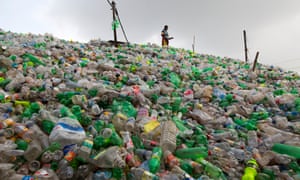
Eight million tonnes of plastic are going into the ocean each year

You might have heard the oceans are full of plastic, but how full exactly? Around 8 million metric tonnes go into the oceans each year, according to the first rigorous global estimate published in Science today.

That’s equivalent to 16 shopping bags full of plastic for every metre of coastline (excluding Antarctica). By 2025 we will be putting enough plastic in the ocean (on our most conservative estimates) to cover 5% of the earth’s entire surface in cling film each year.

Around a third of this likely comes from China, and 10% from Indonesia. In fact all but one of the top 20 worst offenders are developing nations, largely due to fast-growing economies but poor waste management systems.


19 January, 2018

Surfing event in Hawaii accomplishes zero carbon emissions

During the Vans Triple Crown of Surfing, event organisers celebrated sustainability by managing to deliver a zero carbon emissions event while raising awareness about oceans protection among surfers and visitors.
The Vans Triple Crown of Surfing in Hawaii was a zero carbon emissions event.
The Vans Triple Crown of Surfing is a three-event series taking place at Haleiwa, Sunset, and the Banzai Pipeline beaches in Hawaii, attracting an average of 25,000 visitors on competition days putting significant environmental stress on the beaches.

Against this challenge, Vans partnered with Sustainable Coastlines Hawaii, an environmental organisation dedicated to improving consumer behaviour to tackle ocean pollution. They launched a comprehensive sustainability initiative to alleviate the carbon footprint of the event and made sure that visitors do not leave a negative environmental impact in the area.


Read the Climate Action story - “Surfing event in Hawaii accomplishes zero carbon emissions.”

02 January, 2018

The Most Powerful Evidence Climate Scientists Have of Global Warming

Earth's temperature is rising, and it isn't just in the air around us. More than 90 percent of the excess heat trapped by greenhouse gas emissions has been absorbed into the oceans that cover two-thirds of the planet's surface. Their temperature is rising, too, and it tells a story of how humans are changing the planet.

This accrued heat is "really the memory of past climate change," said Kevin Trenberth, the head of climate analysis at the National Center for Atmospheric Research and co-author of a new paper on ocean warming.

It's not just the amount of warming that is significant—it's also the pace.

The rate at which the oceans are heating up has nearly doubled since 1992, and that heat is reaching ever deeper waters, according to a recent study. At the same time, concentrations of carbon dioxide in the atmosphere have been rising.

The charts that follow show how the oceans are changing and what they're telling us as a thermometer of global warming.


Read the Inside Climate News story by Sabrina Shankman and Paul Horn - “The Most Powerful Evidence Climate Scientists Have of Global Warming.”

27 December, 2017

$180bn investment in plastic factories feeds global packaging binge

The global plastic binge which is already causing widespread damage to oceans, habitats and food chains, is set to increase dramatically over the next 10 years after multibillion-dollar investments in a new generation of plastics plants in the US.
One million plastic bottles are bought around the world every minute, with most ending up in landfill or in the sea.
One million plastic bottles are bought around the world every
 minute, with most ending up in landfill or in the sea. Photograph:
Fossil fuel companies are among those who have ploughed more than $180bn since 2010 into new “cracking” facilities that will produce the raw material for everyday plastics from packaging to bottles, trays and cartons.
The new facilities – being built by corporations like Exxon Mobile Chemical and Shell Chemical – will help fuel a 40% rise in plastic production in the next decade, according to experts, exacerbating the plastic pollution crisis that scientist warn already risks “near permanent pollution of the earth.”


Read Matthew Taylor’s story on The Guardian - “$180bn investment in plastic factories feeds global packaging binge.”

12 December, 2017

Great Barrier Reef will be dead by 2100, says David Attenborough's Blue Planet II

London: Coral reefs – including Australia's Great Barrier Reef – will be dead by 2100 due to human "maltreatment of the oceans", David Attenborough's Blue Planet II has declared.

Sir David Attenborough - he says the Great Barrier Reef
will be dead by 2100 due to our maltreatment of the oceans.
 
Attenborough's follow-up documentary series, which took four years to film and produce, finished airing in Britain on Sunday night (local time). It ended with his grim warning about the state of our oceans, which Attenborough said were "under threat now as never before.”

He said climate change, plastic pollution and over-fishing were all contributing to the demise of coral reefs.

Blue Planet II has been Britain's most-watched show of 2017, with 14 million tuning into the first episode of the wildlife series. Nine will air the seven-part series on free-to-air television in Australia in 2018.


Read Latika Bourke’s story in today’s Melbourne Age - “Great Barrier Reef will be dead by 2100, says David Attenborough's Blue Planet II.”

05 October, 2017

The Most Powerful Evidence Climate Scientists Have of Global Warming

Earth's temperature is rising, and it isn't just in the air around us. More than 90 percent of the excess heat trapped by greenhouse gas emissions has been absorbed into the oceans that cover two-thirds of the planet's surface. Their temperature is rising, too, and it tells a story of how humans are changing the planet.
This accrued heat is "really the memory of past climate change," said Kevin Trenberth, the head of climate analysis at the National Center for Atmospheric Research and co-author of a new paper on ocean warming.

It's not just the amount of warming that is significant—it's also the pace.

The rate at which the oceans are heating up has nearly doubled since 1992, and that heat is reaching ever deeper waters, according to a recent study. At the same time, concentrations of carbon dioxide in the atmosphere have been rising.


15 September, 2017

On grief and climate change

I am the daughter of a father born on the floor of a displaced persons’ camp after a Holocaust that almost wiped out his entire community. I am also the daughter of a mother born in freedom, peace and civility whose privilege informed a deep gratitude and joy for life. The dual gift of these legacies inform me every day. I know that tragedy and trauma are often man-made. That showing up and personal fortitude are often forged in the fire of recovery and renewal. I take these lessons into account when I am wracked with grief about climate change.

Dumbo Feather’s publisher and editor-in-chief,  Berry Liberman.
The arctic ice shelf just cracked off, meaning a trillion ton of ice has now entered our oceans. We are in strange and frightening territory of our own making. The weather is our only compass and it is wild and vengeful in places where peoples are the most vulnerable. Issue 52 of Dumbo Feather, and the content we’ll be sharing online over the next eight weeks, is an attempt to have a purposeful conversation about how we can collectively remain engaged and active in campaigning for the renewal of our eco-systems which are crashing and destabilising all around us.


Read the piece by Dumbo Feather’s publisher and editor-in-chief, Berry Liberman - “On grief and climate change.”

16 August, 2017

Scientists searching for the 'Goldilocks' oyster which best adapts to climate change

Marine scientists in New South Wales are working to understand how reduced pH levels and increased temperatures in oceans, both projected with climate change, impact oysters.

Pauline Ross, Wayne O'Connor and Laura Parker
work on oysters coping with climate change.
Farmers in NSW grow approximately 4,000 tonnes of oysters each year, about one-third of Australia's total production.

Internationally, Australia's output of 12,000 tonnes per year is relatively small compared to countries like China and France.

But after a decade's work, the researchers from the NSW Department of Primary Industries (DPI) and the University of Sydney are drawing on analysis from their initial phases of research.


03 August, 2017

Earth Overshoot Day: We used a year's worth of resources in seven months

There is a date every year when the world's resource bank goes into overdraft.

At current rates, we use the resources of 1.7
Earths each year, according to the Global
Footprint Network.
This year, Earth Overshoot Day is marked globally on August 2. For the rest of year we're in the burning red.

It's the point when the amount of natural resources — think trees, fish and water — humanity takes from the Earth reaches the total that can be regenerated over the entire year.

It's when the amount of carbon emitted reaches the amount the forests and oceans are able to absorb.
This year it happened in seven months, according to the Global Footprint Network.


24 January, 2016

'Seabin' will help clean up world's oceans


The world’s oceans have become humanity’s great dumping ground.

However, two Australian surfers have become disenchanted about that and have come with an idea to help with what is a massive clean-up.

04 July, 2015

Billions need us to pay attention to our oceans


O

ceans cover some seventy per cent of the earth’s surface and being instrumental in the survival of billions, it is important that we pay attention to their health.

In the broad scope of events, scant attention has been paid to what and how human behaviour has impacted on this critical part of the earth’s eco-system.

And now the Director, Global Change Institute at The University of Queensland, Ove Hoegh-Guldberg, has written on The Conversation about how we are failing to pay attention to how global warming is impacting on our oceans.

His story - “New report: the chance to rescue the world’s oceans from climate change is drifting away” – says, “Yet the ocean system could not be more important: it regulates the global temperature and atmosphere, feeds 3 billion people, and largely determines our weather.”

26 March, 2015

Our 'pool of worries' doesn't take in ocean circulation


W

orld-scale events, such as climate change, fall well outside the “pool of worries” of most people.

Most find that the relatively complex task of surviving another day in our market driven world – paying the mortgage, the school fees, rates, fuel, buying food and a mass of other things – leaves little room for thinking about seemingly irrelevant things such as the circulation of the world’s oceans.

That change in our oceans brought on by the climate change/global warming dilemma, however, demands our attention.

A story in the Washington Post - “Global warming is now slowing down the circulation of the oceans —with potentially dire consequences” – brings new and discussion about of another potential mega-scale perturbation.

06 October, 2014

Our last unexplored wilderness is heating up, fast


Earth’s oceans, some say, are our last unexplored wilderness.

Unexplored they maybe, but they are not unknown with the sensitivity to rising global temperatures being well known.

Today’s Melbourne Age carries a report, headed: “Southeastern oceans warming fast: report”, reminds us that those massive watery expanses are playing a key role in the mitigation of climate change.

However, the clocking ticking and as the report explains our oceans are heating up quickly and they play a key role in regulating earth’s temperature.

23 March, 2013

Holding your head up as the dilemma worsens


It is becoming increasingly difficult to keep you head up as the news about climate change, and its implications, become increasingly worryingly.

The collapse of our oceans discussed in the CNN story:  “Overfished and under-protected: Oceans on the brink of catastrophiccollapse” that illustrates the emerging difficulties of humanity’s increasing ecological footprint.

Earth’s oceans are often the forgotten environmental sink and the CNN story says: “Remoteness, however, has not left the oceans and their inhabitants unaffected by humans, with overfishing, climate change and pollution destabilizing marine environments across the world”.