Showing posts with label crisis. Show all posts

31 March, 2020

Coronavirus is a wake-up call: our war with the environment is leading to pandemics

The COVID-19 pandemic sweeping across the world is a crisis of our own making.
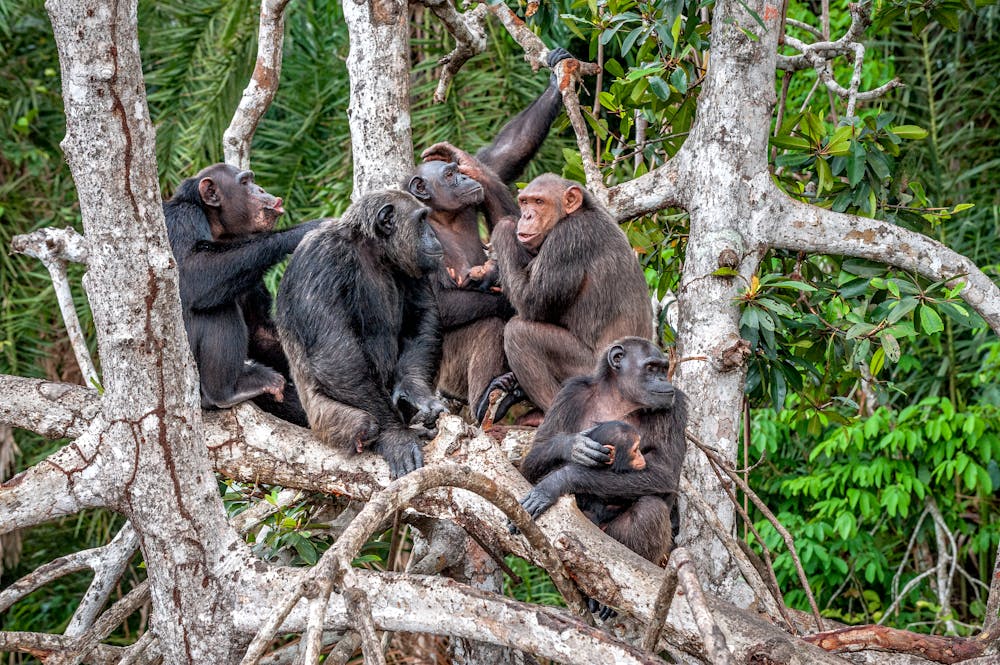
Coronavirus is a wake-up call: our war with the environment is ...
Land use changes forced chimpanzees and bats near human food resources.
That’s the message from infectious disease and environmental health experts, and from those in planetary health – an emerging field connecting human health, civilisation and the natural systems on which they depend.
They might sound unrelated, but the COVID-19 crisis and the climate and biodiversity crises are deeply connected. 
Each arises from our seeming unwillingness to respect the interdependence between ourselves, other animal species and the natural world more generally.

26 March, 2020

A Green Reboot After the Pandemic

EW YORK – The COVID-19 coronavirus has forced entire countries into lockdown mode, terrified citizens around the world, and triggered a financial-market meltdown. The pandemic demands a forceful, immediate response. But in managing the crisis, governments also must look to the long term. One prominent policy blueprint with a deep time horizon is the European Commission’s European Green Deal, which offers several ways to support the communities and businesses most at risk from the current crisis.
COVID-19 reflects a broader trend: more planetary crises are coming. If we muddle through each new crisis while maintaining the same economic model that got us here, future shocks will eventually exceed the capacity of governments, financial institutions, and corporate crisis managers to respond. Indeed, the “coronacrisis” has already done so.

The Club of Rome issued a similar warning in its famous 1972 report, The Limits to Growth, and again in Beyond the Limits, a 1992 book by the lead author of that earlier report, Donella Meadows. As Meadows warned back then, humanity’s future will be defined not by a single emergency but by many separate yet related crises stemming from our failure to live sustainably. By using the Earth’s resources faster than they can be restored, and by releasing wastes and pollutants faster than they can be absorbed, we have long been setting ourselves up for disaster.


Read the Project Syndicate story - “A Green Reboot After the Pandemic.”


23 January, 2020

What I learnt about the Australian bushfires living on the edge of the Sahara Desert

From 1981 to 1999 my family and I lived in Niger Republic, a borderland of the Sahara Desert. 
Tony Rinaudo clips a plant growing in a dry field.
Tony Rinaudo prunes a thorny acacia tree, which helps
transform useless-looking "desert bushes" into potential trees.
I was in charge of a small reforestation project. The hard-earned lessons acquired during that period serve me to this day.
When I arrived in 1981, I was confronted by an environment on the cusp of ecological collapse and barely able to support life. 
The country was in undeclared crisis. In 1984, Niger faced famine. 
Severe drought and crop failure the previous year precipitated this crisis. 
Deforestation and land degradation over previous decades significantly exacerbated the impact. 

17 May, 2019

24 Magazine Covers About Climate Change

We know that the clock is ticking on climate change, yet the sheer volume of news can make it tough for even the most conscientious citizen to comprehend the full scale of the crisis. 


So for Earth Day, we created a different way to read about climate change: an all-cover issue of The Washington Post Magazine, with each cover illustrating an aspect of climate change that The Post wrote about in the past year or so. 

Scroll down to see the stories — and the covers we created to highlight them.


Check out this story from The Washington Post - “24 Magazine Covers About Climate Change.”

17 May, 2018

A solution for the recycling crisis: turn plastic into energy

Australia's recycling crisis needs us to look into waste management options beyond just recycling and landfilling. Some of our waste, like paper or organic matter, can be composted. Some, like glass, metal and rigid plastics, can be recycled. But we have no immediate solution for non-recyclable plastic waste except landfill.
A worker separates plastic bottles at a recycling depot in Beijing.
At a meeting last month, federal and state environment ministers endorsed an ambitious target to make all Australian packaging recyclable, compostable or reusable by 2025. But the ministers also showed support for processes to turn our waste into energy, although they did not specifically discuss plastic waste as an energy source.


Read Muxina Konarova’s comment in The Age - “A solution for the recycling crisis: turn plastic into energy.”

09 April, 2018

A billion kilograms of recycling in need of a new home

The scale of Australia's recycling crisis is twice as bad as initially feared, with new figures showing that well over a million tonnes of metal, paper and plastics previously sent to China now has to be accommodated elsewhere.
Chris Philp, general manager of Wheelie Waste,  amongst a
day's worth of recycling from the Victorian town of
Kyneton, population approximately 7000.
Such a vast amount of rubbish is hard to wrap your head around, so we've converted the figures to regular household recycling items. The illustrations are indicative only, because the range of materials recycled in each category is much broader and includes building waste, industrial packaging and many other types.

But this should give you some indication of the amount of rubbish we're talking about. Remember, this is material that was once exported to China that is now, largely, piling up at Australian waste centres.


Read the story by Mark Solomon from The Age - “A billion kilograms of recycling in need of a new home.”

31 March, 2018

Less laundry less often: how to lighten the washday load on the environment

The clothes we wash and wear each week might seem unconnected to the growing plastic pollution crisis in our oceans but a sobering truth is emerging.
 Front-loading washing machines use far less energy and water.
With each wash, synthetic fabrics shed thousands of plastic particles, leading to broad-scale contamination of waterways. Now it appears we’re drinking that plastic, with a study of tap water in various countries finding 83% of samples were contaminated with plastic fibres.

Doing the laundry has other environmental implications, too, from the water and power used to the harmful substances hidden in common detergents. A more natural approach to laundry is crucial for the health of humans and the planet, so consider our practical steps on how to make the switch.


08 March, 2018

No bin collections for thousands as recycling crisis intensifies

Tens of thousands of people in two council areas northwest of Melbourne have had their bin collections cut off as the state's recycling crisis intensifies.
Wheelie Waste general manager Chris Philp among
a day's worth of collected recycling from Kyneton.
The Age believes that another 13 councils are on rolling payment plans with their bin contractors, with concerns any of those deals could fall over at any moment.

Macedon Ranges Shire Council – which covers nine towns including Kyneton, Lancefield and Gisborne – and Mount Alexander Shire Council – which takes in eight towns including Castlemaine and Maldon – were told by waste collector Wheelie Waste on Wednesday morning that it would no longer collect rubbish.

Despite a day of crisis meetings, the situation was unresolved on Wednesday evening.


Read the story by Liam Mannix in The Age - “No bin collections for thousands as recycling crisis intensifies.”

14 September, 2017

In the US, now is never the time to talk about climate change

Washington: It's as bizarre as it is American – the immediate aftermath of a crisis is never the time to debate what might have caused it. 

A woman walks through the debris at the Seabreeze
 trailer park in the Florida Keys on Tuesday, after
Hurricane Irma hit the area. 
Big losses in the wars in Iraq and Afghanistan? No – to question the wisdom or management of the wars was to disrespect the memory of soldiers who had died. 

Gun violence? No, no – talking about gun control after yet another massacre is insensitive to the grief of the victims' families.

And so it was on the weekend, when a reporter was rude enough to ask US Environmental Protection Agency chief Scott Pruitt about the impact of climate change on monster hurricanes that have been smashing southern states, he responded: "To have any kind of focus on the cause and effect of the storm; versus helping people, or actually facing the effect of the storm, is misplaced…very, very insensitive to these people in Florida.”


Read the story by Paul McGeough in today’s Melbourne Age - “In the US, now is never the time to talk about climate change.”

09 April, 2017

Toshiba’s nuclear flagship goes bust after $10 billion losses

The rapidly-evolving nuclear power crisis escalated dramatically yesterday when US nuclear giant Westinghouse, a subsidiary of Japanese conglomerate Toshiba, filed for bankruptcy.
Where Toshiba's $10bn nuclear debt came from:
 the Vogtle AP1000 construction site in
Georgia, under inspection by NRC
Commissioner Svinicki.
The Chapter 11 filing took place in the US Bankruptcy Court for the Southern District of New York in New York City.

Westinghouse and its parent Toshiba are in crisis because of massive cost overruns building four 'AP1000' nuclear power reactors in the southern US states of Georgia and South Carolina.


Read Jim Green’s story on the Ecologist - “Toshiba’s nuclear flagship goes bust after $10 billion losses.”

28 March, 2015

Californian economy poised to collapse because of climate change


C

limate change is poised to force collapse of the world’s seventh biggest economy.

There is, strangely, an irony that the American state most focused on global warming may be its first catastrophic economic collapse victim.

Triple Pundit reports, “California faces one more year of water supply. The state is in the grip of a record drought tied to climate change. This water crisis holds the potential to collapse California’s economy if the state truly runs out of water.”

The story - “Climate Change Puts California Economy at Risk of Collapse” – says, “This is not an article about California. It is about you, in whatever state you live. California’s economy is so large and impacts so many other businesses that its potential collapse due to a water crisis will impact the pocketbooks of most Americans.”

09 March, 2015

The alarm bells ring, but we do nothing - what is wrong with us?


Naomi Klein.
“It is our great collective misfortune that the scientific community made its decisive diagnosis of the climate threat at the precise moment when an elite minority was enjoying more unfettered political, cultural, and intellectual power than at any point since the 1920s” - Naomi Klein.

Britain’s Guardian newspaper has taken a stance on climate change and today in the second of a series of articles wonders what is wrong with us?

“The alarm bells of the climate crisis have been ringing in our ears for years and are getting louder all the time - yet humanity has failed to change course. What is wrong with us?

“Many answers to that question have been offered, ranging from the extreme difficulty of getting all the governments in the world to agree on anything, to an absence of real technological solutions, to something deep in our human nature that keeps us from acting in the face of seemingly remote threats, to – more recently – the claim that we have blown it anyway and there is no point in even trying to do much more than enjoy the scenery on the way down,” it says.

05 February, 2012

Wasting too much food and running out of land

Tim Fischer - he says we
 are facing a mass famine.
The former deputy Prime Minister Tim Fischer says the world is approaching a period of mass famine.
Mr Fischer says the world is running out of land, fertiliser, oil and fish, and we waste too much food.
Tim Fischer told the National Press Club it's not too late to start addressing the crisis.
Read the full story here.
Thanks to Beneath the Wisteria  supporter, Chris Halpin, for alerting us to this ABC Rural story.