Showing posts with label thousands. Show all posts

28 January, 2020

The tide is coming: why our beaches are vanishing

Australia is crumbling into the sea. Experts estimate there are hundreds of beaches and coastal communities around the country at risk from coastal erosion. Within decades, as sea levels rise, that number could be in the thousands.
Last year, the Western Australian state government identified 55 “hotspots” where coastal erosion is expected to cause serious issues within 25 years. Towns up and down the coast are seeing roads washed away, and buildings and homes under threat.
In July last year, WA Emergency Services Minister Fran Logan told the ABC that dumping sand on the coast to try and hold the sea back was not a viable long-term solution. Entire coastal communities would simply need to retreat.
It’s the same all over the country. Sections of Victoria’s iconic Great Ocean Road risk being washed away within five years. At Inverloch, south-east of Melbourne, erosion has melted away a remarkable 50 metres of the coast in seven years — including 20 metres since the beginning of 2019. Truckloads of imported sand and a “wet” sand fence have been dumped as protection. The remedy has failed.

Read the story from Crikey by Charlie Lewis and Kishor Napier-Raman - “The tide is coming: why our beaches are vanishing.”


19 January, 2020

Thousands flock to second climate change rally in Melbourne

Thousands of protesters took to Melbourne’s streets for the second time in as many weeks demanding the resignation of Prime Minister Scott Morrison and immediate action on climate change.
The protestors gathered at the State Library.
The protestors gathered at the State Library. 
As 15 bushfires continued to burn in Victoria, the crowd marched from the steps of the State Library, through the streets of the city, chanting "System change on climate change, shut the mines down" and "ScoMo ... we deserve a future too”.
Organisers estimated about 2000 people took to the streets.
Uni Students for Climate Justice co-convener Beth Jackson said their message was simple.
"We’re demanding that Scott Morrison be sacked, we’re demanding that the fossil fuel corporations that caused this pay a levy for what they’ve done, and we're demanding a complete transition to renewable energy," Ms Jackson said.

Read the story from The Age by Tate Papworth - “Thousands flock to second climate change rally in Melbourne.”

26 August, 2019

The Amazon is on fire – here are 5 things you need to know

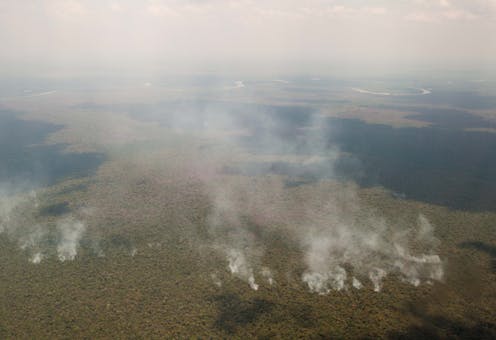
Record fires are raging in Brazil’s Amazon rainforest, with more than 2,500 fires currently burning. They are collectively emitting huge amounts of carbon, with smoke plumes visible thousands of kilometres away.

Image result for The Amazon is on fire – here are 5 things you need to know
Huge fires are raging across multiple regions of the Amazon Basin.
Fires in Brazil increased by 85% in 2019, with more than half in the Amazon region, according to Brazil’s space agency.

This sudden increase is likely down to land degradation: land clearing and farming reduces the availability of water, warms the soil and intensifies drought, combining to make fires more frequent and more fierce.


Read the story from, The Conversation by a PhD candidate from The University of Sydney,  Danilo Ignacio Urzedo - “The Amazon is on fire – here are 5 things you need to know.”

06 April, 2019

London prepares for launch of ultra-low emissions zone

London is preparing to enforce “world-leading” vehicle pollution restrictions from Monday as the capital attempts to clean up the toxic air blamed for thousands of premature deaths.
The ultra-low emission zone will initially cover the
same area as the congestion charge zone but will
 be expanded from 2021.
The ultra-low emission zone, or Ulez, will launch at one minute past midnight, imposing a £12.50-a-day charge to drive into central London in all but the cleanest cars and vans.

The move is expected to reduce road transport emissions by around 45%. The mayor, Sadiq Khan, unveiled research showing that almost 1,000 people a year in the city were hospitalised with asthma caused by pollution.


Read the story from The Guardian by Gwyn Topham - “London prepares for launch of ultra-low emissions zone.”

21 March, 2019

Mozambique rescue teams struggle to save thousands

Rescue teams in Mozambique are struggling to reach the thousands of people stranded on roofs and in trees and urgently need more helicopters and boats as post-cyclone flood waters continue to rise.
Residents stand on rooftops in a flooded area of Buzi,
central Mozambique, after the passage of Cyclone Idai. 
Mozambique, which was hit by Cyclone Idai over the weekend, has declared a state of emergency and is appealing for international help.

Rescue workers, military personnel and volunteers are rushing to save thousands of Mozambicans before flood levels rise further, but with four helicopters, a handful of boats and extremely difficult conditions, have only been able to save about 413 so far.


Read the story from The Guardian by Ruth Maclean and Peter Beaumont - “Mozambique rescue teams struggle to save thousands.”

09 February, 2019

Sydney warned about more storms as many homes remain without power

Thousands of Sydney residents were left without electricity after an intense burst of thunderstorms caused widespread power outages on Friday evening.
Rail lashes Brabyn St in North Parramatta on Friday
after thunderstorms passed over Sydney, Wollongong
 and the Central Coast.
Endeavour Energy had resumed work on Saturday to restore power to about 5,700 properties that remained without power.

“There are nearly 300 electrical hazards needing repairs particularly where trees and large branches have fallen across powerlines,” a statement said.

The Bureau of Meteorology warned that the city could be hit by further storms on Saturday afternoon.


13 January, 2019

Waste crisis looms as thousands of solar panels reach end of life

Thousands of ageing rooftop solar panels represent a toxic time-bomb and major economic waste unless Australia acts swiftly to keep them out of landfill, conservationists and recyclers say.
Solar panel components waiting for
recycling at a Reclaim PV warehouse.
Australia’s enthusiastic embrace of rooftop solar has brought clear environmental and economic benefits, but critics say governments have dragged their feet in addressing the looming waste crisis.

As of December more than 2 million Australian households had rooftop solar installed. The uptake continues to grow due to the technology’s falling cost and rising electricity bills.

Read the story from The Sydney Morning Herald by Nicole Hasham - “Waste crisis looms as thousands of solar panels reach end of life.”


(It seems a little odd to me that we now becoming somewhat agitated about solar panels which have ended their useful life leaving us with a waste stream that is tiny when to compared to the Industrial Age waste littering the world. Exhausted factories and their supporting paraphernalia lie in waste in towns and cities all around the world as do mountains of old motor cars, trucks, buses, trains and other contraptions which supported the human experiment. That doesn't mean, of course, that we should have a dedicated system of disposal for the old solar panels - Robert McLean)

30 November, 2018

Queensland flying fox species decimated by record heatwave

Thousands of threatened flying foxes have dropped dead due to heat stress brought on by extreme temperatures in far north Queensland this week.
 Conservationists estimate more than 4,000 spectacled
 flying foxes have died this week in the heatwave. 
Conservationists and wildlife volunteers estimate more than 4,000 have perished this week during the record heatwave, which has seen temperatures in Cairns reach all-time highs of 42.6C.

The species of flying fox affected is the spectacled flying fox, an endemic Queensland species found in north Queensland.

It’s currently listed as vulnerable under national environment laws but conservationists have been pushing to have the species up-listed to endangered because of declines in the population.

Volunteer carers that have been counting dead animals and taking orphaned young into care say it is the first time the species has suffered mass deaths because of extreme heat.


Read the story from The Guardian by Lisa Cox - “Queensland flying fox species decimated by record heatwave.”

31 October, 2018

The unseen driver behind the migrant caravan: climate change

Thousands of Central American migrants trudging through Mexico towards the US have regularly been described as either fleeing gang violence or extreme poverty.
Honduran migrants taking part in a caravan heading
to the US, walk alongside the road in Huixtla, Chiapas
state, Mexico, on 24 October.
But another crucial driving factor behind the migrant caravan has been harder to grasp: climate change.

Most members of the migrant caravans come from Guatemala, Honduras and El Salvador – three countries devastated by violence, organised crime and systemic corruption, the roots of which can be traced back to the region’s cold war conflicts.


Read the story from The Guardian - “The unseen driver behind the migrant caravan: climate change.”

15 March, 2018

China’s latest energy megaproject shows that coal really is on the way out

China has some of the worst air pollution in the world. In several cities, thick layers of smog are common, resulting in thousands of deaths every year.
The floating solar power station in Anhui province, China. 
According to a 2016 study, the top contributor of air pollution-related deaths in China is the burning of coal. The team of Chinese and American researchers behind the study said that pollution from coal caused 366,000 premature deaths in 2013.

To improve the country's air quality, the Chinese government vows to spend at least $360 billion on clean energy projects and create 13 million new renewable energy jobs by 2020. China is already one of the world's biggest investor in alternative energy sources like solar, wind, and hydropower.


Read the Business Insider story by Leanna Garfield - “China’s latest energy megaproject shows that coal really is on the way out.”

08 March, 2018

The water is coming for Copenhagen; good design could be its best defence

Each day, hundreds of thousands of commuters snake their way across bridges that connect Copenhagen’s many islands. Cyclists, motorists and pedestrians speed over busy canals and race through the thin cobbled streets of the old city, while canal tour boats filled with tourists slowly orbit the centre. On a warm day, the canals are lined with sunbathers jumping from BIG architects’ famous harbour baths, with their distinctive barbershop stripes. Paper Island, in the Christianshavn district, is home to the city’s new pop-up cultural precinct. It is regularly filled with diners, who spill out of the warehouse housing Copenhagen Street Food to watch the sunsets on its banks.
Copenhagen is a city that thrives from its coexistence
with water. By 2100, this relationship will need to be re-negotiated.
Since its beginnings as a Viking fishing village, Copenhagen’s relationship with the Baltic Sea has played a vital role in shaping the city’s culture. Today, canals cordon off its many islands, serving the veins that pump life into its distinct geographical and cultural pockets, such as Christianshavn, even as they divide them. The canals contribute both to Copenhagen’s particular aesthetic and its leading place in global liveability rankings. But the harbour city, whose name has become shorthand for the 2009 UN Climate Change Conference, sees water not only as its biggest asset, but one of its biggest risks.


No bin collections for thousands as recycling crisis intensifies

Tens of thousands of people in two council areas northwest of Melbourne have had their bin collections cut off as the state's recycling crisis intensifies.
Wheelie Waste general manager Chris Philp among
a day's worth of collected recycling from Kyneton.
The Age believes that another 13 councils are on rolling payment plans with their bin contractors, with concerns any of those deals could fall over at any moment.

Macedon Ranges Shire Council – which covers nine towns including Kyneton, Lancefield and Gisborne – and Mount Alexander Shire Council – which takes in eight towns including Castlemaine and Maldon – were told by waste collector Wheelie Waste on Wednesday morning that it would no longer collect rubbish.

Despite a day of crisis meetings, the situation was unresolved on Wednesday evening.


Read the story by Liam Mannix in The Age - “No bin collections for thousands as recycling crisis intensifies.”

04 March, 2018

Ancient carbon discovered coming from Arctic soil

Scientists have published new evidence that old or even ancient carbon, pulled out of the atmosphere and stored in the bodies of plants hundreds or thousands of years ago, is being set loose again from soils in the Arctic region.
The discovery is a potentially worrying indicator that "permafrost"
soils may already be worsening the problem of climate change.
It's a potentially worrying indicator that these "permafrost" soils may already be worsening the problem of climate change. However, scientists are still debating just how much old carbon Arctic soils should release normally even without climate change, leaving the ultimate significance of the findings unclear.


Read Chris Mooney’s story in The Age - “Ancient carbon discovered coming from Arctic soil.”

24 February, 2018

Standing Up for Rural Australia Means Standing Up on Climate Change

The farmers in this ad represent thousands from across Australia who are demanding rural and regional politicians do more to stop damage to our climate harming our livelihoods. 

We must act, to prevent a situation where our kids won’t have the choice to farm like we do.


03 February, 2018

The real cost of McMansions

As Melburnians sweltered through an intense spell of heat and humidity this week, a series of power outages made conditions especially testing for tens of thousands of people.
McMansions were always going to result in high power bills for residents.
Some saw political gains to made by blaming the blackouts on the closure of Victoria's decrepit Hazelwood power station by its French owners last March even though electricity supplies were not the issue.


Read Peter Hannam’s story in today’s Age - “The real cost of McMansions.”

30 January, 2018

Tiny home batteries propping up Victoria's coal-fired power plants

Bill Childs switched on the airconditioning inside his Williamstown house on Sunday to ward off the sticky heat, just like hundreds of thousands of other Victorians.
Bill Childs at home with his solar battery.
But unlike most of us who pay a price for keeping cool on hot days, Mr Childs made a bit of money out of the electricity retailers, as he has on most of the hottest days this summer.


Read Adam Carey’s story from the Melbourne Age - “Tiny home batteries propping up Victoria's coal-fired power plants.”

23 December, 2017

Louisiana, sinking fast, prepares to empty out its coastal plain

WASHINGTON (BLOOMBERG) - Louisiana is finalising a plan to move thousands of people from areas threatened by the rising Gulf of Mexico, effectively declaring uninhabitable a coastal area larger than Delaware.
Flood waters from Tropical Storm Harvey cover a road in Iowa,
 Calcasieu Parish, Louisiana, on Aug 29, 2017
A draft of the plan, the most aggressive response to climate-linked flooding in the US, calls for prohibitions on building new homes in high-risk areas, buyouts of homeowners who live there now and hikes in taxes on those who won't leave. 
Commercial development would still be allowed, but developers would need to put up bonds to pay for those buildings' eventual demolition.


01 December, 2017

Revealing the Methods of Climate-Doubting Blogs

Thousands of scientific papers about climate change are published in journals each year. Far fewer discuss how skepticism toward mainstream climate science spreads.


A group of scientists has now plunged into one of the habitats where so-called climate change skeptics have prospered -- the blogosphere. They found that climate science-doubting blogs cite a small cast of alternative “experts” rather than those with views aligning with the scientific consensus, and seek to undermine all of climate science by casting doubt around limited, hot-button issues.

Nearly all climate scientists agree that Earth’s climate is rapidly warming, that humans are causing it and that if nothing is done, climate change could have catastrophic consequences in the coming decades.

A lively countercurrent of thought exists, however, on internet blogs. Many blogs question how much Earth is warming, how much humans are causing it and whether the warming warrants a major societal response. These blogs are read by millions of people each month, and are often cited by conventional media outlets and by policymakers. So persuasive have climate doubters been that between a third and a half of Americans believe the globe is not warming, or that it is but humans are not the primary cause, according to recent surveys.


Read the Inside Science story - “Revealing the Methods of Climate-Doubting Blogs.”

07 October, 2017

Adani: Thousands turn out across Australia to protest against Carmichael coal mine

A national day of action to oppose the proposed Carmichael coal mine has seen thousands of protesters turn out in locations across Australia.

A Stop Adani sign formed by people on Bondi Beach.
Rallies in locations including Sydney, Brisbane, Melbourne, the Gold Coast and Port Douglas in North Queensland heard messages against Indian company Adani's proposed mine in the Galilee Basin.

Adani has promised thousands of local jobs but opponents say the project will fuel global warming and destroy the Great Barrier Reef.

The ABC's Four Corners program on Monday revealed alleged cases of bribery, corruption and environmentally destructive behaviour by the Adani Group in India.

Adani is seeking a $900-million loan from taxpayers so it can build the railway line from the proposed mine site in the Galilee Basin to the Abbot Point coal port.


19 May, 2017

Where the old things are: Australia’s most ancient tree

They say that trees live for thousands of years. Like many things that “they” say, there is a germ of truth in the saying (even though it is mostly false).
King’s Holly, or Lomatia tasmanica, can form clones nearly 50,000 years old.
The vast majority of trees that burst forth from seeds dropped on the Australian continent die before reaching maturity, and in fact most die within a few years of germination.

But depending on how you define a tree, a very select few trees can live for an astoundingly long time.


Read the piece on The Conversation - “Where the old things are: Australia’s most ancient tree.”