Showing posts with label recovery. Show all posts

17 January, 2020

Grief, frustration, guilt: the bushfires show the far-reaching mental health impacts of climate change.

The bushfires that have ravaged large parts of Australia since September 2019 have resulted in a scale of destruction that will take years, if not decades, of recovery.
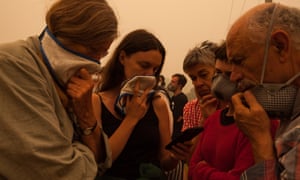
Evacuation meeting of NSW south coast residents
An evacuation meeting of NSW south coast residents. Loss of
 homes and associated identity as well as poor air quality are
major risk factors for mental illness.
The mammoth task that will be Australia’s national bushfire recovery has garnered financial support from numerous private donors and a $2bn commitment from the federal government, including a $76m package allocated to mental health services for affected persons. So what exactly are the expected mental health impacts of the bushfires?
To try and anticipate the direct mental health impacts from the current bushfires, one can look to research conducted after the Black Saturday bushfires of 2009.

06 January, 2020

The bushfires are horrendous, but expect cyclones, floods and heatwaves too

Public attention on the disastrous bushfire crisis in Australia will rightly continue for weeks to come. But as we direct resources to coping and recovery, we should not forget other weather and climate challenges looming this summer.
Image result for The bushfires are horrendous, but expect cyclones, floods and heatwaves too
Bushfires are not the only weather and climate
events set to ravage Australia in coming months.
The peak time for heatwaves in southern Australia has not yet arrived. Many parts of Australia can expect heavy rains and flooding. And northern Australia’s cyclone season is just gearing up. 
The events will stretch the ability of emergency services and the broader community to cope. The best way to prepare for these events is to keep an eye on Bureau of Meteorology forecasts.

Read the story from The Conversation by Professor emeritus from the School of Earth, Atmosphere and Environment, at Monash University, Neville Nicholls -  “The bushfires are horrendous, but expect cyclones, floods and heatwaves too.”

15 September, 2017

On grief and climate change

I am the daughter of a father born on the floor of a displaced persons’ camp after a Holocaust that almost wiped out his entire community. I am also the daughter of a mother born in freedom, peace and civility whose privilege informed a deep gratitude and joy for life. The dual gift of these legacies inform me every day. I know that tragedy and trauma are often man-made. That showing up and personal fortitude are often forged in the fire of recovery and renewal. I take these lessons into account when I am wracked with grief about climate change.

Dumbo Feather’s publisher and editor-in-chief,  Berry Liberman.
The arctic ice shelf just cracked off, meaning a trillion ton of ice has now entered our oceans. We are in strange and frightening territory of our own making. The weather is our only compass and it is wild and vengeful in places where peoples are the most vulnerable. Issue 52 of Dumbo Feather, and the content we’ll be sharing online over the next eight weeks, is an attempt to have a purposeful conversation about how we can collectively remain engaged and active in campaigning for the renewal of our eco-systems which are crashing and destabilising all around us.


Read the piece by Dumbo Feather’s publisher and editor-in-chief, Berry Liberman - “On grief and climate change.”

24 March, 2015

Queensland to spend $30M on disaster recovery centre


Q

ueensland has witnessed the costly reality of climate change and has decided to create a disaster recovery agency.

Queensland Deputy Premier,
Jackie Trad.
According to a story in The Guardian, “The Queensland government is to establish Australia’s first permanent disaster recovery agency to deal with a future of more extreme cyclones and floods brought on by climate change.”

“An ongoing series of natural disasters have cost the state billions since the 2011 floods, which killed 38 people and, according to the World Bank, cost an estimated US$15.9bn ($20bn),” the story says.

Deputy Premier Jackie Trad said the growing number and intensity of disasters like cyclones and floods had been “made clear by key scientists in the field of climate science” and was “the lived experience of regional Queensland”.

The story can be read here - “Queensland to create permanent disaster recovery agency”.