Showing posts with label dramatic changes. Show all posts

05 December, 2019

Morrison carves up environment and energy, praises Taylor for waving big stick

Prime minister Scott Morrison has announced dramatic changes to the federal bureaucracy, with the Department of the Environment and Energy to be abolished, and energy and climate change branches set to be absorbed by the resources department.

Image result for scott morrison
PM Scott Morrison.
Morrison announced the formation of a recombined energy and resources department, creating a new Department of Industry, Science, Energy and Resources, although there was no change in ministerial positions, with the PM voicing his “full confidence” in the embattled Angus Taylor, the minister for energy and emissions reductions.

The environment portfolio will be merged into the agriculture department, with the creation of a new Department of Agriculture, Water and the Environment.

The changes see the environment and energy portfolios once again split up into separate departments.


Read the story from RenewEconomy by Michael Mazengarb - “Morrison carves up environment and energy, praises Taylor for waving big stick.”

04 November, 2019

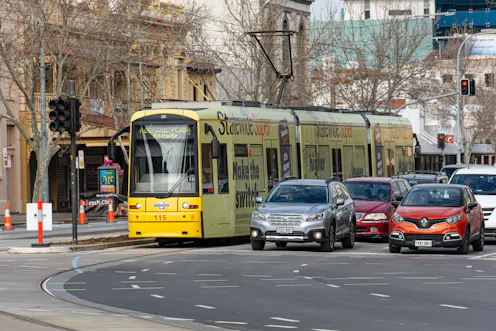
How we feel about our cars means the road to a driverless future may not be smooth

There is a reasonable expectation that autonomous vehicles will dominate the future of transport. Utopian visions suggest these driverless vehicles will lead to dramatic changes to our cities and their transportation. 
Autonomous vehicles operating on a network would allow traffic to move safely and seamlessly through cities. They would use less space per vehicle. Traffic flow would be unhindered by traffic lights or other traditional driver signals. 
Image result for How we feel about our cars means the road to a driverless future may not be smooth
Car owners’ attachment to driving and the willingness
of others to switch from public transport could confound
 rosy predictions for autonomous vehicles.
More efficient transportation would use less fuel. Urban spaces could be repurposed as parking needs virtually disappear.
But this utopian vision depends on a range of factors. In particular, these predictions largely rely on how current car drivers respond to the advent of autonomous vehicles. 
Our research suggests people’s attitudes to driving and their cars could limit the predicted benefits to traffic flow and city efficiency, at least during the initial transition to driverless vehicles. 

Read the story from The Conversation by a Senior Lecturer from the University of Adelaide, Raul A. Barreto -  “How we feel about our cars means the road to a driverless future may not be smooth.”

16 October, 2016

The Cost of Solar Power has 25% decrease in Just 5 months

The future is looking bright for solar as the clean, renewable energy source gets more affordable.
The cost of solar power has
 dropped 25% in just five months.


In just 5 months, the cost of solar went down 25% as shown by two recent construction bids for solar projects in China and Abu Dhabi. On August 11, a bid of $0.46/W was put forward to build 500 megawatts of solar power in China and on September 19 a record low bid of $0.023/kW was submitted for 1.2 gigawatts of solar power in Abu Dhabi.

China and Abu Dhabi are not the only places in the world seeing dramatic changes in the cost of solar. A 100 megawatt solar project in Nevada recently submitted for approval would deliver electricity at $0.04 /kWh. That is the lowest price ever presented or seen from a US solar farm and much lower than the price of electricity for a new nuclear, coal or natural gas power plant.

Read the Solar Trust Centre story - “The Cost of Solar Power has 25% decrease in Just 5 months.”