Showing posts with label work. Show all posts

13 April, 2020

Carbon emissions from fossil fuels could fall by 2.5bn tonnes in 2020

Global carbon emissions from the fossil fuel industry could fall by a record 2.5bn tonnes this year, a reduction of 5%, as the coronavirus pandemic triggers the biggest drop in demand for fossil fuels on record.
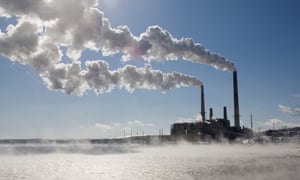
Coal-fired power plant in winter with emissions blowing
Analysts expect a slump in heavy industry to drive
 demand for gas and coal down by about 2.3% each.
The unprecedented restrictions on travel, work and industry due to the coronavirus is expected to cut billions of barrels of oil, trillions of cubic metres of gas and millions of tonnes of coal from the global energy system in 2020 alone, according to data commissioned by the Guardian.
Read the story from The Guardian by Jillian Ambrose - “Carbon emissions from fossil fuels could fall by 2.5bn tonnes in 2020.”

19 March, 2018

Sydney to ditch cars by 2056: report.

Planners envisage that by the middle of this century most Sydneysiders will be able to reach their place of work within 30 minutes using public transport or ‘‘active’’ options, such as walking or riding.

Sights such as this will be substantually lessened by
mid-this century if Sydney's plans come to fruition.
The NSW Government has released its Future Transport Strategy 2056 report, which suggests investment will increasingly be focused on ‘‘three cities’’ built around Western Sydney Airport, Greater Parramatta and the existing CBD.

‘‘Customers will be able to travel to one of these cities or to their nearest centre within 30 minutes of where they live by public or active transport,’’ the report states.

‘‘This will give people better access to access jobs, eduction and essential services.’’

The report suggests getting people out of their cars and using sustainable transport will reduce congestion and emissions and improve air quality and wellbeing.

‘‘Well-planned centres and cities will enable a shift from private cars to public transport and active transport modes, such as walking and cycling,’’ the strategy says.

‘‘In Sydney, the key to this will be the delivery of three 30-minute cities, supported by reliable ‘turn up and go’ mass transit services.’’

Active transport for short trips will be encouraged by providing safe and accessible footpaths with seating and shade.

There’ll also be better pedestrian crossings, lower traffic speeds, separated cycling paths and secure bicycle storage.

The report notes that by 2056 NSW will have more than 12 million residents.

Sydney will be a global city similar in size to London or New York.

Premier Gladys Berejiklian released the transport strategy yesterday alongside the State Infrastructure Strategy and the Greater Sydney Region Plan.

‘‘Now for the first time we have a co-ordinated vision for our state for the next 10, 20, 30 and 40 years,’’ Ms Berejiklian said.

‘‘It’s a plan that makes sure communities can expect to have jobs in their local area, shorter travel times and a better environment, which ensures lots of open and green spaces.’’

Transport Minister Andrew Constance said: ‘‘We want to improve public transport and roads so, that by 2056, 70 per cent of people live within 30 minutes of where they work or study.’’


Story from today’s Shepparton News - “Sydney to ditch cars by 2056: report.”

08 March, 2018

International Women’s Day – Meet the women shaping our future

We’ve all read the stats and we see it every day in the office and on the streets. We want progress, especially in science, technology, engineering and maths (STEM), to get more women in these roles and leading the charge. And we are making progress. Women are changing the world. We’re lucky enough that some of these incredible women work right here. They’re changing the world every day not because they’re women, but because they’re working on curing diseases, saving the environment, exploring the skies, and developing new technology and industries.
Anna Crewell - PhD candidate, CSIRO Ocean and Atmosphere. 
But before we meet some of these amazing women who are helping shape our future, we also want to acknowledge that to shape Australia’s future in with science, we need to consider the next generation and how we can encourage more young girls to consider STEM as a viable career option for them. Many young girls still think that STEM subjects are for boys and they couldn’t succeed in these careers. This is because you can’t be what you can’t see. We need more role models for the future generation so they too can shape our future and #PressforProgress.


Read the CSIROscope story by Nikki Galovic - “International Women’s Day – Meet the women shaping our future.”

12 January, 2018

Where Land Slides, Trying to Learn Why

SANTA BARBARA, Calif. — Water bottle in hand, Dennis Staley crouched over a patch of ground, cleared away surface soil with a finger and poured a couple of drops on the exposed layer.
ON LOCATION Jason Kean, left, and Dennis Staley, scientists
with the United States Geological Survey, exploring the terrain above
Santa Barbara, Calif.
Dr. Staley and a colleague, Jason Kean, researchers with the United States Geological Survey, were taking a break from their work one recent morning in Mission Canyon just above Santa Barbara to offer a show and tell on the interaction of soil and water.

“It will soak in on the surface,” Dr. Staley said. “But just below the surface it’s going to bead up.” Sure enough, the water drops were still visible, as if they had been spilled on a tabletop. “So that enhances the amount of runoff that naturally comes off these slopes,” he said.


Read the New York Times story - “Where Land Slides, Trying to Learn Why.”

19 December, 2017

Stay out of extreme heat today if possible, Shepparton residents warned

Residents are urged to avoid unnecessary outdoor work with temperatures forecast to reach 41°C in Greater Shepparton today, triggering an extreme health alert and total fire ban from emergency authorities.

Bureau of Meteorology senior forecaster Stephen King said hot air above north-west Victoria was moving across the state’s northeast, causing the extreme heat.

‘‘We should see a cool change come later in the afternoon bringing the potential for severe thunderstorms. The day will be a little bit on the windy side, which is what led to a total fire ban warning,’’ Mr King said.

‘‘Maximum temperatures for the following days will be much cooler with 29°C forecast (tomorrow) and 30°C on Thursday. Looking a bit later, Christmas Day is expected to be mostly sunny with a top of 30°C.’’

CFA District 22 duty officer John Leben said brigades were preparing for all situations and from 10 am would have an incident management team ready at the Shepparton control centre.

Mr Leben said the CFA’s main concerns were many farmers were busy harvesting grain and there was the potential for sparks from machinery to cause fast-spreading fires.

‘‘We’ve given out a joint publication from CFA and Victorian Farmers Federation called the Voluntary Grain Harvest Guide that has the best information on how to proceed on total fire ban days,’’ he said.

‘‘We ask farmers to follow the guide and where possible don’t use farm machinery on a total fire ban day.’’

Mr Leben said the general message for people in Shepparton was to be aware of where you are, if you don’t need to do something today, don’t do it. Do it on days when temperatures are less and stay safe.

‘‘Put off going to Melbourne for the Christmas shopping and be aware; monitor any fires that start in your local area,’’ he said.

Mr Leben said tomorrow was too late to have your fire plan in place — it should be enacted today — and also too late to get a permit section 40 to do work on a total fire ban day.

‘‘Refer to the Can I Can’t I Guide by the CFA for more detailed information,’’ Mr Leben said.

Greater Shepparton City Council’s community director Kaye Thomson said it was important residents kept an eye on vulnerable people, including those aged over 65, particularly those living without air conditioning, children under five, pregnant or breastfeeding women and people with existing medical conditions.

‘‘Many vulnerable people do not have friends or relatives living nearby, so if you have an elderly neighbour or live near someone you know is unwell, make sure to keep an eye on them during hot weather,’’ Ms Thomson said.

‘‘The temperature of the inside of a car can double within minutes, possibly leading to heat exhaustion and death. Please never leave kids, pets or adults in a parked car during hot weather.

‘‘We also encourage people or businesses where staff are required to work outdoors in the heat to look to alternative work activities to ensure good health of their staff. This could include starting and finishing work earlier, or working indoors if possible.’’


Story in today’s Shepparton News by Declan Martin - “Stay out of extreme heat today if possible.”

25 October, 2017

Car is top choice in Shepparton

Less than one per cent of Shepparton takes public transport to work.

Shepparton is one of three Victorian electorates with the lowest proportion of people using public transport.

The region ranks in the higher end for proportion of car users.

According to Australian Bureau of Statistics census 2016 data, just 0.6 per cent of Shepparton take public transport to work, compared to almost 77 per cent driving.

Traffic congestion is less of an issue in Shepparton than in metro areas with smaller commute times, while the variety of public transport options on offer is also fewer, according to stakeholders.

Urban designer Bruce Echberg, who has completed key projects in Shepparton, said the figures come as no surprise.

He said such a high reliance on cars meant significant amounts of land was taken up by roads and parking.

The reliance serves to spread the city out and compromise environmental outcomes, he said.

The ‘‘acres of car parks’’ in Shepparton, described by Mr Echberg as wasted land, could instead be redeveloped into housing.

Instead of boosting local public transport, he renewed calls to improve cycling infrastructure.

‘‘You have to give up some of the road space for safe bike infrastructure and probably discourage parking more,’’ he said.

‘‘Getting people off roads and on bikes is the solution.’’

Committee for Greater Shepparton chief Sam Birrell said the close proximity from home and work meant using a car remained the easy option for Sheppartonians.

But he said the main game was not to boost local public transport, but to improve rail connectivity to the city.

‘‘What I hear from the community isn’t (demand for) better public transport around Shepparton.’’

‘‘It’s better public transport from Shepparton to Melbourne.’’

Mr Birrell said the easy work commute constituted a major benefit of regional life
‘‘There’s certainly a lot of people out there in Shepparton, driving to work, driving around the countryside, listening to reports of the gridlock in Melbourne, and would be grateful not to be caught up in that.’’

State Member for Shepparton Suzanna Sheed said the figures served to reinforce the region’s reliance on the motor vehicle and the need for well-maintained local roads.

Ms Sheed supports a review of local public transport boundaries in Shepparton to ensure provision of service to outer areas was up to date.

Almost 5 per cent of Sheppartonians worked from home last year, according to the statistics.

Mr Birrell said with a proportion of people across Shepparton now connected to the NBN, he would have thought opportunities to work from home would have opened up.

In localised analysis of the 2011 Census data for Greater Shepparton by .id economics, about 77 per cent of people were found to take a car to work, while less than 1 per cent took public transport.

This compared with 71.6 per cent and 2.1 per cent respectively in regional Victoria.


Story in today’s Shepparton News by Thomas Moir - “Car is top choice.”

(Those who understand, argue that a successful public transport system must pass "where you are" at least every seven minutes and as that is unlikely in Shepparton then the advice of Bruce Echberg must be taken and particular effort made to make the city proper and it surrounding urban areas cycling friendly, in every sense. 
Beyond that, a special effort must also be made to show people that cycling to work or social events in this flat, weather friendly part of Australia, is both cheap and quick, and beyond that, the use of a bicycle instead of a car, plays a major role in helping Australia meet its international commitments of carbon dioxide emissions - Robert McLean)

20 October, 2017

The National Energy Guarantee doesn't end the climate wars, but provides rules of engagement

You have to work pretty hard to see the Prime Minister's energy and climate policy as anything other than a breakthrough.
Malcolm Turnbull's new energy plan, if adopted,
 will provide the rules of engagement.
Just getting his party onside is a major achievement. There was a very real risk the issue would explode in the joint party room on Tuesday.

In the end, the only person asking for more time to debate it was Tony Abbott and, so settled was the matter, his plea was met with silence.

Business groups and big industrial energy users have also welcomed the National Energy Guarantee (NEG). Even AGL, publicly shamed for its perfectly legitimate plans to shut down its Liddell power plant, is onboard.

When the Chief Scientist Alan Finkel swung behind the policy (despite the fact it killed off his Clean Energy Target) you started to get the sense everyone was bending over backwards to support something, anything that will deliver the certainty that industry so desperately needs.

26 August, 2016

Making hotter and drier healthier, safer, and more vibrant for living and working

Victoria is becoming hotter and drier due to climate change. Even with ambitious global action to reduce greenhouse gas emissions, changes to Victoria’s climate will continue to occur. We must adapt to these unavoidable changes to ensure that our economy, community and environment continue to thrive.

About Victoria’s Climate Change Adaptation Plan (2017-2020)

The second Victorian Climate Change Adaptation Plan will build on the first Adaptation Plan(External link), which is currently in effect, and on the vast amount of adaptation action already taking place throughout the State.

This includes action by coastal communities to develop regional plans, by businesses developing technology that can be applied in a climate-changed future, and by local governments to develop urban forest strategies and climate-proof local infrastructure (for example, Victorian Climate Change Grants(External link)).

The second Victorian Climate Change Adaptation Plan will outline the Victorian Government’s vision for a climate-ready Victoria.

With this Plan we will put in place durable processes and take action to prepare all Victorian communities to meet the challenges and act on the opportunities of climate change.

We want to ensure that Victoria remains a healthy, prosperous, safe and vibrant place to work and live long into the future.

Check out how you can comment - “Victoria's Climate Change Adaptation Plan.”

24 November, 2013

Putting adaptation and mitigation together to tackle climate change


Adaptation and mitigation are rarely considered together when people discuss a response to climate change.

Learn about life in Australia
 in a four degree world.
However, they are in fact complementary, one and the same thing for if you apply mitigation processes correctly adaptation will follow.

Human-induced climate change has arisen, primarily, because humanity discovered fossil fuels and worked out a ways to employ them for humanity’s benefit, but failed to recognize that in the burning they would be dumping inordinate amounts of carbon dioxide into the atmosphere.

Initially all was well for there were relatively few people on the earth (about one billion in 1800) and aided by the fossil fuels that brought the agricultural and industrial revolutions, along with marked increases in public health, we began to live longer and healthier lives.

Being better fed and educated, along with becoming much smarter, we learned how to exploit those fossil fuels and in making life far more comfortable, our numbers began to expand and in the past 40 years our population has more than tripled to an alarming seven billion plus.

However, those who study such things argue population growth is slowing and although there are more people living on the earth now than in the whole of human history, we will see fewer than 10 billion people on earth by the end of this century.

Of course, the numbers are in a sense irrelevant to how we adapt to a mitigate climate change.

The die, it is important to note, is already cast.

The amount of carbon dioxide dumped into out atmosphere as an unaccounted for externality is such that what is now a nearly one degree increase in the earth’s surface temperatures above pre-industrial times will soon become two degrees.

Writing in the 2013 book, “Four Degrees of Global Warming: Australia in a Hot World”, there was consensus among the many authors, the Australians would need to learn to adapt to living all the shortcomings and difficulties associated with a four degree increase in temperature.

The two degree increase is unavoidable and roaring down the pipe toward us is a four degree increase and so we need not just adaptation, but mitigation if we are to have any serious likelihood of surviving these quite different circumstances.

People need to educate themselves, read the literature and learn about what is ahead.

Population numbers have soared, but are
expected to plateau at less than 10 billion.
What we are facing is so different from what has existed that it escapes the comprehension of most and the outcome is of such complexity, that to attempt an explanation here would do a disservice to all, short to say that the world of tomorrow will be different, damnably difficult and effectively a step into the unknown.

Let’s talk about adaptation and mitigation – first we must throw off the human created economic shackles and create a new life that is people focussed rather than one the emphasises that human-created construct of money.

Work, a process that enslaves many and benefits just a few, needs to be relegated to a position of lesser importance and so rather than be “working for the man”, we need to be in a position of working for the greater wellbeing of all.

Subsequently a four-hour work day would still see us produce more than enough to ensure our comfortable survival and yet allow each of us sufficient time in which to work with and for our respective communities.

An inherent part of such an approach would see us all poorer, in brutal economic terms, and so less able to consume “stuff” and so society’s use of and consumption of fossil fuel-powered energy would drop dramatically.

Freed from the “need” to work most of our waking hours, each of us would be in a position to use that time, energy and skill to help make our neighbourhoods, communities, towns and cities better places in which to live.

Places that because of the work/life balance would be less energy intensive, more resilient in a changing world and a way of life that would be more adaptive to the emerging difficulties associated with climate change and actually mitigate the cause of our declining atmospheric conditions.

03 February, 2012

'Work' fewer hours, and so work on improving our lives

Contemporary understandings of work and the consumerist society that result from it both contribute to the worsening of climate change. Should we re-think how and why we work, consume less and subsequently reduce demands on energy use, then changes to our climate would not be so dramatic.

by Robert McLean.
Ideas for easing climate change are as varied as they are many.
Working towards a
 smaller ecological
footprint.

The equation seems, however, on the face of it pretty simple and easily understood.

Modern lifestyles of the developed world, in particular, have exceeded or exhausted the natural world’s ability to cope – we have created a global dystopia, a situation in which earth’s inherent ecological balance has been disrupted.
A few of us, in relative world population terms, live as if humans are detached from the rhythms of nature, ignoring the reality that we are in fact integral to it.

Just a couple of centuries ago we discovered how to access the magical power of fossil fuels (ancient sunlight) and now after such a short time we have nearly exhausted a resource that took nature billions of years to create.

We have been wasteful in the extreme and now the bill for that frivolity is coming due and should we choose to ignore the debt collector, civilization will be decimated.

Complete restitution is beyond us, but we can make inroads on the interest with a systemic behavioural change and within that a seismic-like revolution to the economic foundations of our communities.

Each of us should be limited, by law, to working four hours a day, no overtime and no double shifts with the outcome being five days at four hours being just 20 hours a week.

Consequently people would be inherently financially poorer and so vastly less able to consume and use products that are only available because of an economically driven society whose richness hinges on the prolific use of fossil fuels that are unquestionably the root of the complications that are changing the world’s climate.

Conversely, and importantly, people would suddenly be, by comparison to today, “time-rich” and so able to use those free hours to grow food, make things, enrich their neighbourhoods through simply being there more frequently, set up and implement sharing schemes reducing the need for every household have one of everything and begin the long societal haul to the creation of the “five-minute life”.


Such a life would mean that most everything important on a day-to-day basis was within five minutes easy walking or cycling distance.

Should a business want to operate longer hours, then it would need to hire another team of people for a further four hours changing completely the employment/unemployment nexus.

Most contemporary economic gurus will declare such a change as unworkable, alluding to consequences that would bring society to its knees.

However, what is truly unworkable is the business as usual paradigm and its 40-hour week producing a rich middle class that, in 200 years, has nearly exhausted the world’s fossil fuels, depleted obvious energy resources and left a benign environment and atmosphere in tatters.

22 January, 2012

A four-hour work day might be a workable response to climate change

The ceaseless fertility of the world’s economy, its endless waste of energy and with that our gouging and our never-ending use of the earth’s finite fossil fuels is a key plank in the difficulties that lead to the deterioration of our atmosphere and the dangerous emergence of climate change -  Robert McLean sees one response being the introduction of a four-hour workday that would limit the economy, reduce our prolific use of energy and re-use rather than re-new would become a way of life.

Work has always been, and still is, the rock to which my life is anchored, as is that of many others.
That, however, is a habit I don’t want to break as it pointedly enriches who and what I am. It makes me, in my view, a better person.
Naturally it is easy to be philosophical flippant about the pleasure work brings when not locked into seemingly endless and equally pointless and heartless sweat inducing toil, reminding me of the words from the Bruce Springsteen song Factory:
End of the day, factory whistle cries,
Men walk through these gates with death in their eyes.
And you just better believe, boy,
somebody's gonna’ get hurt tonight,
It's the working, the working, just the working life”.
Bruce Springsteen
Work, for me, however is not about that sort of drudgery (of course some jobs  have had that flavour), rather it has largely been an ongoing joy through which the human interaction brightens my being, makes me smile and brings satisfaction to every day.
Interestingly though, our addiction to contemporary understandings of work, sees us devote a hefty, and almost irrational portion of our lives to maintaining a structure that ultimately enriches only a few, while the many toiling endlessly, get little.
The “responsible men” who, by what they make appear default, but which is really intent, call the shots in society repeatedly bleat about the need of the “many” to work harder and longer, often for less, to ensure the integrity of an economic system that ultimately serves only them.
The disparity between rewards to the worker and ever bulging bank balances of the few is what ignited the unrest that become known as “the occupy movement”.
The “occupiers” have my support and sympathy as I can sense the injustices they live with and the subsequent unfairness that assaults them every day as a system deemed to be as it should be favours only a few.
However, as understandable as their cause is, it seems somewhat ill-directed in that it seeks equality, or at least an increased sense of fairness, in a system that is in itself fundamentally flawed.
The literal meaning of work has been so distorted by capitalistic tub-thumpers that it equates more now with drudgery than a vocation or a soul-enriching contribution to the broader betterment of the human experiment.
Modern times have seen most people enslaved to an economic paradigm from which we need to urgently disengage, both individually and as a society.
The sacrosanct eight-hour day might seem untouchable to adherents of the present scenario, but a four-hour day in most industries would see a similar amount of work undertaken and completed with hitherto unseen efficiencies.
Those who only see the welfare of man linked inextricably to the economic paradigm and therefore have no understanding of the richness of human contemplation and the fruitfulness of humanism would weep at the idea of people doing what they love rather than having their shoulder to the wheel.
An eight-hour day is a fantasy for many and a move to halve that would need a cultural change of tsunami-like proportions, which undoubtedly would be accompanied by threats from the responsible men about the inevitable collapse of society.
Contemporary work injects discipline into our lives, bringing with it a certain contentment arising from that understood regime and so to live with what would effectively be a half-day holiday every day, people would need to re-think their affairs enabling the fortification of personal resilience attributes and survival understandings that future scarcity will make imperative.
Naturally, a switch to a four-hour day would bring complexities, but from those subsequent intricacies would emerge people who were psychologically more intact, happier, better workers and, importantly, vastly improved communitarians.
Suggestions of a four-hour work day will bring, no doubt, a chorus of comments ranging from “stupid” to “won’t work” from those unable to see the finer attributes of life and whose futuristic vision is limited to what they can see through the prism of growth and its attendant consumerism.
A four-hour work day will naturally slow our exploitation of earth’s finite resources, first by reducing our manufacturing throughout and so resultant output and secondly by an overall reduction of our fiscal wealth and, one would hope, a decline in our apparently inexhaustible desire to accumulate.
The tsunami-like cultural change of a four-hour day would ricochet through the whole of society and with such a short working day it would be advisable to live where you work, or at least within easy walking or cycling distance, bringing an urgent reality to the idea of a five minute life – that sees most everything critical to day-to-day doings being just five minutes away.
The extra free time in our lives should not be wasted on frivolities, but devoted to working on strengthening the character of our neighbourhoods and, by default, our lives.
The idea that is “work” will be re-shaped, restructured and re-thought with many working either at home, or from home, and travelling regularly to a central Work is essential to our mental and emotional health, just as is the “balance” we are always encouraged to bring to our lives about many things.
Should we have the capacity to understand how our egos ignite to underpin the consumerism that drives the capitalistic ethos, then maybe we can find a true balance in our lives between work and living.
The extra free time in our lives should not be wasted on frivolities, but devoted to working on strengthening the character of our neighbourhoods and, by default, our lives.