Showing posts with label country. Show all posts

07 September, 2019

Hurricane Dorian leaves Bahamas unliveable as locals await evacuation

The scope of the disaster Hurricane Dorian brought to the Bahamas is becoming more clear as rescue workers reach devastated parts of the country. 
A large crowd of people gather with their belongings in duffel bags and shopping carts
People wait in Marsh Harbour Port to be evacuated to Nassau.
Carrying possessions in duffel bags and shopping carts, hundreds of desperate storm victims gathered at the port in Grand Abaco in hopes of getting off the hurricane-devastated island, amid signs of rising frustration over the pace of the disaster-relief effort.
"It's chaos here," Gee Rolle, a 44-year-old construction worker said as he waited with his wife for a boat that could take them to the capital, Nassau. 
"The Government is trying their best, but at the same time, I don't think they're doing a good enough job to evacuate the people. It ain't liveable for nobody. Only animals can live here."
The Bahamian Health Ministry said helicopters and boats were on the way, but officials warned of delays because of severe flooding.

27 August, 2019

Heat Deaths Jump in Southwest United States, Puzzling Officials

WASHINGTON — Heat-related deaths have increased sharply since 2014 in Nevada and Arizona, raising concerns that the hottest parts of the country are struggling to protect their most vulnerable residents from global warming. 
https://static01.nyt.com/images/2019/08/26/climate/26CLI-HEATDEATHS/merlin_157804848_19e86011-5bd7-488d-a804-9d8fa8687126-jumbo.jpg?quality=90&auto=webp
In Arizona, the annual number of deaths attributed to heat exposure more than tripled, from 76 deaths in 2014 to 235 in 2017, according to figures obtained from the U.S. Centers for Disease Control and Prevention. Heat-related deaths in Nevada rose almost fivefold during the same period, from 29 to 139. 

Read the story from The New York Times - “Heat Deaths Jump in Southwest United States, Puzzling Officials.

02 June, 2019

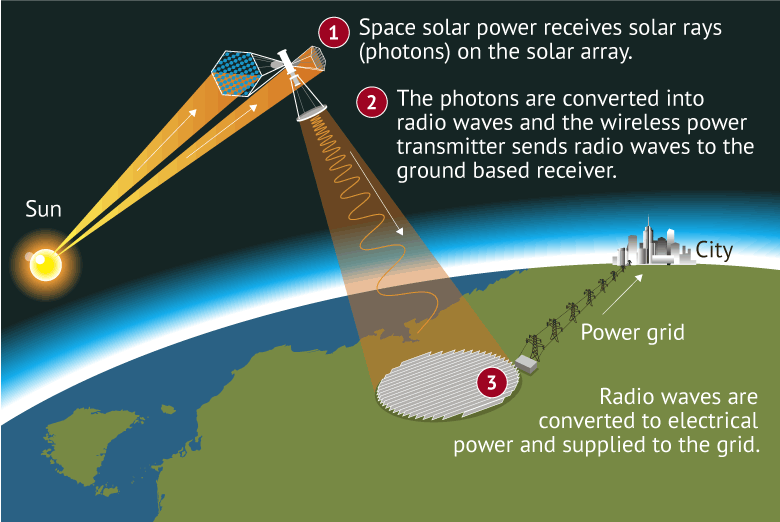
‘Energy for democracy': A plan for out-of-this-world solar power

Satisfying Australia’s energy needs while simultaneously putting the country on firmer national-security footing is a lofty goal.
https://d3cdtxx03omvla.cloudfront.net/2230123_1559375411521.png

That sort of “energy for democracy” is what Melbourne architect Serdar Baycan hopes to help create.Image
Baycan has teamed up with one of the world’s foremost experts in space-based power to design and build a new system to supply energy for the country.
Their proposal is to test and then launch a series of orbiting solar power stations to capture sunlight, convert it to radio waves and send the energy down to terrestrial receivers to provide a source of endless clean electricity.

Read the story from The Age by Chris Zappone - “‘Energy for democracy': A plan for out-of-this-world solar power.”
ImageImageImage

17 May, 2019

Australia’s Politics May Be Changing With Its Climate

HARDEN, Australia — It’s been a year of extremes for this country. The hottest summer ever. Torrential rains in the north. A crippling drought in its southeastern farm belt.
Peter Holding on his farm near Harden, New South Wales, in March.
Now, with national elections scheduled for May 18, a vital question looms: To what degree will climate change sway the way Australians vote? The answer could provide important lessons for other democracies in the age of climate change.

Australia is acutely vulnerable to climate change, just as it is also a culprit. The continent has warmed faster than the global average; its cherished Great Barrier Reef has been devastated by marine heat waves; and heat and drought this year took a bite out of the country’s economy, according to a top official of the country’s central bank. At the same time, central to its prosperity is the extraction of the dirtiest fossil fuel: Australia is the world’s biggest exporter of coal for power generation.  


Read the story from The New York Times by Somini Sengupta  - “Australia’s Politics May Be Changing With Its Climate.”

07 April, 2019

Is Bill Shorten in the driver's seat or just an electric dreamer?

On the eve of the federal budget, Labor unveiled a new electric vehicle policy that has never been tested before in this country.
SEA Electric test driver Graeme Cook at a Dandenong
South factory where the company makes electric trucks
 and buses.
If elected, Opposition Leader Bill Shorten has promised that 50 per cent of new car sales would be electric by 2030.

The pre-election pitch is being sold as a way to help achieve Labor's emissions reduction target of 45 per cent on 2005 levels by 2030, and an opportunity to kickstart an electric vehicle manufacturing industry.

But it raises questions about the future cost of cars, how the fuel excise will be replaced and whether boosting electric cars is the right solution to a pressing global problem.


Read the story from The Age by Timna Jacks - “Is Bill Shorten in the driver's seat or just an electric dreamer?”

03 April, 2019

How Britain kicked coal

Despite the chaos of Brexit and the difficulty of expanding renewable generation in a country where sunshine is notoriously scarce, and despite strong opposition to wind turbines, Britain has just about ended its use of coal-fired electricity. The last coal-fired power stations are set to close by 2025, but the process is almost complete already. How was this achieved?

The answer can be found in this graph released by Ofgem, the British electricity regulator. As it shows, coal (shown in orange) supplied around 40 per cent of British electricity in 2006, yet by 2018 its contribution was negligible. (The graph on Ofgem’s site is interactive, so you can see the actual numbers there.)


Read the story by John Quiggan from Inside Story - “How Britain kicked coal.”

02 December, 2018

Climate Change Protest Draws Thousands of Australian Students.

MELBOURNE, Australia — As wildfires raged across the country, a heat wave again threatened the Great Barrier Reef and a mining giant announced it would push ahead with a huge coal project, thousands of students across Australia quit school for the day on Friday to protest government inaction on climate change.
Milou Albrecht, 14, center, speaking to students attending
 a rally for climate change action at the Old Treasury
Building in Melbourne, Australia, on Friday.
The students — ranging in age from 5 to 18 — came from more than 200 schools to demand that the federal government block construction of the Adani Carmichael coal mine, block any new coal or gas projects and require 100 percent renewable energy use by 2030.

“I am here because I am terrified,” Harriet O’Shea Carre, 14, told a crowd of thousands of student marchers outside the Old Treasury Building in Melbourne. Protesters spilled out onto the road with signs saying “civil disobedience requires no permission slip” and “don’t be a fossil fool.”


Read The New York Times story by Livia Albeck-Ripka - “Climate Change Protest Draws Thousands of Australian Students.”

24 November, 2018

Australia failing to meet nature protection targets, UN finds

Australia is failing to meet international targets to protect nature in parts of the country where land clearing and habitat destruction are widespread, according to data in a major new United Nations report.
The UN says Australia is not meeting its obligation for
 a system of parks that protects 17% of all regions
. 
The UN report on protected areas, released at the Convention on Biological Diversity Conference of the Parties in Egypt, examines progress by countries to meet global conservation targets.

Conservation groups said the report showed that Australia was “far from meeting” international targets that require countries to develop well-connected and ecologically representative protected areas for nature.

While 19% of Australia’s total land area has conservation protections in place, this is largely due to an increase in Indigenous protected areas in inland Australia.


Read the story from The Guardian by Lisa Cox - “Australia failing to meet nature protection targets, UN finds.”

04 February, 2018

Ease of living without a clean environment is meaningless

In the last few months, the environmental status of the country has been in the news for all the wrong reasons. Delhi’s air pollution became an international incident when Sri Lankan cricketers wore face masks during the third Test against India at the Feroz Shah Kotla Stadium. Some of the players vomited on the ground due to noxious smog.

 A national action plan to combat air pollution backed with
significant budgetary allocation would have been appropriate. 
At the World Economic Forum meet in Davos, Switzerland, where Prime Minister Modi gave the opening address, a report on the environmental performance index of countries published by the Yale and Columbia Universities, ranked India as 177th out of the 180 countries. Only Burundi, Bangladesh and Congo were found worse than India.

Lastly, the Economic Survey 2018 found that climate change is now hurting Indian agriculture and farmers considerably. The survey found that the effect of extreme temperature shocks on productivity in un-irrigated areas, which account for more than half of our agricultural land, is significant. An extreme temperature shock in unirrigated areas reduces yields by 7 per cent for Kharif and 7.6 per cent for Rabi. Similarly, extreme rainfall shocks lead to 14.7 per cent and 8.6 per cent reduction in yield for Kharif and Rabi, respectively. These losses could rise significantly in the coming years as the warming level reaches 1.5 degrees Celsius in the next 10 years.

With the country in the throes of an impending crisis, one was hoping that the Finance Ministry Arun Jaitley would give due recognition to the environmental challenges in his last full budget before the general elections next year. Alas, it was a damp squib.


Read the Down to Earth story by Chandra Bhushan - “Ease of living without a clean environment is meaningless.”

27 January, 2018

Australia on the way to achieving its 2020 renewable energy targets.

The Australian renewable energy regulator has released new information revealing that the country is well on track to meet its 2020 clean energy targets.

Record level of investment in renewable energy last year in Australia.
Australia has committed that at least 33,000 gigawatt-hours (GWh) of the country’s electricity will come from renewable energy sources by 2020. For the target to be met, it has been estimated that roughly 6,000 megawatts (MW) of clean energy projects would need to be announced and built between 2016 and 2019.

Clean Energy Regulator Chairman David Parker explained that the record level of investment in renewable energy projects in 2017 helped the country reach a significant milestone and was critical for the positive forecast of the next years.


02 January, 2018

US weather: Record-shattering cold reaches as far south as Florida; parts of Niagara Falls freeze over

A record-shattering arctic cold in the United States has reached as far south as Florida, with freeze warnings in place from Texas to the Atlantic Coast and the north-east of the country facing another cold wave at the end of the week, forecasters said.
The brink of the Horseshoe Falls in Niagara Falls turns to
icicles as the area is hit with a cold blast.
Temperatures were from 11 to 17 degrees Celsius below normal across the US east of the Rocky Mountains, with only southern Florida untouched by the arctic blast.

"That degree of cold will be with us until tomorrow," National Weather Service meteorologist Brian Hurley said.

"Tuesday morning, we're looking at temperatures with very high probability of record lows."
Along Alabama's Gulf Coast, the temperature in the city of Mobile could hit a low of -9C overnight.


30 December, 2017

US weather latest: Parts of country colder than Antarctica or Mars

US officials are urging residents to help the vulnerable as a deep freeze sets in across half the country, bringing colder temperatures than those Antarctica or parts of Mars. 
Rochelle Carlotti, 28, shovels steps near her home after a record snowfall in Erie, Pa.
Forecasters warned people to be wary of hypothermia and frostbite from the arctic blast sweeping across from the Midwest to the Northeast, where the temperature, without wind chill factored in, plummeted to -35C degrees in parts of New York state. 

In Antarctica, temperatures are currently around -16C. 

The prolonged, dangerous cold weather has sent advocates for the homeless scrambling to get people off the streets and to bring in extra beds for them. Warming centres were also set up in some locations.

Segundo Rivera and Sean Stuart told The Boston Herald they were not comfortable spending the night in a shelter.


Read the story on the Independent by Lucy Pasha-Robinson - "US weather latest: Parts of country colder than Antarctica or Mars”.

30 November, 2017

Capturing Somalia’s Climate Calamity


Photographer Nichole Sobecki, along with writer Laura Heaton, spent years documenting parts of Somalia, a country traumatized by over 25 years of conflict and ravaged by climate change.

 As Sobecki put it, “In a generation, parts of Somalia went from being semi-arid to desert, fueling conflict and pushing one of the world’s most resilient communities to the brink.”

Read and take a  look at - “Capturing Somalia’s Climate Calamity.”

24 November, 2017

Costa Rica's Electricity Has Run Entirely on Renewables For 300 Days in 2017

Costa Rica has done it again. In January, the Central American country announced it had powered its electricity for a stunning 250 days in 2016 without burning fossil fuels. Now its 2017 effort has already eclipsed that feat – and it's still only November.


So far this year, Costa Rica has clocked up 300 days where 100 percent of its electricity generation came from renewable energy sources – no small accomplishment for a nation comprised of some 5 million people.

According to figures provided by Costa Rica's National Centre for Energy Control, 99.62 percent of the country's electricity production is now generated from five renewable sources.

Leading the charge is hydropower, which provides 78.26 percent of Costa Rican electricity, followed by wind (10.29 percent), geothermal energy (10.23 percent), biomass and solar (0.84 percent), and hydrocarbons (0.38 percent).


23 November, 2017

Australian red meat sector sets 2030 carbon neutral target at Alice Springs producer forum

Research and marketing group Meat and Livestock Australia (MLA) says the country's red meat industry could be carbon neutral by 2030.

Richard Norton says the target will prove farming
 red meat is environmentally sustainable.
The challenge was set for the cattle and sheep sectors by managing director Richard Norton during his address at the MLA annual general meeting in Alice Springs on Wednesday.

It follows the start of a CSIRO research project in the past 12 months, funded by MLA, to identify ways the industry could become carbon neutral.

In 2015, a separate study by CSIRO found cattle and sheep produced almost 70 per cent of Australian agriculture's greenhouse gas emissions.


(The idea that Australia’s red meat industry - particularly red meat from sheep and cattle - will ever be carbon neutral is fanciful as all the evidence points precisely in the wrong direction - Robert McLean)

08 November, 2017

Paris accord: Syria plans to join climate agreement, leaving US only country opposed

Syria has announced it intends to join the 2015 Paris agreement for slowing climate change, leaving the United States as the only country in the world opposed to the pact.
The UN weather agency says 2017 temperatures
 are set to be the second or third hottest on record.
Syria, wracked by civil war, and Nicaragua were the only two nations outside the 195-nation pact when it was agreed in 2015.

Nicaragua's left-wing Government, which originally denounced the plan as too weak, signed up last month.

"I would like to affirm the Syrian Arab Republic's commitment to the Paris climate change accord," deputy Environment Minister Wadah Katmawi told a meeting of almost 200 countries at the November 6-17 climate talks in Bonn, Germany.


30 October, 2017

In battery boom cobalt-supply chain, Democratic Republic of Congo has the power

The cars of the future will depend increasingly upon supplies of an obscure metal from a country in the African tropics where there has never been a peaceful transition of power and child labor is still used in parts of the mining industry.
A "creuseur," or digger, climbs through a cobalt
and copper mine in Kawama, in the Democratic
 Republic of the Congo. Sixty per cent of the
 world's cobalt comes from the Congo.
Most major automakers are pledging to build millions of electric vehicles as the world's governments crack down on climate-damaging emissions from traditional-fuel engines. As a result, demand is surging for lithium-ion batteries and the materials needed to make them – including cobalt, a relatively rare substance found mostly in the Democratic Republic of Congo.

The country formerly known as Zaire – which hosted boxers Muhammad Ali and George Foreman for their 1974 heavyweight title bout, dubbed the "Rumble in the Jungle" – supplies 63 per cent of the world's cobalt.

Congo's market share may jump to 73 per cent by 2025 as producers like Glencore expand mines, according to Wood Mackenzie. By 2030, global demand could be 47 times more than it was last year, Bloomberg New Energy Finance estimates.


Read the story by Tom Wilson in today’s Melbourne Age - “In battery boom cobalt-supply chain, Democratic Republic of Congo has the power.”

20 October, 2017

Electric car charging stations power up in NSW with NRMA set to add 40 around the state

If you have an electric car, you would be hard pressed to take it on holiday, with only 50 charging stations across the country and just 11 in New South Wales.

In Newstead in Victoria, locals used their initiative
 and made a charging station from an old petrol bowser.
The state's peak road user group, the NRMA, is set to change that with plans to establish a network of fast-charging stations for electric and hybrid cars in NSW.

The plan involves a phased introduction of at least 40 stations at a cost of $10 million.

The NRMA and the Electric Vehicle Council (EVC) believe vehicle price and a lack of charging infrastructure are barriers to growth in the uptake of electric cars in Australia.

According to the EVC, sales of electric vehicles across the nation slumped 23 per cent from 2015 to 2016.


11 October, 2017

Australia needs a clean energy target, not Coalition paralysis

"If you're cold, put on a jumper. If you're too hot, play under the hose.”


These have long been stock phrases for cost-conscious parents confronted with a complaining child wanting the heater turned up or the air-conditioning switched on (at least, in the latter case, until water restrictions started to bite). But now, it seems, they have become the de facto national energy policies of a government too paralysed by ideology and infighting to give the country what it needs: a secure road from the power generation of the past to the power generation of the future.

Australians were recently confronted with the startling news that nationwide, our power is among the most expensive in the world, despite our abundance of fossil fuels, long hours of sunshine and windy coastlines. The situation is worst in South Australia, which, while struggling to keep the lights on during summer, has the world's costliest electricity. Given the other states' increasing reliance on creaking relics such as NSW's Liddell power station, however, the rest of us should not be too smug.


Read the Editorial from today’s Melbourne Age - “Australia needs a clean energy target, not Coalition paralysis.”

07 June, 2017

Americans Deserve Better than the Heartland Institute’s Climate ‘Experts’

Last Thursday, President Trump held a press conference in the White House Rose Garden—a setting where many past presidents have given great speeches, announced new initiatives, and held special events to honor or protect great Americans. President Trump did none of these things.
Gretchen Goldman.

Instead he announced his intent for the US to withdraw from the Paris Climate Accord—the first ever global agreement to address climate change, signed by nearly every country on Earth.

Presidents typically invite guests to such events, including people who will benefit from the policy move, those who worked closely on it, or honorary guests who inspired the move in the first place.  So who did President Trump invite? A cadre of industry-tied lobbyists and others who have peddled climate disinformation for years.

Americans deserve better.


Read Gretchen Goldman’s Union  of Concerned Scientists story - “Americans Deserve Better than the Heartland Institute’s Climate ‘Experts’.”