Showing posts with label Federal Budget. Show all posts

13 January, 2020

The 2017 budget has axed research to help Australia adapt to climate change

The 2017 federal budget has axed funding for the National Climate Change Adaptation Research Facility (NCCARF), an agency that provides information to decision-makers on how best to manage the risks of climate change and sea level rise.

Image result for The 2017 budget has axed research to help Australia adapt to climate change
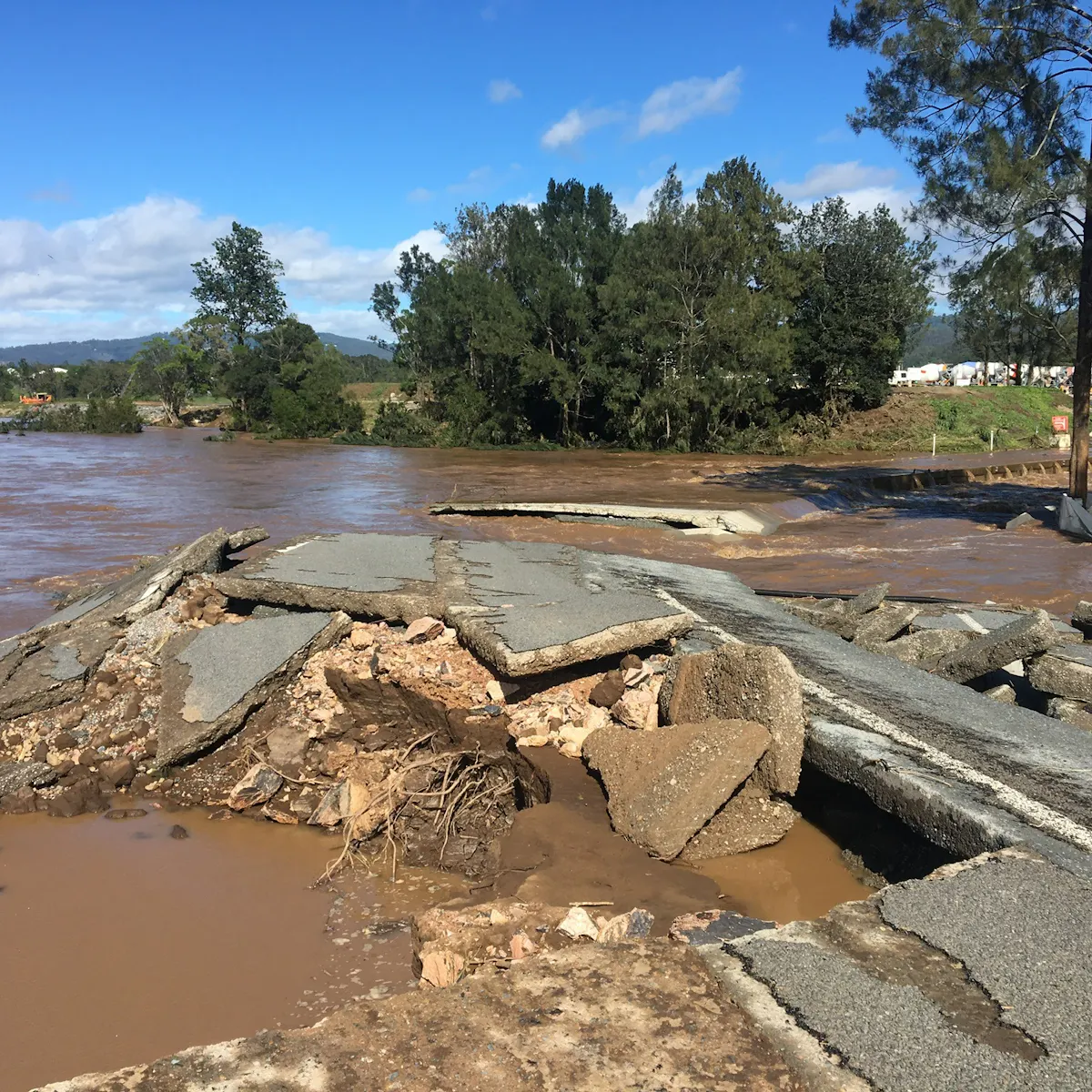
Flooding on the Coomera River near Queensland’s Gold Coast.
The NCCARF received A$50 million in 2008 to coordinate Australia’s national research effort into climate adaptation measures. That was reduced in 2014 to just under A$9 million. For 2017-18, a mere A$600,000 will be spread between CSIRO and NCCARF to support existing online platforms only. From 2018, funding is axed entirely.

This decision follows on from the 2014 streamlining of CSIRO’s Climate Adaptation Flagship, and comes at a time when a national review of Australia’s climate policies is still underway.


07 April, 2019

Is Bill Shorten in the driver's seat or just an electric dreamer?

On the eve of the federal budget, Labor unveiled a new electric vehicle policy that has never been tested before in this country.
SEA Electric test driver Graeme Cook at a Dandenong
South factory where the company makes electric trucks
 and buses.
If elected, Opposition Leader Bill Shorten has promised that 50 per cent of new car sales would be electric by 2030.

The pre-election pitch is being sold as a way to help achieve Labor's emissions reduction target of 45 per cent on 2005 levels by 2030, and an opportunity to kickstart an electric vehicle manufacturing industry.

But it raises questions about the future cost of cars, how the fuel excise will be replaced and whether boosting electric cars is the right solution to a pressing global problem.


Read the story from The Age by Timna Jacks - “Is Bill Shorten in the driver's seat or just an electric dreamer?

05 April, 2019

Labor climate policy requires scrutiny

The ALP’s announcement of key details of its climate policy on Monday was quickly overshadowed by the federal budget, but it could prove to be a more important document in the long-term if there is a change of government at the federal election.


The policy is complex and, unfortunately, the political debate on the details has been poor. Prime Minister Scott Morrison chose to respond to a question about climate policy in Parliament on Wednesday with a dad-joke impersonation of the slapstick character Borat from a 2006 movie.

The government’s failure to engage intellectually is giving the ALP too easy a ride. There are serious questions to be answered.

The ALP must show it has a practical plan that will achieve its promise to cut emissions by 2030 to 45 per cent below 2005 levels while at the same time keeping costs to a minimum.


Read the Editorial from The Age - “Labor climate policy requires scrutiny.”

24 May, 2018

Business, science collaboration crucial to save reef, Great Barrier Reef Foundation says

This month's Federal Budget pledged an unprecedented $444 million to a single organisation — the Great Barrier Reef Foundation.


It's the largest donation any Australian Government has made to a single foundation for environmental purposes, with the money going towards improving water quality, tackling crown-of thorn starfish and expanding reef restoration.

Labor though has questioned whether the foundation is the right organisation to receive so much money given many of its members have close ties to the fossil fuel industry.

But those working with it say its collaborative approach between business and scientists could be the last chance to salvage the reef.


Listen to the Radio National News Breakfast interview by Hamish Macdonald - “Business, science collaboration crucial to save reef, Great Barrier Reef Foundation says.”

10 May, 2017

Federal budget 2017: Funding boost for expanding gas sector, but little for renewable sector

The Federal budget includes a number of multi-million-dollar measures to ensure more gas is available and shore up east-coast supplies.
Gas exploration, science and pipeline feasibility
all get funding from the Federal budget.
Investment, environmental research, pipeline feasibility studies and other semi-regulatory bodies are at the heart of the spend.

It also is very pointed in its inference that states and territories with moratoria in place on gas drilling, exploration or fracking will not have access to funds.


16 May, 2016

A 20th Century plan for a 21st Century Australia


(Each fortnight I write a column for The Shepparton News and this one published today seemed relevant to our blog – Robert McLean)


People from around here will feel the impact of the recent Federal Budget, but not necessarily only in the way they imagine.

My shoulders drooped as I listened to the oft-repeated mantra of “jobs and growth” as I sensed many here would be warming up to join the chorus seemingly unaware that “less” is what we need, not “more”.

In a world seriously troubled by human-induced climate disruption, policies and budgets based on 20th Century values and ideas will simply not work.

Rather than look back for solutions and employ ideas offensive to the planet, Mr Turnbull, and his cohort need to lift their gaze and see that the unfolding world of the 21st Century will be strikingly different and instead of the much-cited and inappropriate exhortation for jobs and growth, our leaders should be helping create and build a community able to thrive in an energy constrained future.

Such an idea undoubtedly doesn’t fit with the ideologies of either of Australia’s major political parties with both pandering to the populist ideas and values that have hardened since the Industrial Revolution to become an entrenched societal practice.

Living here in the Goulburn Valley doesn’t provide us with any protection from climate change for the south-east corner of Australia is experiencing changes to both weather and seasons, just as is the case around the world.

With the ideologically trapped Federal Government turning its back on climate science and our State Government doing something but treading carefully for fear of breaching its limited mandate, the responsibility to actually do something now falls upon the City of Greater Shepparton.

Mr Turnbull and his cohort need a 21st
Century orientated economic plan
 and not one that is rooted in 20th Century.
That would not be unusual, for while many national governments hesitate and procrastinate, and state bodies call for yet another report, many cities have taken up the dropped batten and have introduced projects and ideas into their respective Local Government areas that will lead to resilience and sustainability, and along with that play their part in the wider reduction of carbon dioxide emissions.

And so what do we do?

Let’s begin with the city’s transport strategy, which presents us with a wonderful opportunity to think deeply and seriously about what the Shepparton of tomorrow should look like, how it should work and how the people who live here should move about.

Yes, a wonderful opportunity, one which is either the moment when we decide to create a city able to cope with the climate disrupted future or opt for the status quo and wander aimlessly down the same endless and, as time will show a rather rough road.

Courageous decisions will see a city that prioritizes and is friendly to pedestrians; encourages cyclists in the same way; introduces electric (solar charged) transit; and produces reasons about our need for sophisticated inter-town public transport (trains, light or otherwise) that eclipse any contra-arguments put by our State or Federal Governments.

Idealistic? Yes, but if we are to find our way through the troubled times ahead, it is essential we think differently and escape from the fossilized ideas of the current Federal Budget, presented as an “economic plan for the future”.