Showing posts with label first time. Show all posts

20 March, 2020

Wind output overtakes hydro power for first time in Tasmania

Tasmania reached a new milestone on Friday when wind output overtook hydro output, likely for the first time.
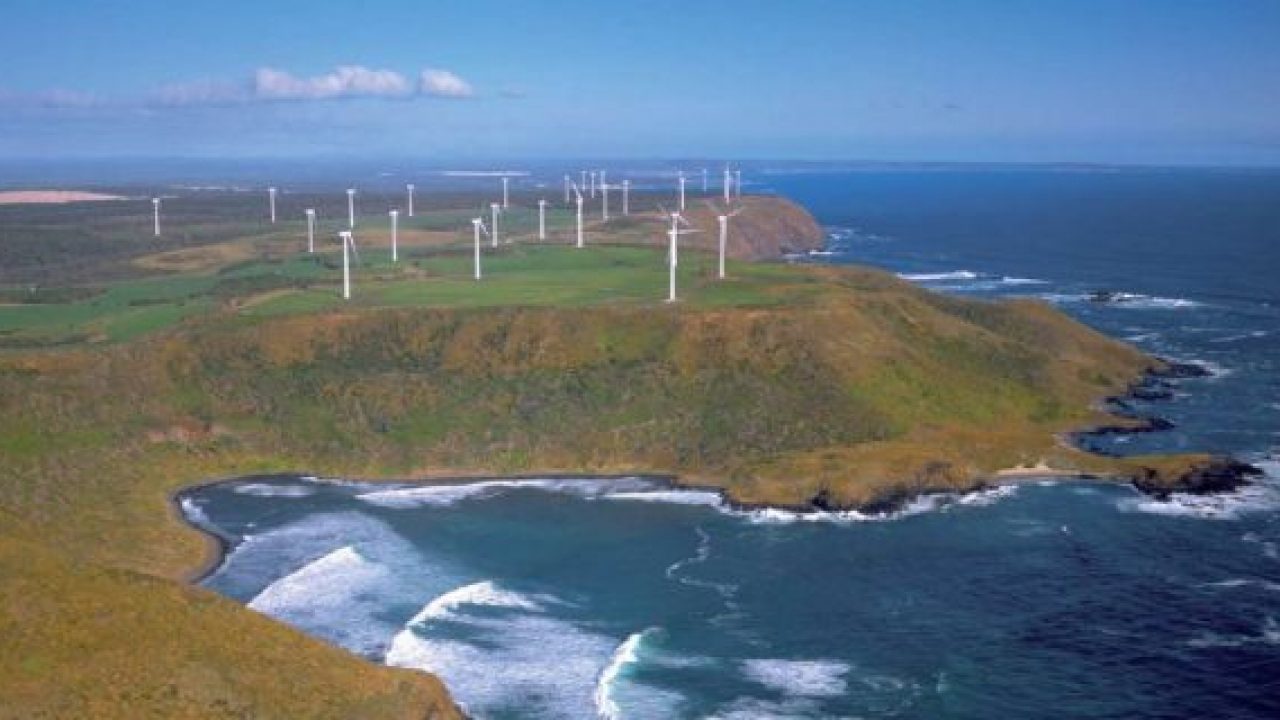
Image result for Wind output overtakes hydro power for first time in Tasmania
Woolnorth wind farm, Tasmania.

According to OpenNem, operated by the Climate and Energy College, wind output totalled around 350MW (37 per cent) in the early hours of Friday morning, while hydro was scaled back to just 216MW (23 per cent) – see graph below.
The balance was made up from imports from Victoria. Tasmania has been importing in the morning, and exporting back to the mainland in the afternoon and evening.
It is believed to be the first time that wind power has overtaken hydro power in the island state, and comes after the recent additions of the 148MW  Cattle Hill wind farm, which starting sending power to the grid in January, and the 112MW Granville wind farm, which began operations in February. They join the existing Musselroe and Woolnorth wind farms, with others on the way.

Read the story from RenewEconomy by Giles Parkinson - “Wind output overtakes hydro power for first time in Tasmania.”

23 February, 2020

More bike parking than car parking spaces were added in the City of Melbourne last year

More bicycle parking spaces than car parking spaces were created in new buildings within the City of Melbourne for the first time last year, council data shows.
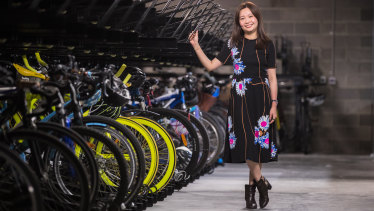
UEM Sunrise international business director Ong Chee Wei at Aurora Melbourne Central's 700-plus capacity bike locker.
UEM Sunrise international business director Ong Chee Wei
at Aurora Melbourne Central's 700-plus capacity bike locker. 
A total of 3797 bike spaces were added in developments completed within the city in 2019, compared with 3575 car parks.
Since 2015, when the council started keeping track of this information, 15,904 new bike spaces and 22,316 new car spaces have been completed in private developments such as apartment blocks and office buildings. This figure does not include on-street parking or bike hoops on footpaths.

25 January, 2020

Zero-carbon hydrogen injected into gas grid for first time in groundbreaking UK trial

Zero-carbon hydrogen has been injected into a UK gas network for the first time in a groundbreaking trial that could help to reduce carbon dioxide emissions.
Keele University
Keele University owns and operates a private gas
 network that can be isolated from the main network.
The 20% hydrogen and natural gas blend is being used to heat 100 homes and 30 faculty buildings at Keele University in Staffordshire. Unlike natural gas, when hydrogen is burned it produces heat and water as opposed to carbon dioxide.
“Heat hasn’t been particularly decarbonised to date and it’s a very big challenge,” said Lorna Millington, the future networks manager at Cadent, the gas distribution network that led the £7m HyDeploy project. “The aim was to turn the theoretical evidence into something real and tangible that the consumers within the Keele network are now getting to experience every day.”

Read the story from The Guardian UK by Jessica Murray - “Zero-carbon hydrogen injected into gas grid for first time in groundbreaking UK trial.”

02 December, 2019

Environment is prime worry for the first time: poll

The environment has for the first time surpassed healthcare, cost of living and the economy to be the number one concern for Australians.
Amid bushfires and drought, a poll shows the environment has emerged as our top concern.
Amid bushfires and drought, a poll shows the
environment has emerged as our top concern.
The Ipsos Issues Monitor, which asks a representative sample of Australians to select the three top issues facing the nation, found 32.1 per cent rated the state of the environment among their biggest worries in November - the highest share in the decade-long history of the survey.

Read the story from The Age by Matt Wade - “Environment is prime worry for the first time: poll.”

03 May, 2019

Young people won’t accept inaction on climate change, and they’ll be voting in drove

Today young Australians will hit the streets for the second Climate Strike of 2019.
School students take part in the global #ClimateStrike
 rally in Melbourne, Friday, March 16, 2019.
Youths are often brushed off as being politically disengaged, but the Australian Electoral Commission has reported record high numbers of youth enrolment, and climate change will be at the forefront of their minds when many take to the polls for the first time.

But unlike older generations, who develop and stick to lifelong party allegiances, we’re seeing dramatic shifts in the way young people vote, choosing sides based on issues and specific policies instead.


Read the story from The Conversation by a PhD Researcher in Science Communication from the Australian National University, Hannah Feldman - “Young people won’t accept inaction on climate change, and they’ll be voting in drove.”

31 December, 2018

Weatherwatch: how do we store surplus renewable energy until we need it?

A milestone was reached for renewable energy in November when more than 100% of Scotland’s electricity demand was met by wind turbines for the first time – enough for nearly six million homes. Scottish weather is powering a revolution. With ever-larger wind turbines being built at sea, and wave and tidal power being developed, the problem will soon be how to use this surplus energy. 

Some is already exported to England via interconnector cables and in 2020 there will be another running from the Aberdeen area to Norway. But this will not be enough and the race is on to find ways to store cheap energy to sell back to the grid when demand is high.
Turbines being assembled in Norway before being moved to
 the world’s first floating wind farm off north-east  Scotland.
Large batteries are helping, but another proven method is pump storage. This uses virtually free surplus electricity at night to pump water into upland reservoirs to be used to power turbines during peak periods. Scotland has had these schemes since the 1960s but there is potential for many more and two new ones are proposed to pump water uphill from Loch Ness to reservoirs in the hills.


Read the story from The Guardian by Paul Brown - “Weatherwatch: how do we store surplus renewable energy until we need it?

14 May, 2018

Carbon dioxide in the atmosphere hits record high monthly average

April monthly average exceeds 410 parts per million for the first time in recorded history.

The average concentration of carbon dioxide in the atmosphere was 410.31 parts per million (ppm) for the month of April, according to the Keeling Curve measurement series made at the Mauna Loa Observatory in Hawaii.

This marks the first time in the history of the Mauna Loa record that a monthly average has exceeded 410 parts per million. This also represents a 30-percent increase in carbon dioxide concentration in the global atmosphere since the Keeling Curve began in 1958. In March, Scripps Institution of Oceanography at the University of California San Diego observed the 60th anniversary of the data series, the first measurements of which were 315 ppm.


Read the report by Rob Monroe from the Scripps Institution of Oceanography - “Carbon dioxide in the atmosphere hits record high monthly average.”

07 May, 2018

Earth’s atmosphere just crossed another troubling climate change threshold

For the first time since humans have been monitoring, atmospheric concentrations of carbon dioxide have exceeded 410 parts per million averaged across an entire month, a threshold that pushes the planet ever closer to warming beyond levels that scientists and the international community have deemed “safe.”
Recent CO2 measurements at Mauna Loa Observatory in Hawaii.
The reading from the Mauna Loa Observatory in Hawaii finds that concentrations of the climate-warming gas averaged above 410 parts per million throughout April. The first time readings crossed 410 at all occurred on April 18, 2017, or just about a year ago.

Carbon dioxide concentrations — whose “greenhouse gas effect” traps heat and drives climate change — were around 280 parts per million circa 1880, at the dawn of the industrial revolution. They’re now 46 percent higher.


Read the story by Chris Mooney from The Washington Post - “Earth’s atmosphere just crossed another troubling climate change threshold.”

22 December, 2017

People without electricity could end up living the energy dream

MORE than 100 million people around the world now have access to electricity for the first time thanks to simple solar power systems that typically provide LED lights and a phone charger. More powerful versions include radios and even televisions.
Those who have lived without electricity could be the winners. 
The LEDs provide a clean and cheap alternative to the kerosene lamps normally used by those with no electricity. “People spend 50 cents a day on kerosene,” says Nick Hughes, co-founder of M-KOPA Solar of Kenya, which has sold 550,000 home solar power systems in East Africa. Some families spend a tenth of their income on fuel for lighting. “It’s a crazy price for a poor fuel,” says Hughes.

His firm has just raised the money it needs to finance a million more systems, and Hughes thinks they could eventually sell up to 11 million in East Africa alone. And M-KOPA is just one.


Read the New Scientist story By Michael Le Page - “People without electricity could end up living the energy dream.”

(Apologies, but the full story is only available to subscribers - Robert McLean)

19 December, 2017

Three 2016 extremes 'not ... possible' without human warming

For the first time, an annual report issued by the American Meteorological Society has found that the extreme magnitudes of three weather events in 2016 “was not possible without the influence of human-caused climate change.”


Explaining Extreme Events of 2016 from a Climate Perspective, published as a supplement to the Bulletin of the American Meteorological Society (BAMS), is AMS’s sixth annual report on extreme weather events. It was officially released and presented on December 13 at the American Geophysical Union’s fall meeting in New Orleans.

The report includes 27 peer-reviewed scientific papers. Authors of those papers examined 21 different extreme weather events around the globe in 2016 – including wildfires in North America and Australia, droughts in South Africa and Brazil, cold snaps in Eastern China, and an anomalous body of warm water in the Pacific Ocean.


Read the Yale Climate Connections story by Bruce Lieberman - “Three 2016 extremes 'not ... possible' without human warming.”

30 November, 2017

Climate change a financial risk, says APRA

Image result for apra logoOne of Australia's financial regulators has explicitly addressed for the first time the topic of financial risk created by global warming. 

An executive board member of the Australian Prudential Regulation Authority (APRA), Geoff Summerhayes, in a speech yesterday that APRA now views climate change as a 'here and now' risk. 
It made the recommendation due to three main influences: the Paris climate agreement, recommendations by the G-20 Financial Stability Board, as well as a legal opinion issued late last year. 

APRA says it expects big companies to carefully consider these risks, warning that company directors could be liable if they fail to do so.


Listen to the Radio National report - “Climate change a financial risk, says APRA.”

18 October, 2017

Malcolm Turnbull's national energy guarantee plan masks a carbon price

The Turnbull government's new national energy guarantee could introduce a de facto carbon price, measuring the cost of emissions for the first time since the Abbott government scrapped the carbon tax in 2014.
Placing a price on carbon: One default outcome of a National Energy Guarantee.
The long-awaited energy plan, released by the government on Tuesday, requires electricity retailers to ensure improved reliability levels while also reducing carbon emissions in line with Australia's Paris Agreement commitments.

Buried in the detail of advice presented by the new Energy Security Board to state and federal governments is a mechanism to be added to the National Electricity Market in two stages in 2019 and 2020 that could produce a default carbon price.

"Some electricity retailers will not be able to meet the required emissions profile, while others will overachieve," it reads. "Therefore a secondary exchange will occur between retailers to balance their portfolios."


Read Peter Hannam’s story in the Melbourne Age - “Malcolm Turnbull's national energy guarantee plan masks a carbon price.”

06 December, 2014

State's temperatures are becoming unmanagable


Parts of north-western NSW could spend more than a third of the year above 35 degrees Celsius by 2070, according to new projections released by the NSW Government.

That fact has been shown in detailed modelling, produced through a partnership with the NSW and ACT governments and the University of NSW Climate Change Research Centre.

It suggests that by 2070 average temperatures in the state will have risen by 2.1 degrees.

Importantly, what needs to be noted is the fact put 35 degrees as the base number and so if it creeps up to 38 degrees, which is quite possible, that will be 100 degrees Fahrenheit, for those still working in the former regime.

A story on the ABC headed: “Climate change in NSW: New projections reveal likely local impacts of rising temperatures” explains about the detailed modelling.

It says: “The projections map out for the first time how different parts of New South Wales could be affected by climate change in the near and distant future.”