Showing posts with label levels. Show all posts

24 June, 2019

Climate crisis: CO2 levels rise to highest point since evolution of humans

Levels of the damaging greenhouse gas carbon dioxide have reached an alarming new milestone at the world’s oldest measuring station in Hawaii.
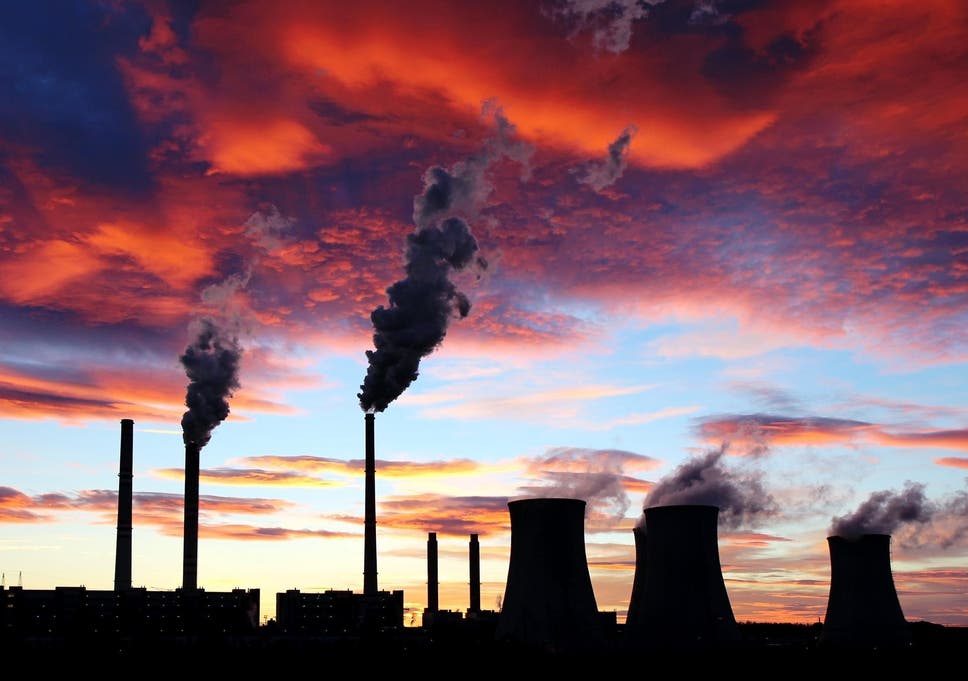
Burning fossil fuels remains the biggest producer of CO2
Burning fossil fuels remains the biggest producer of CO2. 
The Mauna Loa Observatory, which has measured the parts per million (ppm) of CO2 in the atmosphere since 1958, took a reading of 415.26ppm in the air on 11 May – thought to be the highest concentration since humans evolved.

The Scripps Institution of Oceanography measures CO2 levels at Mauna Loa daily. The observatory, on Hawaii’s largest volcano, was built to test air quality on the remote Pacific islands because it is far from continents and pollution, while the area lacks vegetation, which can interfere with results.


Read the story from the Independent by Harry Cockburn - “Climate crisis: CO2 levels rise to highest point since evolution of humans.”

23 March, 2018

New scenarios show how the world could limit warming to 1-5c in 2100

In the 2015 Paris Agreement on climate change, nearly every country on Earth pledged to keeping global temperatures “well below” 2C above pre-industrial levels and to “pursue efforts to limit the temperature increase even further to 1.5C”.

However, at the time, scientists had only modelled energy system and carbon mitigation pathways to achieve the 2C target. Few studies had examined how the world might limit warming to 1.5C.

Now a paper in Nature Climate Change presents the results from a new modelling exercise using six different “integrated assessment models” (IAMs) to limit global temperatures in 2100 to below 1.5C.

The results suggest that 1.5C is achievable if global emissions peak in the next few years and massive amounts of carbon are sucked out of the atmosphere in the second half of the century through a proposed technology known as bioenergy with carbon capture and storage (BECCS).


Read the RenewEconomy story by Zeke Hausfather - “New scenarios show how the world could limit warming to 1-5c in 2100.”

20 February, 2018

Rising CO2 levels are making your food less nutritious

Rising carbon dioxide levels are causing climate change. But they could also be making the food on your plate less nutritious.
This looks great, but as the world
warms it is becoming less nutritious.
Loladze: “Every time you eat, say, a carrot or a bread or potatoes, the quality of it is different than, all else being equal, it was, say, a hundred years ago.”

Irakli Loladze, of Nebraska’s Bryan College of Health Sciences, studies how carbon dioxide levels affect plant nutrients. He analyzed studies from around the world that examined the nutrient levels of plants grown in experiments with elevated levels of CO2.

The data include more than 7,000 samples of 130 plant varieties, including rice, wheat, and other grains, as well as fruits and vegetables.


Read the Yale Climate Connections story by Jan O’Brien - ‘Rising CO2 levels are making your food less nutritious.”

05 November, 2017

Predicted West Gate Tunnel pollution seriously under-estimated, expert warns

Toxic pollution caused by the $5.5 billion West Gate Tunnel will breach Victoria's air quality standards and be emitted at levels that have been seriously under-estimated, a former Environmental Protection Authority principal scientist has warned.

Leading respiratory experts also warn that people living in parts of Melbourne's inner-west who already battle some of Victoria's worst pollution will be exposed to even higher risks of asthma and cardiovascular problems due to projected increases in truck and car traffic.


26 September, 2017

Antarctic sea ice levels hit record low, but experts are not sure why

Sea ice levels in Antarctica dropped to a record low this year, but experts say there is not a clear link to climate change.
 Sea ice levels in the Antarctic have experienced huge variability in the last few years. 
More than 60 meteorologists and scientists from around the world are holding a week-long meeting in Hobart, Tasmania, to better understand sea ice changes on the frozen continent.

Dr Jan Lieser from the Antarctic Climate and Ecosystems Cooperative Research Centre said sea ice levels had experienced a “massive increase” in variability over the past few years.