Showing posts with label two years. Show all posts

28 April, 2020

Climate crisis: Sweden closes last coal-fired power station two years ahead of schedule

Sweden has closed the country’s last coal-fired power station two years ahead of schedule.
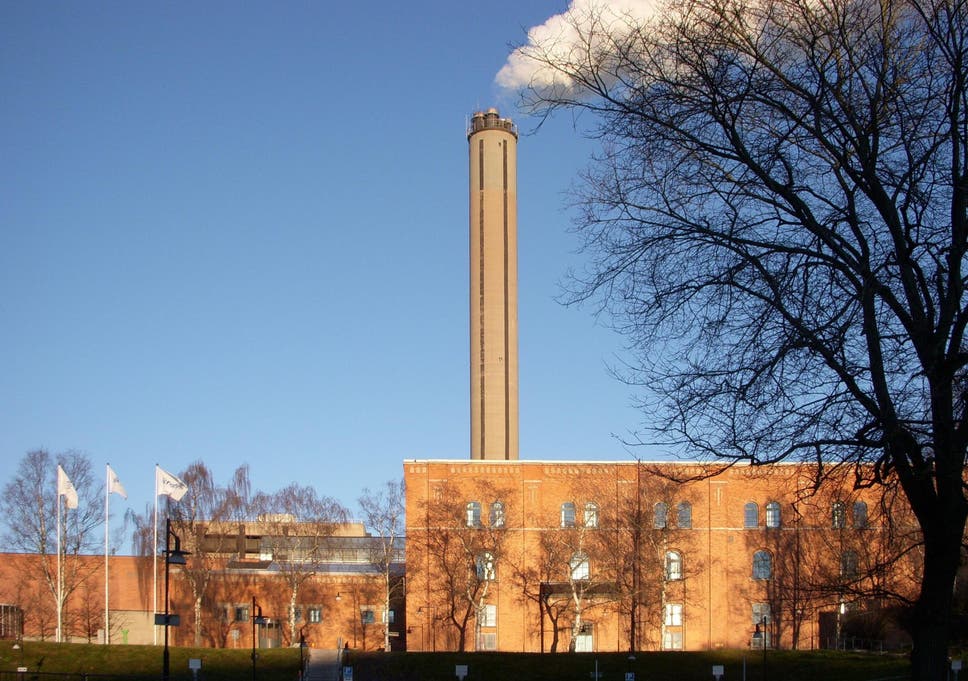
The plant at Värtaverket, in Hjorthagen in eastern Stockholm, pictured in 2008.
It becomes the third European country to exit coal completely after Belgium closed its last coal power station in 2016, and Austria ended its final coal-fired energy operations earlier this month.
The plant at Värtaverket, in Hjorthagen in eastern Stockholm is owned by Stockholm Exergi, a company part owned by the City of Stockholm and which described the closure as “a milestone” for clean energy in Sweden.
The move will cut the CO2 emissions of the company by half, it said.
The Swedish capital is on track for its district heating to be produced entirely by renewable or recycled energy by 2030. District heating, which is used in many European cities, tends to provide higher efficiencies and less pollution than localised boilers in each dwelling. 
Read the story from the Independent by Harry Cockburn - “Climate crisis: Sweden closes last coal-fired power station two years ahead of schedule.”

02 April, 2019

Attempts to uncover Great Barrier Reef lobbying thwarted, researcher says

A legal expert has criticised Australia’s freedom of information regime after spending two years and more than $1,000 trying to shed light on Australia’s enormous lobbying effort to prevent the Great Barrier Reef from being listed as “in danger”.
 Australian officials spent more than $100,000 lobbying
 Unesco members to keep the Great Barrier Reef off
the ‘in danger’ list.
In 2014-15, Australian government officials spent more than $100,000 visiting and lobbying members of Unesco’s world heritage committee to keep the Great Barrier Reef off the “in danger” list.

A group of Australian and US environmental lawyers had found the dangers to the reef overwhelmingly met the criteria for such a listing, but Australia’s lobbying was ultimately successful.

The legal academic Prof Reece Walters, of Deakin University, wanted to understand how far Australia had gone in its taxpayer-funded campaign.


Read the story from The Guardian by Christopher Knaus - “Attempts to uncover Great Barrier Reef lobbying thwarted, researcher says.”

30 May, 2018

Land-clearing wipes out $1bn taxpayer-funded emissions gains

More than $1bn of public money being spent on cutting greenhouse gas emissions by planting trees and restoring habitat under the Coalition’s Direct Action climate policy will have effectively been wiped out by little more than two years of forest-clearing elsewhere in the country, official government data suggests.
Emissions projections data estimates more than 60.3m tonnes
 will be emitted this year – equivalent to more than 10%
 of national emissions.
The $2.55bn emissions reduction fund pays landowners and companies to avoid emissions or store carbon dioxide using a reverse auction – the cheapest credible bids win. The government says it has signed contracts to prevent 124m tonnes of emissions through vegetation projects – mostly repairing degraded habitat, planting trees and ensuring existing forest on private land is not cleared.


Read the story by Adam Morton from The Guardian - “Land-clearing wipes out $1bn taxpayer-funded emissions gains.”

18 February, 2018

A new solar reality

The costs of renewable systems have dropped dramatically over the last two years — particularly solar — and continue to drop very quickly, Scientia Professor Martin Green argues.
Political pessimism lags behind the
 reality of solar in Australia.
Yet he says none of this yet being factored in to the political discussion over renewables.

So how do we dispel the lingering pessimism in Canberra over solar — and expand the use of this remarkable technology?


Listen to Ockham’s Razor on Radio National - “A new solar reality.”

18 December, 2017

Power prices forecast to fall over next two years but AEMC warns they won't last

Power prices in Australia rose almost 11% during 2017 but a new forecast says they will fall over the next two years because of the entry of 5,300 MW of new generation capacity into the national electricity market – most of it renewable.
The Liddell power station in New South Wales. Power prices in Australia rose almost 11% during 2017. 
A new assessment from the Australian Energy Market Commission predicts power prices will fall over the next two years, beginning in mid-2018.

But the AEMC, which played a significant role in designing the Turnbull government’s proposed national energy guarantee, says the price reductions won’t last if governments don’t settle an energy policy that provides incentives for investing in dispatchable power.


Read Katherine Murphy’s story on The Guardian - “Power prices forecast to fall over next two years but AEMC warns they won't last.”

24 May, 2017

Snowy Hydro expansion could cost double initial $2 billion estimate

The bill for the Snowy Hydro expansion could be twice the initial estimate,  while the project's delivery time frame has been increased by two years.

Prime Minister Malcolm Turnbull's pet project to
 expand the Snowy Hydro scheme is going to cost
more and take longer than expected.
Executives from Snowy Hydro Limited have estimated that an essential upgrade of power transmission lines from the mountains into Sydney and Melbourne will cost up to $2 billion, effectively doubling the cost of the total project.

When Prime Minister Malcolm Turnbull announced the "supercharged" pumped-hydro scheme in March, he estimated it would take four years to dig 27 kilometres of tunnels and sink a turbine a kilometre below ground to make the project ready to plug in to the National Energy Market.


Read Heath Aston’s story in today’s Melbourne Age - “Snowy Hydro expansion could cost double initial $2 billion estimate.”