Showing posts with label Sweden. Show all posts

28 April, 2020

Climate crisis: Sweden closes last coal-fired power station two years ahead of schedule

Sweden has closed the country’s last coal-fired power station two years ahead of schedule.
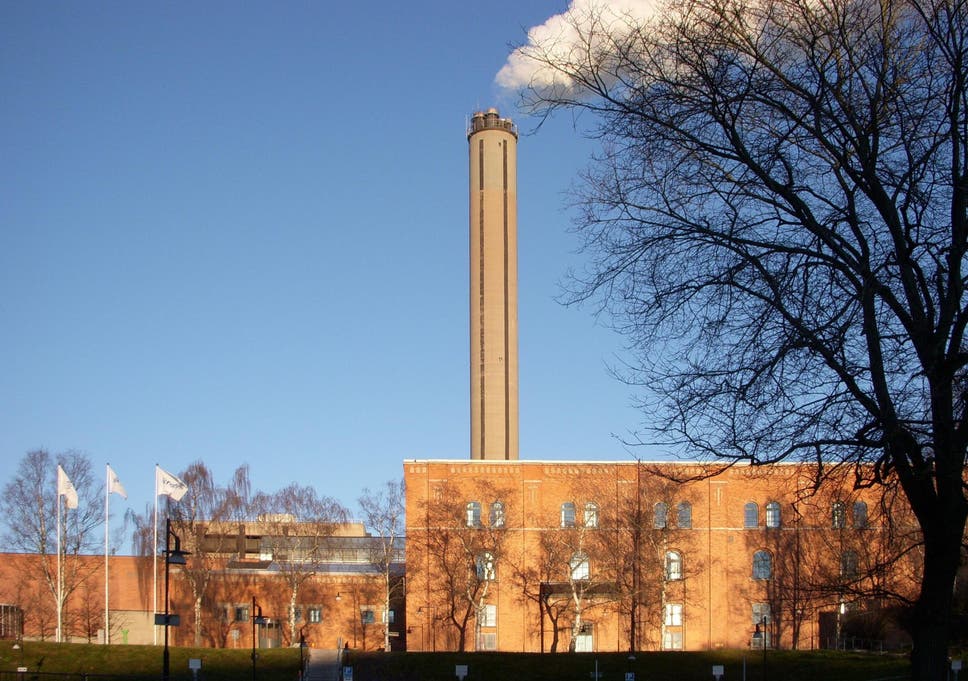
The plant at Värtaverket, in Hjorthagen in eastern Stockholm, pictured in 2008.
It becomes the third European country to exit coal completely after Belgium closed its last coal power station in 2016, and Austria ended its final coal-fired energy operations earlier this month.
The plant at Värtaverket, in Hjorthagen in eastern Stockholm is owned by Stockholm Exergi, a company part owned by the City of Stockholm and which described the closure as “a milestone” for clean energy in Sweden.
The move will cut the CO2 emissions of the company by half, it said.
The Swedish capital is on track for its district heating to be produced entirely by renewable or recycled energy by 2030. District heating, which is used in many European cities, tends to provide higher efficiencies and less pollution than localised boilers in each dwelling. 
Read the story from the Independent by Harry Cockburn - “Climate crisis: Sweden closes last coal-fired power station two years ahead of schedule.”

05 February, 2019

A groundbreaking study outlines what you can do about climate change

Researchers in Sweden examined the possible steps that people can take to help tackle the climate crisis. Although a lot of resulting news coverage focused on the most effective action (having one fewer kid), the real takeaway is that individual actions still matter. A lot.

In fact, the researchers found that behavioral shifts could be faster than waiting for national climate policies and widespread energy transformations. As far as I know, this is the very first comprehensive analysis on the effectiveness of specific individual climate actions.


23 April, 2018

Sweden’s solution for charging electric cars is bold, but flawed

Sweden's electric road claims to solve the problem of charging cars.
The eRoadArlanda pilot scheme, which covers two kilometres of road outside Stockholm, is an attempt to solve one of the biggest challenges that the transport industry faces. Namely, how to move freight and people in a way that neither damages the climate through greenhouse gas emissions nor the quality of air through nitrogen oxide pollution.

The eRoadArlanda scheme is supposed to extend the range of electric vehicles beyond what was previously possible. Yet, as an engineer, I have concerns about the durability of this road. Even more significantly, the cost of the technology and the disruption that building it causes is likely to restrict any mass scale replication. If this solution cannot be widely replicated then it is really no solution at all.


Read the comment from The Age by Rick Greenough - “Sweden’s solution for charging electric cars is bold, but flawed.”

14 March, 2016

Windfarms answer domestic needs, and exports some power

Denmark's windfarms answer all domestic
 power needs and then exports some.
So much power was produced by Denmark’s windfarms on Thursday that the country was able to meet its domestic electricity demand and export power to Norway, Germany and Sweden.

On an unusually windy day, Denmark found itself producing 116% of its national electricity needs from wind turbines yesterday evening. By 3am on Friday, when electricity demand dropped, that figure had risen to 140%.

Interconnectors allowed 80% of the power surplus to be shared equally between Germany and Norway, which can store it in hydropower systems for use later. Sweden took the remaining fifth of excess power.

11 July, 2015

Wind power meets and exceeds Denmark's domestic electricity needs


S

o much power was produced by Denmark’s windfarms on Thursday that the country was able to meet its domestic electricity demand and export power to Norway, Germany and Sweden.

On an unusually windy day, Denmark found itself producing 116% of its national electricity needs from wind turbines yesterday evening. By 3am on Friday, when electricity demand dropped, that figure had risen to 140%.

Interconnectors allowed 80% of the power surplus to be shared equally between Germany and Norway, which can store it in hydropower systems for use later. Sweden took the remaining fifth of excess power.

19 March, 2015

Sweden has much to teach about governance and creating a cleaner country


S

weden has much to teach us about governance and ensuring we live in a cleaner country.

Sitting here, reading and posting this I can hear, in the background, Australia’s parliament careering into seriously undisciplined discussion that is about scoring political points, rather than working together to make Australia a better place to live.

Sweden is one of the leading countries in the development, implementation, and export of environmental technology.

The success is including high standards of sanitation, waste management and stringent rules against the emission of environmentally harmful substances

A quick look at Sweden’s caring development can be seen here; “Sweden's Eco history - how a small country became big in clean tech!”
 
Robert McLean