Showing posts with label disappear. Show all posts

13 March, 2020

The end of coal-fired power can be managed or messy

Coal is on the way out. The head of the world's largest coal export port says it needs to prepare for the day it will no longer be viable to send coal from Newcastle to the rest of the world. And there is no doubt coal will disappear from Australia’s energy system, too. The question is just how quickly, and how messy this process will be. It is in the hand of governments to make the transition palatable.
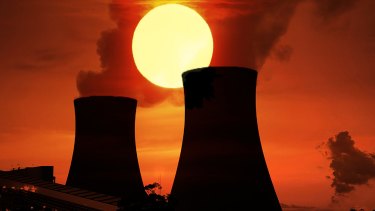
The market is already driving the shift away from coal-fired power.
Net-zero emissions for any country relies on a near carbon-free electricity system that can also supply clean energy in transport and industry. In Australia, that means replacing coal power with renewables and storage.

Read the story from The Sydney Morning Herald by Frank Jotzo and John Wiseman - “The end of coal-fired power can be managed or messy.”

27 February, 2019

A World Without Clouds. Think About That a Minute': New Study Details Possibility of Devastating Climate Feedback Loop

As people across the globe mobilize to demand bold action to combat the climate crisis and scientific findings about looming "environmental breakdown" pile up, a startling new study published Monday in the journal Nature Geoscience warns that human-caused global warming could cause stratocumulus clouds to totally disappear in as little as a century, triggering up to 8°C (14°F) of additional warming.
A new study warns that if the Earth's atmospheric
carbon hits a certain level, stratocumulus clouds could
completely vanish, causing the planet's temperatures
to skyrocket even higher. 
Stratocumulus clouds cover about two-thirds of the Earth and help keep it cool by reflecting solar radiation back to space. Recent research has suggested that planetary warming correlates with greater cloud loss, stoking fears about a feedback loop that could spell disaster.

For this study, researchers at the California Institute of Technology used a supercomputer simulation to explore what could lead these low-lying, lumpy clouds to vanish completely. As science journalist Natalie Wolchover laid out in a lengthy piece for Quanta Magazine titled "A World Without Clouds".


01 January, 2016

The foods the could disappear because of climate change


Climate change is making the world a different place. There are more floods, droughts, wildfires, heat waves and other extreme weather events. Animal species around the world are either shifting habitat locations or simply dying off. Even humans are migrating due to a warmer world.

But there is one effect that will hit many of us right in the gut: Certain foods could disappear thanks to our changing climate. Brace yourself: Here are 10 foods you’ll probably be sad to see go.

12 July, 2015

Albert Einstein quote about bees coming to fruition


A

lbert Einstein was famous for his exploits in science and along with that he made many other comments that continue to echo around the world.

One was about bees and here is a version (many exist) of what he said:
 
“If the bee disappeared off the surface of the globe then man would only have four years of life left. No more bees, no more pollination, no more plants, no more animals, no more man”.


And now today’s scientists are echoing his view, this time in response to changes being wrought by climate change with report from the Guardian.

Climate change caused by emissions from cars, factories and power plants is squeezing the habitats suitable for bumblebees to live in across Europe and North America, scientists have discovered.

As temperatures have risen over the past 110 years, the bees are being killed off by increased heat in their southern habitats. But to the surprise of researchers, they are failing to move north to cooler climes, unlike other species.

The finding matters because of the vital job the bees do as pollinators for wild flowers and other plants. Scientists consider the bees to be a “keystone species” crucial to the health of the ecological communities they are part of. If they disappear there will be knock on effects for a wide range of other species.