Showing posts with label Newcastle. Show all posts

13 March, 2020

The end of coal-fired power can be managed or messy

Coal is on the way out. The head of the world's largest coal export port says it needs to prepare for the day it will no longer be viable to send coal from Newcastle to the rest of the world. And there is no doubt coal will disappear from Australia’s energy system, too. The question is just how quickly, and how messy this process will be. It is in the hand of governments to make the transition palatable.
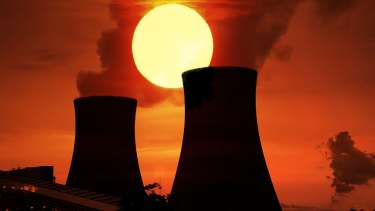
The market is already driving the shift away from coal-fired power.
Net-zero emissions for any country relies on a near carbon-free electricity system that can also supply clean energy in transport and industry. In Australia, that means replacing coal power with renewables and storage.

Read the story from The Sydney Morning Herald by Frank Jotzo and John Wiseman - “The end of coal-fired power can be managed or messy.”

24 February, 2020

Smoke screen: how Australia's biggest polluters have been free to increase emissions

For nearly 40 years, black coal has been mined at Myuna, an underground operation a short drive south-west of Newcastle. Each year about 2 million tonnes is dug up, dropped on to an overland conveyor and sent to the Eraring power plant next door to be burned.
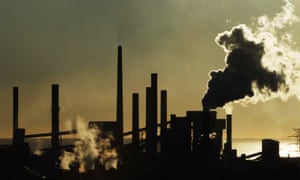
The Port Kembla steelworks in New South Wales.
The Coalition’s safeguards mechanism was intended
to protect trade-exposed industries, such as steel and
aluminium, while ensuring emissions did not increase,
but its failure has raised serious questions.
Although the New South Wales mine isn’t new, its operation under owner Centennial Coal has changed over the past couple of years, leading to a dramatic increase in greenhouse gas escaping its coal seams.
Emissions at the mine in 2017-18 were 65% above the government-agreed limit for the site. New data published just before Christmas show Centennial was also in breach last financial year, with carbon pollution at Myuna 47% above its limit.
In an era in which political battles are fought over how to meet climate targets, an emissions rise of this proportion – nearly half a million tonnes at one site over just a couple of years – is noteworthy. Along with similar examples at other industrial sites, including those owned by BHP, Chevron and a range of other fossil-fuel companies, it helps explain why official data says the Morrison government will fail to cut emissions to 5% below 2000 levels in 2020 as it claims.

Read the story from The Guardian by Adam Morton - “Smoke screen: how Australia's biggest polluters have been free to increase emissions.”

18 May, 2017

Cheap and quick printed solar on the way from Newcastle

New solar ink technology from the University of Newcastle can be printed so rapidly that enough energy to power 1000 homes could be created every day on just 10 commercial-scale printers – and for a cost of less than $10 a square metre.
Professor Paul Dastoor with panels
from the new solar ink technology.
The university this week has revealed a 100-square-metre demonstration site to test its printed organic solar film, with commercialisation expected in the next three years.

The creator, Professor Paul Dastoor, said the technology could be rolled out (literally) faster than any other renewable energy technology.

“On our lab-scale printer we can easily produce hundreds of metres of material per day. On a commercial-scale printer this would increase to kilometres. If you had just 10 of these printers operating around the clock we could print enough material to deliver power to 1000 homes per day,” he said.


Read The Fifth Estate story - “Cheap and quick printed solar on the way from Newcastle.”

16 May, 2016

Coal mining, transport and burning brings pollution problem to Hunter Valley

The recent studies of air pollution in the Hunter finally show us the constituents of pollution and points to the likely sources. We agree with the editorial comment (Newcastle Herald, April 30) that it is extraordinary that the EPA seems to have leapt to the defence of the coal industry, because a close look at the results shows that coal mining, transport and burning is a major contributor to pollution.

Air pollution is a complex mixture of components. The largest fraction shown from the Particle Characterisation Study in Newcastle was sea salt which is probably innocuous, however this is true wherever air pollution has been studied. The large health studies from Europe and North America showing air pollution to cause lung cancer and heart disease also included a salt fraction, so this is not an argument to ignore the high levels of fine particle pollution recorded here.

Read the Newcastle Herald story - “We need a regional air quality plan for the Hunter.”