Showing posts with label new report. Show all posts

27 March, 2020

The reef is rapidly deteriorating

A new report reveals that under the Federal Government’s watch the long-term outlook for the Great Barrier Reef has gone from “poor” to “very poor” for the very first time.
“This report makes it abundantly clear that climate change is the major factor driving the deterioration of one of our most precious natural icons,” said the Climate Council’s CEO Amanda McKenzie.
The Government’s caretaker of the reef – the Great Barrier Reef Marine Park Authority – releases a report every five years that provides an assessment of the reef’s health, the pressures it’s under and its likely future. 
The report states: “Climate change is escalating and is the most significant threat to the Region’s long-term outlook…The challenge to restore Reef resilience is big, but not insurmountable. However, it requires mitigation of climate change.”

Read the story from The Climate Council - “The reef is rapidly deteriorating.”


08 March, 2020

‘Expensive and underperforming': energy audit finds gas power running well below capacity

Australia’s existing gas power plants are running well below capacity, challenging the justification for a Morrison government program that may support up to five new gas-fired generators, according to a new report.
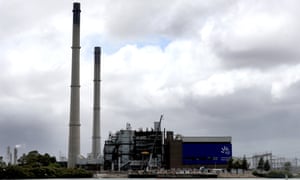
gas power station
Gas is expensive, it’s high-polluting and underperforming,’
says Richie Merzian from the Australia Institute, who
 published the report. ‘Why would we underwrite new gas-fired plants?’
Energy analyst Hugh Saddler, from Australian National University’s Crawford school of public policy, found the combined-cycle gas plants in the national grid – those expected to be available near constantly, sometimes described as “baseload” – ran at just 30% capacity across the past 18 months.
The Australia Institute, the thinktank that publishes Saddler’s monthly energy audit which includes the gas analysis, said it suggested the government’s commitment to underwrite new gas generators made little sense, and if it wanted to increase supply it should find ways to get the current fleet to operate at greater capacity.


27 December, 2019

Extreme heat due to climate change could send cricket's Boxing Day Test into extinction, researchers say

The Boxing Day Test may need to be moved to November or March in the future to avoid extreme heat, which is a danger to players and cricket fans, a new report has suggested.
Steve Smith hits a cover drive as the wicket-keeper watches on at the MCG
The Boxing Day Test is an iconic fixture of the summer
calendar — but climate change could eventually see
 it moved to a cooler month.
Cricket Australia must also work to help grassroots clubs deal with extreme heat, the report from Monash University's Climate Change Communication Research Hub has found.
The study, commissioned by the Australian Conservation Foundation (ACF), urges Cricket Australia to use its prominence to push for greater climate action and do more to look after player and spectator welfare.
Conditions in the middle of the ground can reach into the high 50s, with English captain Joe Root hospitalised with dehydration during the Sydney Test in 2018 when the air temperature hit 42 degrees Celsius, as a heat tracker in the middle of the ground showed 57.6C.

Read the ABC News story by Richard Willingham and Joseph Dunstan - “Extreme heat due to climate change could send cricket's Boxing Day Test into extinction, researchers say.”

20 November, 2019

Climate Change Poses Threats to Children’s Health Worldwide

The health effects of climate change will be unevenly distributed and children will be among those especially harmed, according to a new report from the medical journal The Lancet.
The report compared human health consequences under two scenarios: one in which the world meets the commitments laid out in the Paris Agreement and reins in emissions so that increases in global temperatures remain “well below 2 degrees Celsius” by the end of the century, and one in which it does not.
The report, published Wednesday, found that failing to limit emissions would lead to health problems caused by infectious diseases, worsening air pollution, rising temperatures and malnutrition.
“With every degree of warming, a child born today faces a future where their health and well-being will be increasingly impacted by the realities and dangers of a warmer world,” said Dr. Renee N. Salas, a clinical instructor of emergency medicine at Harvard Medical School and lead author of the United States policy brief that accompanied the report.

Read the story from The New York Times by Kendra Pierre-Louis - “Climate Change Poses Threats to Children’s Health Worldwide.”

25 August, 2019

Farming Our Way Out of the Climate Crisis

Early tomorrow (this story was published August 7), the Intergovernmental Panel on Climate Change (IPCC) will release a new report that highlights the importance of land use and agriculture in climate change.
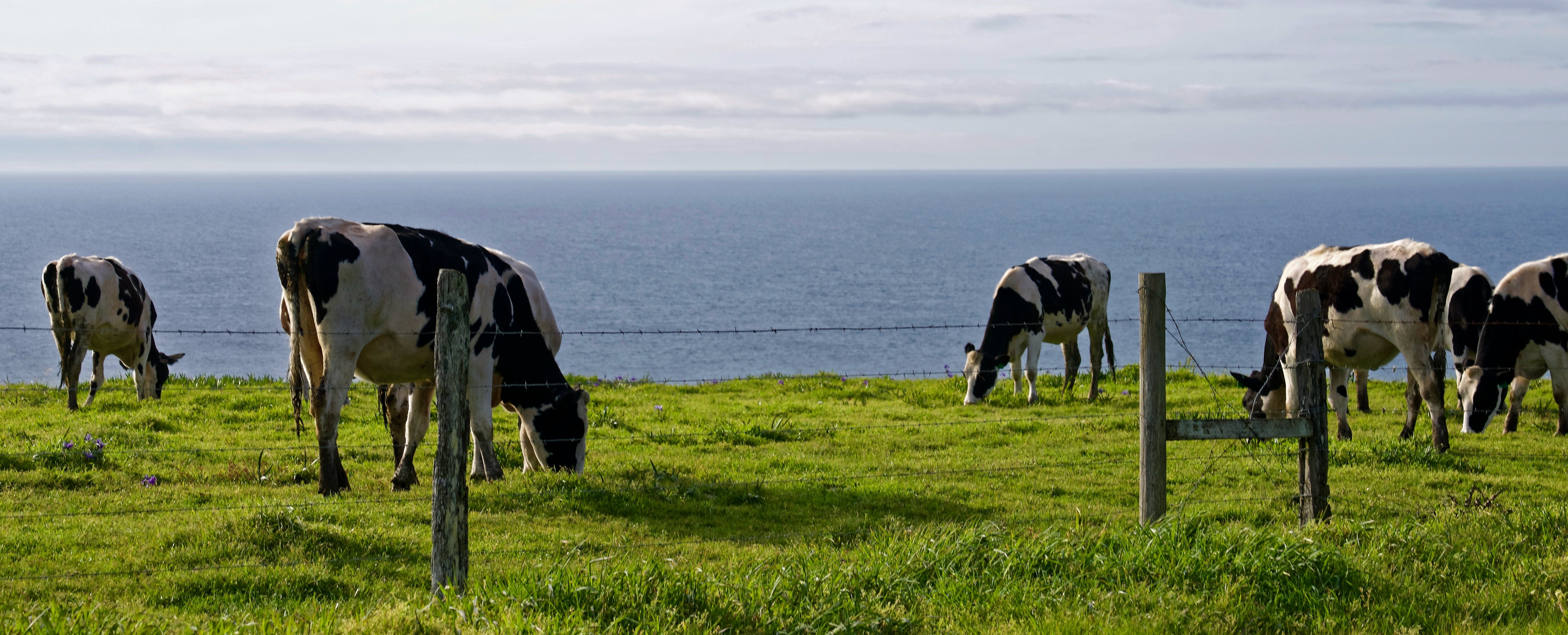
California cows, Marin County. 
Good! It’s a crucial area for us to focus on, and it’s often neglected.

I’ve been working on this topic, on and off, since the 1990s, and have been bewildered why it doesn’t get more attention. For some reason, when we think of greenhouse gas emissions, we envision factories, cars, and smokestacks — not farm fields, plantations, and cattle ranches. But, it turns out, land use and agriculture are among the biggest contributors to climate change — and can be among the biggest climate solutions.

So it’s great to see more attention paid to land use and agriculture, and its central role in addressing the climate crisis. At Project Drawdown, we have stressed this point since the beginning, and we are happy to see others talk about it too.


Read the story from Medium by Jonathan Foley - “Farming Our Way Out of the Climate Crisis.”

09 August, 2019

Fighting Climate Change on the Farm

FIREBAUGH, Calif. — Many farmers probably haven’t read the new report from the United Nations warning of threats to the global food supply from climate change and land misuse. But we don’t need to read the science — we’re living it.
Here in the San Joaquin Valley, one of the world’s most productive agricultural regions, there’s not much debate anymore that the climate is changing. The drought of recent years made it hard to ignore; we had limited surface water for irrigation, and the groundwater was so depleted that land sank right under our feet.

Temperatures in nearby Fresno rose to 100 degrees or above on 15 days last month, which was the hottest month worldwide on record, following the hottest June ever. (The previous July, temperatures reached at least 100 degrees on 26 consecutive days, surpassing the record of 22 days in 2005.) The heat is hard to ignore when you and your crew are trying to fix a broken tractor or harvest tomatoes under a blazing sun. As the world heats up, so do our soils, making it harder to get thirsty plants the water they need.


Read the story from The New York Times by Alan San - “Fighting Climate Change on the Farm.”

11 July, 2019

Banks Funneled $1.9 Trillion Into Fossil Fuels Since Paris Agreement

A new report published this week shows that 33 global banks provided $1.9 trillion to fossil fuel companies since the adoption of the Paris Climate Agreement at the end of 2015 and that the amount of fossil fuel financing has increased in each of the past two years.


The new report, Banking on Climate Change 2019, is the tenth annual fossil fuel report card and the first-ever analysis of funding from the world’s major private banks for the fossil fuel sector as a whole. The report was released Wednesday by Rainforest Action Network, BankTrack, Indigenous Environmental Network, Oil Change International, Sierra Club, and Honor the Earth, and endorsed by over 160 organizations around the world.

In addition to finding that 33 of the world’s top banks are supplied $1.9 trillion to fossil fuel companies since the adoption of the Paris Agreement, the report also found that of that $1.9 trillion, $600 billion went to 100 companies that are most aggressively expanding fossil fuels, highlighting business-as-usual practices that fly in the face of the latest scientific warnings from the Intergovernmental Panel on Climate Change (IPCC) which warned that “Limiting global warming to 1.5°C would require rapid, far-reaching and unprecedented changes in all aspects of society.”


Read the Clean Technica story by Joshua S. Hill - “Banks Funneled $1.9 Trillion Into Fossil Fuels Since Paris Agreement."

23 June, 2019

Study: U.S. Fossil Fuel Subsidies Exceed Pentagon Spending

The United States has spent more subsidizing fossil fuels in recent years than it has on defense spending, according to a new report from the International Monetary Fund. 
The dome of the U.S. Capitol is seen behind the smoke
 stacks of the Capitol Power Plant, the only coal-burning
power plant in Washington, D.C.
The IMF found that direct and indirect subsidies for coal, oil and gas in the U.S. reached $649 billion in 2015. Pentagon spending that same year was $599 billion.
The study defines “subsidy” very broadly, as many economists do. It accounts for the “differences between actual consumer fuel prices and how much consumers would pay if prices fully reflected supply costs plus the taxes needed to reflect environmental costs” and other damage, including premature deaths from air pollution.

Read the story from Rolling Stone by Tom Dickinson - “Study: U.S. Fossil Fuel Subsidies Exceed Pentagon Spending.”

06 June, 2019

Human civilization faces ‘Existential risk’ by 2050 according to new Australian climate change report

A new report by Australian climate experts warns that "climate change now represents a near- to mid-term existential threat" to human civilization. In this grim forecast — which was endorsed by the former chief of the Australian Defense Force — human civilization could end by 2050 due to the destabilizing societal and environmental factors caused by a rapidly warming planet. 
The report, entitled "Existential climate-related security risk: A scenario approach," lays out a future where society could collapse due to instability set off by migration patterns of billions of people affected by drought, rising sea levels, and environmental destruction. 
"Climate-change impacts on food and water systems, declining crop yields and rising food prices driven by drought, wildfire and harvest failures have already become catalysts for social breakdown and conflict across the Middle East, the Maghreb and the Sahel, contributing to the European migration crisis," the report said. 

(Interview with David Spratt on "Climate Conversations")

28 March, 2019

Carbon emissions reach record high worldwide in 2018

A new report from the International Energy Agency determined carbon dioxide emissions was at an all-time high in 2018. While global emissions rose 1.7 percent to reach a historic 33.1 gigatons of carbon dioxide, it was the highest rate of growth since 2013, according to IEA.

An overall growing economy, which caused a greater energy demand, is to blame along with climate change – sending more global warming gasses into the environment – EcoWatch reported. The extreme global hot and cold temperatures caused by climate change made people depend on the increased use of heating and cooling systems.

“[D]espite major growth in renewables, global emissions are still rising, demonstrating once again that more urgent action is needed on all fronts,” Fatih Birol, IEA Executive director, said. “It seems like a vicious cycle. Heating and cooling are one of the biggest drivers of energy demand growth.”


Read the story from Nation of Change by Ashley Curtin - “Carbon emissions reach record high worldwide in 2018.”

06 March, 2019

Murray-Darling Basin could be missing billions of litres of water, study claims

Hundreds of billions of litres of water is missing from the Murray-Darling Basin, according to a new report.
Billions of dollars has been spent trying to restore
water to the Murray-Darling Basin river system.
An Australian National University (ANU) study claimed the Federal Government had grossly exaggerated the amount of water being returned to the system via water savings.

The recovered water was meant to boost environmental flows.

Co-author Professor John Williams said the lack of water may be a contributing factor in ecological issues affecting the river.


Read the story from ABC News by Rachel Carbonell, Tom Iggulden and Jesse Davies - “Murray-Darling Basin could be missing billions of litres of water, study claims.”

13 February, 2019

Climate and economic risks 'threaten 2008-style systemic collapse

The gathering storm of human-caused threats to climate, nature and economy pose a danger of systemic collapse comparable to the 2008 financial crisis, according to a new report that calls for urgent and radical reform to protect political and social systems.
Hurricane Florence in North Carolina in 2018. The report
 fears relentless floods and fires in the US could threaten
financial institutions.
The study says the combination of global warming, soil infertility, pollinator loss, chemical leaching and ocean acidification is creating a “new domain of risk”, which is hugely underestimated by policymakers even though it may pose the greatest threat in human history.

“A new, highly complex and destabilised ‘domain of risk’ is emerging – which includes the risk of the collapse of key social and economic systems, at local and potentially even global levels,” warns the paper from the Institute for Public Policy Research. “This new risk domain affects virtually all areas of policy and politics, and it is doubtful that societies around the world are adequately prepared to manage this risk.”

Until recently, most studies of environmental risk tended to examine threats in isolation: climate scientists examined disruption to weather systems, biologists focused on ecosystem loss and economists calculated potential damages from intensifying storms and droughts. But a growing body of research is assessing how the interplay of these factors can create a cascade of tipping points in human society as well as the natural world.


Read the story from The Guardian by Jonathon Watts - “Climate and economic risks 'threaten 2008-style systemic collapse.”

24 January, 2019

Report predicts 21m electric cars by 2030, price parity by 2022

By 2030 there will be 21 million electric vehicles on the road globally, a new report released this week predicts.
It's predicted there will be 21 million electric cars on the road globally by 2030.
After a record year for EV adoption in 2018, the report forecasts that the transition will continue, doubling the number of EVs worldwide from 2 million in 2018 to 4 million in 2020.

By 2025 there will be 12 million electric cars on the road, the report says, increasing to 21 million within the next five years.


Read the story from The Driven by  Bridie Schmidt - “Report predicts 21m electric cars by 2030, price parity by 2022.”

22 January, 2019

World Economic Forum report notes climate change as key threat

Environment-related risks are the most likely and among the most impactful global risks of 2019, says a new report by the World Economic Forum, issued just as world leaders gather next week for the annual conference.
The WEF survey, completed by roughly 1,000 experts
and business leaders in preparation for the meeting
in Davos, Switzerland, lists extreme weather events,
 natural disasters and environmental policy failure
among the greatest hazards for 2019.
The survey, completed by roughly 1,000 experts and business leaders in preparation for the meeting in Davos, Switzerland, lists extreme weather events, natural disasters and environmental policy failure among the greatest hazards for 2019.

“Of all risks, it is in relation to the environment that the world is most clearly sleepwalking into a catastrophe,” the WEF report said, highlighting the strong relationship between intensity and likelihood of severe events and the failure of government climate action last year.

Alison Martin, group chief risk officer at Zurich Insurance Group who collaborated on the WEF report, is urging businesses to develop a timely climate-change strategy.


Read the story from The Globe and Mail by Alastair Spriggs - “World Economic Forum report notes climate change as key threat.”

22 December, 2018

Record breaking temperatures in 2019, warns Met Office.

A new report by the Met Office has found that 2019 could be a record-breaking year for global temperatures due to climate change.
The British Met Office has warned of record-breaking temperatures in 2019.
The Met Office forecasts the global average temperature for 2019 to be between 0.98 degrees Celsius and 1.22 degrees Celsius, with a central estimate of 1.10 degrees Celsius.

Since 1850, 2016 is the warmest year on record with a central estimate of 1.15 degrees Celsius above the baseline.

The forecast is based on modest warming from El Nino combined with much larger effects due to rising levels of greenhouse gases.


Read the ClimateAction story by Rachel Cooper - “Record breaking temperatures in 2019, warns Met Office.”

10 November, 2018

While my island nation sinks, Australia is doing nothing to solve climate change

A new report by the Intergovernmental Panel on Climate Change paints a picture of what the world will look like if it gets 1.5°C, and 2°C, hotter than pre-industrial levels.
Part of the village of Eita in the nation of Kiribati, which
is only two metres above sea level and is already feeling
 the impact of rising sea levels. 

Our whole nation is only two metres above sea level, and the report shows that the difference between 1.5°C and 2°C of warming is several centimetres of sea level rise. Given that we are already feeling the impacts of rising water, every millimetre counts.


Read the story from The Guardian by Anote Tong - “While my island nation sinks, Australia is doing nothing to solve climate change.”

08 October, 2018

The good, the bad and the ugly: limiting temperature rise to 1.5°C

THE INTERNATIONAL effort to tackle climate change must be accelerated in order to limit global temperature rises, a new report from the Intergovernmental Panel on Climate Change (IPCC) has found.

The IPCC report, released today in South Korea, is an urgent reminder that global warming poses a grave risk to humanity.

To put into context what this means for Australia, the Climate Council has prepared its own report: “The good, the bad and the ugly: Limiting temperature rise to 1.5°C”.


13 September, 2018

Transport emissions continue to rise as Australia lags behind other nations

Australia is lagging behind other developed nations in the race to curb greenhouse gas emissions from transport, according to a new report.
 Rush hour traffic in Melbourne. Australia ranks behind
Russia and Mexico in green transport efficiency due to
 policy inaction, a new report has found.
The report from the Climate Council, due to be released on Thursday, finds that Australia’s transport-related emissions have continued to rise because of policy inaction.

The nation’s move to electric vehicles has been hampered by a lack of incentives and a lack of mandatory pollution standards for vehicles, which have been implemented in almost all other OECD countries.


Read the story from The Guardian by Luke Henriques-Gomes - “Transport emissions continue to rise as Australia lags behind other nations.”

04 September, 2018

Queensland could be 90% renewable by 2030 – with right policy settings

Coal-dependent Queensland could meet almost 100 per cent of its electricity needs from renewable energy sources by 2030, a new report has found, if all of the state’s almost 15,000MW (15GW) pipeline of large-scale wind and solar projects went ahead.


The report, produced by Green Energy Markets for the Solar Citizens campaign group, says that if all projects under various stages of development in Queensland proceeded, they could generate more than 90 per cent of its forecast annual power consumption in 2030.

It points to a growth trajectory that has taken renewable energy capacity in Queensland from just 7.4 per cent of state electricity consumption in 2015, to 25.6 per cent – or just over one quarter – by 2020.


Read Sophie Vorrath’s story from RenewEconomy - “Queensland could be 90% renewable by 2030 – with right policy settings.”

25 July, 2018

National Energy Guarantee will help cut power prices in most states and territories in the next decade, report finds

Households would save about $150 every year on their power bills under the Turnbull Government's flagship energy policy, a new report has found.
New research says the average household would
 make an additional saving of $150 under the NEG.
The research said the National Energy Guarantee (NEG) would help cut prices in most states and territories in the next decade.

Energy Ministers from across the country will decide the policy's fate at a crucial meeting on August 10 — a gathering that could end more than a decade of bickering over energy and climate change.

The average household would "save around $550 a year on their retail bill over the 2020s relative to 2017-18," the official report predicted.