Showing posts with label World Economic Forum. Show all posts

23 January, 2020

We need revolutionary action to save the planet: full transcript of Prince Charles' Davos speech

Ladies and gentlemen, I am most touched that Professor Klaus Schwab should have invited me to be with you as we mark the 50th anniversary of the World Economic Forum and its mission to “improve the state of the world”. It is this mission, and the urgent need to shape the next 50 years, that has inspired me to be with you here today, after an absence of 30 years I hate to tell you.
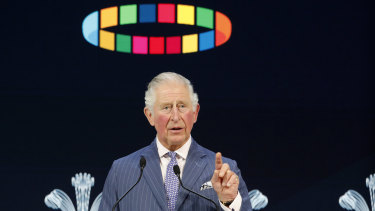
Prince Charles speaks to the World Economic Forum for the first time in 30 years.
Prince Charles speaks to the World Economic
 Forum for the first time in 30 years.
We are in the midst of a crisis that is now, I hope, well understood. Global warming, climate change, and the devastating loss of biodiversity are the greatest threats humanity has ever faced – and one largely of our own creation.
I have dedicated much of my life to the restoration of harmony between humanity, nature and the environment, and to the encouragement of corporate social and environmental responsibility. Quite frankly, it has been a bit of an uphill struggle. But, now, it is time to take it to the next level.

26 January, 2019

Teen activist tells Davos elite they're to blame for climate crisis

Davos (CNN) While many delegates at the World Economic Forum arrive in their private jets, 16-year-old Swedish climate activist Greta Thunberg took a 32-hour train from her home to Davos.
Swedish youth climate activist Greta Thunberg poses
during an interview at the World Economic Forum in
Davos, Switzerland.
She's also been camping out, trading a luxury hotel stay for a tent in 0 degrees Fahrenheit.
And, in the process, she's been giving Davos a run for its money.


Read the CNN story by Ivana Kottassova and Eiza Mackintosh - “Teen activist tells Davos elite they're to blame for climate crisis.”

22 January, 2019

World Economic Forum report notes climate change as key threat

Environment-related risks are the most likely and among the most impactful global risks of 2019, says a new report by the World Economic Forum, issued just as world leaders gather next week for the annual conference.
The WEF survey, completed by roughly 1,000 experts
and business leaders in preparation for the meeting
in Davos, Switzerland, lists extreme weather events,
 natural disasters and environmental policy failure
among the greatest hazards for 2019.
The survey, completed by roughly 1,000 experts and business leaders in preparation for the meeting in Davos, Switzerland, lists extreme weather events, natural disasters and environmental policy failure among the greatest hazards for 2019.

“Of all risks, it is in relation to the environment that the world is most clearly sleepwalking into a catastrophe,” the WEF report said, highlighting the strong relationship between intensity and likelihood of severe events and the failure of government climate action last year.

Alison Martin, group chief risk officer at Zurich Insurance Group who collaborated on the WEF report, is urging businesses to develop a timely climate-change strategy.


Read the story from The Globe and Mail by Alastair Spriggs - “World Economic Forum report notes climate change as key threat.”

23 January, 2016

Pouyanne's Davos renewable energy argument is flawed

The rock-bottom price of oil dramatically reduces investor appetite for lower-carbon alternatives, the head of one of the world’s largest oil companies said on Thursday.

Total CEO Patrick Pouyanne told delegates at the World Economic Forum in Davos the business case for clean energy had collapsed.

“I am a big investor in solar and I was advocating that there are 20 countries in the world where we can make solar profitable,” he said. “It is not true today. At 30 dollars per barrel there is not a single one.”

Read the Climate Home story - “Total CEO: Solar is loss-making at $30 oil.”

(Should Davos decisions reflect the view of Total CEO Patrick Pouyanne, then they are purely the short-termism of economics. The collapse in oil prices is being driven by OPEC and just as soon as oil exploration and production led by the fracking companies and the renewable energy industry are disarmed, the costs of the “black gold” will increase.
Profit, rather than the broader wellbeing of humanity, is the prime driver of those gathered in Davos. Pouyanne's argument is flawed and serves only the interests of the fossil fuel companies– Robert McLean).

18 January, 2016

Climate change deemed top economic threat

Forced migration and climate change are the biggest risks facing the global economy this decade, according to 750 experts surveyed by the World Economic Forum.

 The warning was published in the 11th edition of WEF’s Global Risks Report and in advance of the annual gathering of global leaders at Davos next week.

Read the Greener Cities story -“Climate Change Deemed Top Economic Threat.”

02 January, 2016

What should we be looking for post-Paris


How should one evaluate the agreement reached in Paris at last month’s United Nations climate change conference? No sooner was the deal announced on December 12 than the debate erupted.

Some avid environmentalists were disappointed that the agreement did not commit firmly to limiting global warming to 1.5º Celsius above pre-industrial levels by 2050.

But such a commitment would not have been credible. What emerged in Paris was in fact better, because the negotiators were able to agree on practical steps in the right direction. Individual countries pledged to limit their emissions in the near term, with provisions for future monitoring and periodic reviews of targets. This is far better than setting lofty goals for the distant future while giving little reason to think that they would be met. The important thing is to get started.

Read the World Economic Forum story - “4 reasons to be hopeful about the Paris Agreement.”

21 December, 2015

What countries need to do to meet their Paris pledges


Countries around the world need to turn their climate pledges into action following the historic agreement in Paris on December 12.

The deal calls for average global temperatures to be kept “well below” 2° Celsius above pre-industrial levels and a target of restricting any rise to 1.5°C. Achieving this will require significant reductions in global emissions – so which countries have the most work to do?

There are a number of ways to calculate carbon emissions. Each method reveals a varied global picture, highlighting the complexity of the challenge.

04 November, 2015

Green Climate Fund wants to allocate money before Paris conference


T
he Green Climate Fund, which is due to deliver billions of dollars to help poorer nations deal with climate change in the coming years, is aiming to allocate money to a first set of projects in November, ahead of a major U.N. climate conference in Paris.

Executive director of
the Green Climate Fund,
Héla Cheikhrouhou.
Héla Cheikhrouhou, executive director of the fund, told journalists she hoped some proposals would be approved by its board at a meeting in Zambia from November 2 to 5.

“It is good that we are starting with a manageable number of projects that are fully prepared and appraised, and ready for an investment decision,” she said.

The board will consider eight proposals, which would require a total of $168 million in funding. They were selected from 37 proposals submitted since July.

Read the World Economic Forum story - “New funds to help poorer nations adapt to climate change.”

14 September, 2015

Food waste among worst of greenhouse gas emitters


“F

ood waste generates 3.3 billion tons of greenhouse gases annually, and that makes food wastage the third top emitter after USA and China.”

In this World Economic Forum IdeasLab video, captured during the Annual Meeting of the New Champions 2015, Professor Laura Nyström from ETH Zurich, talks about the global damaging effects of food waste.

Watch the video here - “How food waste is killing our planet”.

03 September, 2015

Not just renewable, but sustainable


D

ue to growing world population and increasing wealth, demand for energy – specifically electricity – is rising, especially for the 1.3 billion people who don’t have access.

The most commonly used source for electricity production today is coal; 41% of all electricity is produced from coal, according to the World Coal Association.
 
Due to its high level of pollution (water and air pollution during mining and air pollution during burning) and often miserable circumstances for miners, we can conclude that this is not a sustainable source for electricity.

Read the World Economic Forum Agenda story - “Renewable energy is not enough: it needs to be sustainable”.

24 January, 2015

World leaders say this is the year for global action


This year is the year for global action.

That was the message from world leaders, delivered at this month’s 45th World Economic Forum Annual Meeting in Davos-Klosters.

The leaders said: “If politicians, the private sector and international organizations fail to act on climate change and sustainable development in 2015, the opportunity to create low-carbon growth and reduce poverty will be lost.”

What resources and commitments are needed now to tackle climate change, development and growth were the points considered by the leaders and the outcome of those is reported in a story headed: “Tackling Climate, Development and Growth”.

26 January, 2014

Don't worry about saving the planet, save us!


The planet doesn’t care about climate change, we do!

Earth has been about for more than 13 billion years and we have only been here for about 200 000 years.

What we are concerned about is not the survival of the planet for it will go on regardless of what we do, what we are really concerned about it the preservation of the conditions that have existed for the past 10 000 years and allowed humanity to flourish.

The Huffington Post writing about the World Economic Forum at Davos discussed the dichotomy of thought in a story headed: “Kumi Naidoo of Greenpeace: ‘The planet does not need saving’”.

"The struggle is not about saving the planet. The planet does not need saving," Naidoo said. "This fight is fundamentally about securing our children and grandchildren's futures."