Showing posts with label weather patterns. Show all posts

17 November, 2018

Warmer, Wetter Than Usual Winter Headed for Much of US

Just over half of the United States has no need to fear an exceptionally frigid, frozen winter in the coming months — instead, they'll likely experience a warmer and wetter winter than usual, according to the National Oceanic and Atmospheric Administration (NOAA) Climate Prediction Center.
Warmer and wetter winter than usual in much of the U.S.
In the three coming months — December, January and February — the West Coast, the Mountain states and chunks of the Midwest and Northeast (although not New York or Boston) are all forecast to have above-normal temperatures for the season, as well as increased precipitation (meaning rain and snow), the Climate Prediction Center announced at a news conference yesterday (Nov. 15).

The warm and wet winter is due, in part, to weather patterns such as El Niño and decadal changes in ocean patterns, as well as climate change, said Stephen Baxter, a meteorologist and seasonal forecaster at the NOAA Climate Prediction Center. 


Read the LiveScience story by Laura Gegel - “Warmer, Wetter Than Usual Winter Headed for Much of US.”

14 October, 2018

Intense frequent and long heatwaves caused by human activity

It’s boiling outside. You can’t remember the last time it was this hot. It feels like the sun is sucking every morsel of water out of your body. Hopes of a short respite in a delicious ice cream fade fast when you realize how quickly it will melt. 
Dr Sarah Perkins-Kirkpatrick.

You’re in the middle of a heatwave. 

Heatwaves, measured as prolonged periods of excessive heat, are a complex type of extreme temperature event. These events occur naturally (albeit rarely) as part of our climate, and are driven by a delicate balance of the right weather patterns, local soil moisture conditions, and larger-scale climate variability patterns.

Unfortunately, they’ve increased in their intensity, frequency and duration over many regions of the globe since at least the middle of the 20th Century.

Read the story taken from the blog “SarahinScience” by climate scientist Sarah Perkins-Kirkpatrick - “Intense frequent and long heatwaves caused by human activity.”


(Dr Sarah Perkins-Kirkpatrick is from the University of New South Wales and will be interviewed soon on the podcast “Climate Conversations” - Robert McLean)

04 August, 2018

The world is losing the war against climate change

EARTH is smouldering. From Seattle to Siberia this summer, flames have consumed swathes of the northern hemisphere. One of 18 wildfires sweeping through California, among the worst in the state’s history, is generating such heat that it created its own weather. Fires that raged through a coastal area near Athens last week killed 91 (see article). Elsewhere people are suffocating in the heat. Roughly 125 have died in Japan as the result of a heatwave that pushed temperatures in Tokyo above 40°C for the first time.
A wonderfully evocative picture that sums up where we are at -
through our behaviour, which for a long time we didn't understand,
our actions have unleashed a demon (climate change) we are
unable to control.
Such calamities, once considered freakish, are now commonplace. Scientists have long cautioned that, as the planet warms—it is roughly 1°C hotter today than before the industrial age’s first furnaces were lit—weather patterns will go berserk. An early analysis has found that this sweltering European summer would have been less than half as likely were it not for human-induced global warming.


Read the story from The Economist - “The world is losing the war against climate change.”

26 July, 2018

Six reasons you should care about El Niño

El Niño translates to “the little boy” in Spanish and, together with La Niña (the little girl), has the potential to wreak havoc on our weather patterns. But what do you really know about it?
Good reasons why you should care about El Ninõ.
Last month our friends at the Bureau of Meteorology (aka da BOM) raised their El Niño-Southern Oscillation (ENSO) Outlook to El Niño WATCH; meaning that the likelihood of El Niño forming this spring has increased from approximately 25% to 50%. And today, some of our climate scientists had a paper published in Nature looking at the complexity of El Niño (you know it must be complex when even the experts haven’t got it completely pegged yet!).

So with the possibility that El Niño is on its way we thought we’d take a look at this climate phenomenon, how it’s likely to impact you, and why it’s so tricky to predict.


Read the story from CSIROscope by Fiona Brown - “Six reasons you should care about El Niño.”

15 July, 2017

Report: Asia facing dire future toll from climate change

A report by the Asia Development Bank says Asia will endure extreme heat, rising sea levels, growing losses from severe weather and increasing food insecurity in coming decades as climate change raises temperatures and alters weather patterns across the globe.

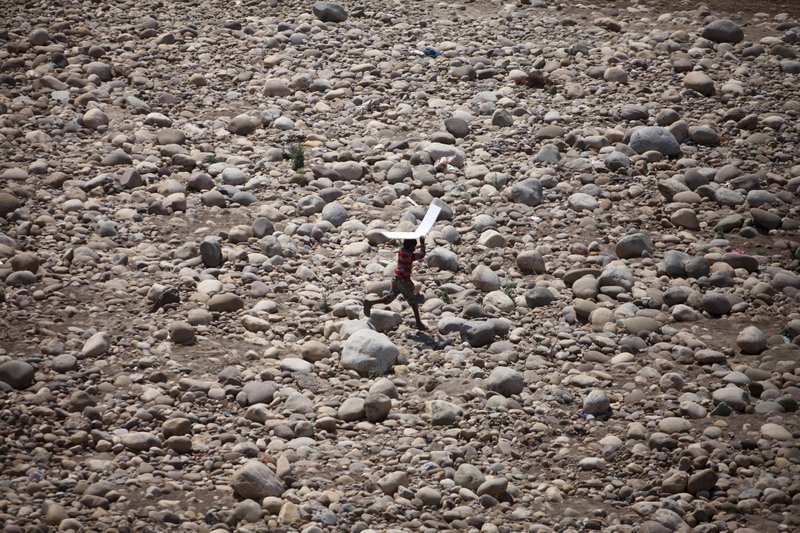
A boy walks on a dried-up river bed.
The survey released Friday by the Manila-based lender paints a grim outlook for many communities in Asia, home to about 4 billion people. It’s based on the latest scientific research, with or without more aggressive efforts to curb carbon emissions that contribute to global warming.

Read the Associated Press story - “Report: Asia facing dire future toll from climate change.”

28 May, 2017

Can’t sleep? Maybe global warming is to blame?

It's no surprise that a change in our planet's climate would affect our coastlines, our weather patterns and our food supply. But here's something you may not have considered before: Global warming might also affect how well we sleep at night.
Sleeplessness equates with global warming.
In a paper published in Science Advances, researchers show that when local temperatures get unusually high people don't sleep as well as they usually do. And if climate trends continue, we can expect to have more frequent heat waves that also last longer.


Read Deborah Netburn’s story in today’s Melbourne Age - “Can’t sleep? Maybe global warming is to blame?”

09 February, 2016

U.S. Southwest enters 'drier climate state'

A new study finds that the semi-arid U.S. Southwest has begun to enter the “drier climate state” that had been long-predicted from climate models. These findings match ones from September documenting an expansion of the entire world’s dry and semi-arid climate regions in recent decades because of human-caused climate change.

The new study from the National Center for Atmospheric Research (NCAR) concludes that “The weather patterns that typically bring moisture to the southwestern United States are becoming more rare, an indication that the region is sliding into the drier climate state predicted by global models.”

07 October, 2015

Climate Council report considers food security threat


T

he price, quality and seasonality of Australia’s food is increasingly being affected by climate change with Australia’s future food security under threat, our new report has revealed.

Australia’s food supply chain is highly exposed to disruption from increasing extreme weather events driven by climate change, with farmers already struggling to cope with more frequent and intense droughts and changing weather patterns.

And now Australia’s Climate Council has produced a report - “Feeding a Hungry Nation: Climate change, food and farming in Australia” – that looks at this issue.

The report’s preface says: “Australia is one of only a handful of countries that produces more food than it consumes and most Australians have access to an abundant and safe food supply. But Australia is also considered one of the most vulnerable developed countries in the world to impacts of the changing climate.

“Rising temperatures, increased frequency and intensity of extreme weather events, and declining water availability in some of our most important agricultural regions pose significant risks for the nature, distribution, quality, and affordability of our food supply. At the same time, the Australian and global population continues to grow, competition for arable land continues to intensify, and our natural resource base continues to degrade, placing ever-increasing demands on food production systems.”