Showing posts with label climate scientist. Show all posts

20 October, 2019

Why 'doomism' is part of the latest frontier in the climate wars

Once if you were a climate scientist the chief enemy was denial. Now, says Michael E. Mann, it’s more likely to be “doomism”: the idea that taking action to reduce the threat of runaway climate change is pointless because it’s already too late.
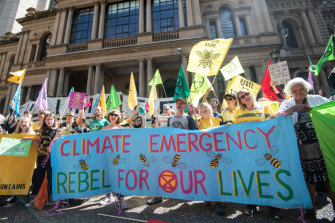
An Extinction Rebellion protest calling for stronger action to reduce climate change.
An Extinction Rebellion protest calling for
 stronger action to reduce climate change.
Doomism, argues the internationally renowned climate scientist, is part of the latest frontier in the climate wars - a new tool being exploited by those resisting change in the way the world does business.
It sits alongside what he calls “soft denialism” (climate change is happening but it's OK, we can adapt) and “deflection” (sowing division by making it all about individual lifestyle choices). Such tactics, he says, are in some ways “even more pernicious” than the old arguments flatly rejecting human-induced climate change.

Read the story from The Age by Deborah Snow - “Why 'doomism' is part of the latest frontier in the climate wars.”

11 September, 2019

I never thought I'd see the Australian rainforest burning. What will it take for us to wake up to the climate crisis?

These days as a climate scientist, the line of separation between the research I do in my professional life and the events unfolding in the world at large is growing ever thinner.
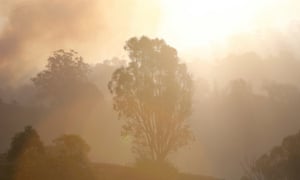
Bushfire on the Gold Coast
‘The extreme events that our community has been
talking about for decades are now are becoming a
part of our lived experience, season after season,
year after year across the entire planet.’
The extreme events that our community has been talking about for decades are now becoming part of our lived experience, season after season, year after year across the entire planet. What we are seeing play out now is much faster than many of us ever imagined.
Barely a week after sweltering through an Intergovernmental Panel on Climate Change (IPCC) lead author meeting discussing the UN group’s sixth global climate assessment report during an unseasonable European heatwave, it’s been surreal to return home to find much of Australia’s eastern seaboard engulfed in unprecedented bushfires crisis. In spring.

13 January, 2019

How Far Can We Get Without Flying?

I’m a climate scientist who doesn’t fly. I try to avoid burning fossil fuels, because it’s clear that doing so causes real harm to humans and to nonhumans, today and far into the future. I don’t like harming others, so I don’t fly. Back in 2010, though, I was awash in cognitive dissonance. My awareness of global warming had risen to a fever pitch, but I hadn’t yet made real changes to my daily life. This disconnect made me feel panicked and disempowered.

Then one evening in 2011, I gathered my utility bills and did some Internet research. I looked up the amounts of carbon dioxide emitted by burning a gallon of gasoline and a therm (about 100 cubic feet) of natural gas, I found an estimate for emissions from producing the food for a typical American diet and an estimate for generating a kilowatt-hour of electricity in California, and I averaged the Intergovernmental Panel on Climate Change and Environmental Protection Agency estimates for CO2 emissions per mile from flying. With these data, I made a basic pie chart of my personal greenhouse gas emissions for 2010.


Read the story from Yes! Magazine by Peter Kalmus - “How Far Can We Get Without Flying?”

30 December, 2018

In the hot seat: Joelle's journey from the dole to a global role

In 2006, climate scientist Dr Joelle Gergis was pulling weeds under Melbourne’s West Gate Bridge on the work-for-the-dole scheme. Centrelink advised removing her PhD from her resume, saying: “It’s not going to help you find a job.”
Dr Joelle Gergis speaks at the Melbourne University
 launch of her book 
Sunburnt Country in April.
CREDIT:
She refused, and instead enrolled in a professional writing course.

This year Gergis is one of Australia’s lead authors on the Sixth Assessment Report of the United Nation’s IPCC – the Intergovernmental Panel on Climate Change. In 2014, her inter-disciplinary team SEARCH – South Eastern Australian Recent Climate History – won the Eureka science prize,  informally known as the Oscars of Australian science.

But the story is not all pretty. Since 2012, Gergis has had to face attacks from trolls and climate change sceptics. But 2018 has seen her climate scholarship vindicated and the story of her work published to acclaim.


Read the story from The Age by Julie Perrin - “In the hot seat: Joelle's journey from the dole to a global role.”

28 July, 2018

How Far Can We Get Without Flying?

I’m a climate scientist who doesn’t fly. I try to avoid burning fossil fuels, because it’s clear that doing so causes real harm to humans and to nonhumans, today and far into the future. I don’t like harming others, so I don’t fly. Back in 2010, though, I was awash in cognitive dissonance. My awareness of global warming had risen to a fever pitch, but I hadn’t yet made real changes to my daily life. This disconnect made me feel panicked and disempowered.

Then one evening in 2011, I gathered my utility bills and did some Internet research. I looked up the amounts of carbon dioxide emitted by burning a gallon of gasoline and a therm (about 100 cubic feet) of natural gas, I found an estimate for emissions from producing the food for a typical American diet and an estimate for generating a kilowatt-hour of electricity in California, and I averaged the Intergovernmental Panel on Climate Change and Environmental Protection Agency estimates for CO2 emissions per mile from flying. With these data, I made a basic pie chart of my personal greenhouse gas emissions for 2010.


Read the story by Peter Kalmus from Yes! Magazine - “How Far Can We Get Without Flying?”

01 June, 2018

Ocean heat as 'fuel' for hurricanes

Mitigate and adapt. Mitigate or adapt.
Our oceans are becoming "fuel" for hurricanes.
“Right now, we’re kind of doing neither,” says George Mason University scientist Peter Jacobs.

Which, as this year’s hurricane season is getting under way, leaves us still facing the “suffer the consequences” outcome, according to National Center for Atmospheric Research climate scientist Kevin Trenberth.

Along with Lijing Cheng of China’s Institute of Atmospheric Research, Trenberth and Jacobs analyzed the source of the “fuel” for Hurricane Harvey, which deluged Houston and parts of Texas in August 2017.


Read the Yale Climate Connections story - “Ocean heat as 'fuel' for hurricanes.”

28 May, 2018

Solving our climate history puzzle

Climate scientist and paleoclimatologist Dr Joelle Gergis has spent over a decade painstakingly piecing together Australia’s climate history, using historical records dating back to the First Fleet, natural records held in our trees, corals and ice and computer modelling.
As she outlines in her book Sunburnt Country, published by Melbourne University Publishing, Australia’s climate has always been “spectacularly erratic”, but human activity has accelerated these rates of change.

As the developed nation most vulnerable to the impacts of climate change, she says we must act now to slow its worst impacts.


Listen as Joëlle Gergis outlines some aspects of her new book - “Solving our climate history puzzle.”

31 March, 2018

Faith-based arguments that deal with climate change are a smokescreen that mask the real problem

As underscored by the current consternation of conservatives with Pope Francis over his encyclical on global warming, religion is perhaps the most confounding variable when it comes to grappling with the issue of climate change. Even more than Catholics like Jeb Bush and Rick Santorum, however, it's been evangelicals who have been most reluctant to accept the science of global warming. Which is actually a bit of a puzzle, really, once you start to really parse the arguments they put forward in religious garb, because the grounding in Scripture or theology is nowhere to be found.
Katherine Hayhoe talks about faith and climate change.
Katharine Hayhoe is one person who was particularly puzzled by evangelical objections to climate change. Hayhoe is both a climate scientist and an evangelical Christian herself, and, as a Canadian largely removed from the polarizations of American political culture, she saw nothing in her evangelical faith more compelling in relationship to global warming than a strong moral imperative to care for God's creation. That all changed when she married an American, and then found out how differently he saw things.


20 February, 2018

Vatican climate scientist Ramanathan to speak at Creighton University

Veerabhadran “Ram” Ramanathan.
The climate scientist won’t sugarcoat it: The fate of the world is no longer in the hands of the researchers and academics. Now, it’s up to everyone else.

“We’re wasting time talking to people like me,” said Veerabhadran “Ram” Ramanathan. “It’s up to people like you to solve it. This is a human tragedy.”

This week, Ramanathan, climate scientist with the Vatican’s Pontifical Academy of Sciences, will speak at Creighton University about the toll climate change will take on human lives and what we can do to fix it. His talk, “Climate Change: Morphing into an Existential Threat,” will begin at 7 p.m. Wednesday in the university’s Mike & Josie Harper Center. It is free and open to the public.


Read the Omaha World-Herald story by Blake Ursch - “Vatican climate scientist Ramanathan to speak at Creighton University.”

15 February, 2018

'Sunburnt Country' discusses history and future of climate change in Australia

Award-winning climate scientist and author Joëlle Gergis will talk in April about her soon to be released book, “Sunburnt Country”.

New book by Joëlle Gergislaunched in April.
Promoting the Thursday, April 5, event, the Melbourne Sustainable Society Institute said: “Gergis shares her fascinating journey through Australia to unearth our climate history.

“Her new book, Sunburnt Country, pieces together Australia’s climate history for the first time,” it said.

Listing the book, amazon.com asked, “What was Australia's climate like before official weather records began? How do scientists use tree-rings, ice cores and tropical corals to retrace the past? What do Indigenous seasonal calendars reveal? And what do settler diary entries about rainfall, droughts, bushfires and snowfalls tell us about natural climate cycles?.

“Sunburnt Country pieces together Australia's climate history for the first time. It uncovers a continent long vulnerable to climate extremes and variability. It gives an unparalleled perspective on how human activities have altered patterns that have been with us for millions of years, and what climate change looks like in our own backyard.

“Sunburnt Country highlights the impact of a warming planet on Australian lifestyles and ecosystems and the power we all have to shape future life on Earth,” Amazon added.


The April 5 discussion will be held in the Basement Theatre at the University of Melbourne’s School of Design. Those eager to attend and hear more about the new book can register here.

12 January, 2018

A ‘perfect storm’: extreme winter weather, bitter cold, and climate change

World-renowned climate scientist Dr. Michael Mann explains why the bitter cold and snowy conditions gripping the US are “an example of precisely the sort of extreme winter weather we expect because of climate change.”
iew image on Twitter

The US East Coast is experiencing an “old-fashioned” winter, with plenty of cold weather and some heavy snowfall in certain places. Listening to climate contrarians like President Donald Trump, you might think this constitutes the death knell for concern over human-caused climate change.
Yet, what we were witnessing play out is in fact very much consistent with our expectations of the response of weather dynamics to human-caused climate change.


15 November, 2017

On climate change, there aren’t ‘two sides.’ So why do some feel otherwise?

“Do you believe in climate change?”

Canada’s Foreign Minister Chrystia Freeland (R)
 reaches out to shake hands with new U.S.
Ambassador to Canada Kelly Craft during a meeting
at the Lester B. Pearson Building in Ottawa,
Ontario, Canada October 23, 2017.
Kelly Knight Craft, the newly minted U.S. ambassador to Canada, did not take long after arriving in Ottawa to make waves. The same day she presented her credentials to Canada’s Governor General Julie Payette, she sat down for an interview with a CBC journalist where she was asked this question.

“I think that both sides have their own results, from their studies, and I appreciate and I respect both sides of the science,” she replied. Her alarming answer paid lip service to the toxic myth that there is a legitimate debate over the reality of climate change, and that both sides deserve equal consideration—as if there were “two sides” to gravity, and whether we fall or float when we step off the cliff somehow depends on our perspective, our opinion, and our politics rather than on the facts.

I’m a Canadian climate scientist living in Texas, the heart of oil country. I spend a lot of time talking to people who share Craft’s perspective, and am often asked if I believe in climate change, too. My answer to them is no. I crunch the data myself, I run the models, and the evidence is clear. I don’t believe in climate change—I know it’s real.


Read Katharine Hayhoe’s story on Maclean’s - “On climate change, there aren’t ‘two sides.’ So why do some feel otherwise?”

09 May, 2017

A Parable From Down Under for U.S. Climate Scientists

HOBART, TASMANIA — John A. Church, a climate scientist, did not look or sound like a man who had recently been shoved out of a job.
John Church in Hobart in September 2010.
He is known internationally for helping to
bring statistical and analytical rigor to
 longstanding questions about sea level rise.
Speaking softly and downing coffee at an outdoor cafe in this old port city, he sounded more like a fellow fresh off a jousting match. “I think we had a win — a bigger win than I ever anticipated,” Dr. Church said in an interview last month.

Australian climate science went through an upheaval last year, one that engaged the press and the public in defending the importance of basic research. In the end, Dr. Church did indeed lose his job, but scores of his colleagues who had been marked for layoffs did not. Some of them view him as having sacrificed his career to save theirs.

What happened in Australia shows the power of an informed citizenry keeping watch on its government. And it may turn out to be a precursor to an attack on fundamental climate research in the United States.


Read the story by Justin Gillis in The New York Times - “A Parable From Down Under for U.S. Climate Scientists.”

20 March, 2017

I’m worried having a baby will make climate change worse

Sophie Lewis had trouble 
reconciling her concern
 for climate change with
 her desire to be a parent. 
Part of my motivation for becoming a climate scientist was my grave worries for our future and my desire to make a positive contribution. In today's world, this isn't straightforward.

Earlier this year, I wrote publicly of my qualms around desiring children. I have always loved children and always wanted children in my own life. At the same time, among my friends and colleagues, such ordinary desires are increasingly accompanied by long, complex conversations about the ethics of such aspirations.


Read the piece by Sophie Lewis in today’s Melbourne Age - “I’m worried having a baby will make climate change worse.”

14 March, 2017

'We are about to choose to fail' - Kevin Anderson

“We are somewhere between denial and delusion,” according to climate scientist Kevin Anderson.
Professor Kevin Anderson.

The professor of Climate and Energy at the University of Manchester talks here in a Beyond One Degree interview with Martin Helberg about the widespread illusion that we can mitigate climate change within business as usual, small steps and some future technology. 

He concludes that we have the scientific knowledge and technical solutions to move to renewable energy, but we lack the political, economical and cultural will to implement the systems at scale.

He is endorses the research of so called ”negative emissions” and geo engineering, but does not want us become dependent upon them.

He works on climate questions because we still have a possibility to avoid catastrophe, but he thinks we are about to choose to fail. 

”Let’s not pretend it is not a choice,”he says.


The conversation that took place in Stockholm, February 20, this year can be heard here.

13 March, 2017

Carbon Dioxide Could Reach 410 PPM This Month

A never-ending stream of carbon pollution ensures that each year the world continues to break records for carbon dioxide in the atmosphere. This year will be no different.

Like a rite of spring, carbon dioxide is poised to cruise pass the previous mark set last year and reach heights unseen in human history. In the coming weeks, carbon dioxide will start to breach the 410 parts per million threshold on a daily basis at the Mauna Loa Observatory in Hawaii. The monthly average for May could come close to topping 410 ppm, too, according to the U.K. Met Office’s inaugural carbon dioxide forecast, released last week.

Richard Betts, a climate scientist who helped create the forecast, said we should pass last year’s record-setting monthly peak by April or even as soon as this month. It’s not a question of if but rather when depending on wind patterns and other factors that influence daily measurements.

This year’s new high-water mark comes a year after the planet passed the 400 ppm threshold permanently on the back of the greatest yearly rise in carbon dioxide on record. That dramatic rise was driven in part by last year’s super El Niño, but the underlying cause of the steady uptick is human activities that emit carbon pollution.


Read Brian Kahn’s story on Climate Central - “Carbon Dioxide Could Reach 410 PPM This Month.”

06 February, 2017

Factcheck: Mail on Sunday’s ‘astonishing evidence’ about global temperature rise

In an article in today’s Mail on Sunday, David Rose makes the extraordinary claim that “world leaders were duped into investing billions over manipulated global warming data”, accusing the US National Oceanic and Atmospheric Administration (NOAA) of manipulating the data to show more warming in a 2015 study by Tom Karl and coauthors.
What he fails to mention is that the new NOAA results have been validated by independent data from satellites, buoys and Argo floats and that many other independent groups, including Berkeley Earth and the UK’s Met Office Hadley Centre, get effectively the same results.

Read the guest post on CarbonBrief by Zeke Hausfather, a climate scientist and energy systems analyst at Berkeley Earth, an independent temperature analysis project. “Factcheck: Mail on Sunday’s ‘astonishing evidence’ about global temperature rise.”

22 January, 2017

Sea levels could rise by six to nine metres over time, new study warns


Sea levels respond directly to global temperatures,
 both through the melting of ice shelves and through
 the expansion of water as it warms.
Sea surface temperatures today are strikingly similar to those during the last interglacial period, when sea levels were six to nine metres above their present height, according to research.

The findings provide compelling evidence that Greenland and Antarctica’s continental ice sheets are highly sensitive to slight increases in ocean temperatures, and raise the prospect of sea levels continuing to rise for many centuries.

Previous research had shown that sea levels rose by several metres during the last interglacial (LIG), between 129,000 to 116,000 years ago, but until now the picture of how sea temperatures had varied over the same period had remained patchy.

The latest research, based on marine sediment core records from 83 sites, concludes that sea temperatures towards the end of the LIG were comparable to those seen today.

Rob DeConto, a climate scientist at the University of Massachusetts, Amherst, who was not involved in the research said: “This tells us that the big ice sheets are really sensitive to just a little bit of warming. That’s a really powerful message.”

26 December, 2016

Obituary: Piers Sellers, astronaut who warned of global warming risks

Piers Sellers awaits the start of the
 mission's third space walk, 2006.
Piers Sellers, a British-born climate scientist for NASA who remained optimistic about the fate of the Earth, despite the grim climate change models he oversaw, and who gained US citizenship to fulfil a childhood dream of becoming an astronaut, has died in Houston aged 61.

He was diagnosed with pancreatic cancer last year and went public with his diagnosis in a New York Times column. He wrote that, while he had hoped he would see solutions to the problem of climate change in his lifetime, he was devoted to continuing his climate research until he died.

"There is no convincing, demonstrated reason to believe that our evolving future will be worse than our present, assuming careful management of the challenges and risks," he wrote, sounding a note of optimism, despite increasingly drastic changes in the global temperature and precipitation patterns that he studied. "History is replete with examples of us humans getting out of tight spots."

Read the obituary in today’s Melbourne Age - “Piers Sellers, astronaut who warned of global warming risks.”

12 June, 2016

This is 'Hug a Climate Scientist Day (Week)'

12 June is International Hug a Climate Scientist Day (this year incorporating Climate Scientist Awareness Week)!!

Share your photos of hugging a scientist (or a nearby friend or pet). If you are hosting a morning tea, share photos and tell us how it went. We’ll feature a selection of them on the site.