Showing posts with label more likely. Show all posts

20 October, 2019

Why 'doomism' is part of the latest frontier in the climate wars

Once if you were a climate scientist the chief enemy was denial. Now, says Michael E. Mann, it’s more likely to be “doomism”: the idea that taking action to reduce the threat of runaway climate change is pointless because it’s already too late.
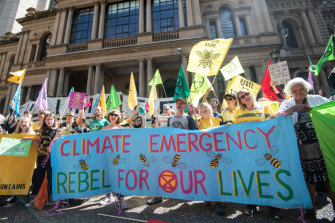
An Extinction Rebellion protest calling for stronger action to reduce climate change.
An Extinction Rebellion protest calling for
 stronger action to reduce climate change.
Doomism, argues the internationally renowned climate scientist, is part of the latest frontier in the climate wars - a new tool being exploited by those resisting change in the way the world does business.
It sits alongside what he calls “soft denialism” (climate change is happening but it's OK, we can adapt) and “deflection” (sowing division by making it all about individual lifestyle choices). Such tactics, he says, are in some ways “even more pernicious” than the old arguments flatly rejecting human-induced climate change.

Read the story from The Age by Deborah Snow - “Why 'doomism' is part of the latest frontier in the climate wars.”

18 March, 2018

Warm Arctic? Expect Northeast Blizzards: What 7 Decades of Weather Data Show

The warmer the Arctic, the more likely the Northeast will be clobbered by blizzards, says a team of researchers who analyzed winter weather patterns going back to 1950.
Three extreme winter storms have hit the Northeast this
month, dumping several feet of snow and in some areas
bringing destructive coastal flooding. The Arctic,
meanwhile, has had record warmth.
Citing disruptive storms like Snowzilla (2016), Snowmaggedon (2010) and Snowpocalypse (2009), the climate scientists wrote that "heavy snowfalls are generally more frequent since 1990, and in many cities the most extreme snowfalls have occurred primarily during recent decades.”

Their study, published in the journal Nature Communications, links the increased frequency of extreme winter storms with the rapid and persistent warming of the Arctic since around 1990. When temperatures over the Arctic spike, especially high in the atmosphere, extreme winter weather is two to four times more likely in Boston and New York, while the U.S. West tends to see warmer and drier conditions, they conclude.


Read the Inside Climate News storey by Bob  Berwyn - “Warm Arctic? Expect Northeast Blizzards: What 7 Decades of Weather Data Show.”

16 July, 2015

Climate changes doubles Europe's chances of heatwaves: Nature


O

ver much of Europe, the sweltering heatwave of late June and early July has barely subsided. But already, scientists have analysed the possible role of climate change, concluding that global warming made such an event at least twice as likely over much of the continent.

 In some cities, climate change has made comparable heatwaves four times more likely, they say.

The speedy study comes from a collaboration involving the US-based nonprofit environmental news organization Climate Central and an international team of climate researchers.

They posted results on 2 July based on the sweltering temperatures forecasted, and updated their work on 10 July using the previous week’s actual temperatures, with similar conclusions.