Showing posts with label response. Show all posts

25 December, 2019

Prime minister, you need a credible climate policy. It's too dangerous to keep pretending you have one


Scott Morrison says this is not a time for division, or partisanship, or point scoring. He says we should unite in response to the current crisis. That’s certainly true. We have been.
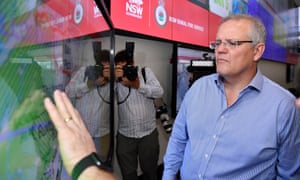
NSW fires: Australian prime minister Scott Morrison is briefed by NSW RFS Commissioner Shane Fitzsimmons on in the NSW Rural Fire Service control room on Sunday after returning from holiday in Hawaii.
NSW fires: Australian prime minister Scott
 Morrison is briefed by RFS Commissioner
Shane Fitzsimmons in the NSW Rural Fire
Service control room on Sunday after returning
 from holiday in Hawaii.
But prime minister, this is also time to stop pretending. Talking about Australia’s woefully inadequate climate policy at this time is not partisan, it is essential. And, with respect, the same same old talking points you rolled out on your return from Hawaii just don’t cut it any more.
As you acknowledged, we are facing Christmas with dread. The immediate losses – of loved people, homes, safety, breathable air, passable highways upon which to drive to holiday, blue summer sky – those are deeply unsettling and sad.

17 April, 2018

Starting young to change the mindset on the idea of walking

Any worthwhile response to climate change involves a new outlook on the idea of walking.

We must start using our feet to get about as opposed to the fossil fuels presently at the root of human movement.

And the help alter that mindset, it is important to start young and so the Walk Safely to School Day needs our support and endorsement.


Should you be eager to know more about walking to school, check out the Walk Safely to School Day website.

09 April, 2018

Keeping the Earth cool with sunshades

A recent story on Beneath the Wisteria about the idea if putting shades in the sky to protect the Earth from the suns rays and so keep it cooler brought this response from on reader.

13 March, 2018

Australia can avoid Germany's renewable energy mistakes

Australia's increasing focus on demand response and energy efficiency is setting the country up to bypass the mistakes made by the world leader in renewables, says a German energy expert.
Australia can avoid German's renewable energy mistakes.
"Australia can learn from Germany's mistakes of the last few years," the deputy chairman of the German Business Initiative for Energy Efficiency, the nation's peak energy efficiency body, Christoph von Spesshardt said.

"I can see similarities between the situation in Australia now and Germany 10 years ago," he told Fairfax Media.


Read Cole Latimer’s story from The Sydney Morning Herald - “Australia can avoid Germany's renewable energy mistakes.”

22 January, 2018

Age letter writers respond to Frydenberg claims

Today’s Melbourne Age had several letters written in response to an earlier letter from the Minister for the Environment and Energy, Josh Frydenberg, questioning his views.


Read the letters here.

01 October, 2017

Irish failing ‘spectacularly’ in response to climate change

Ireland has “failed spectacularly” in its response to the challenges posed by climate change over the last 15 years, the Citizens’ Assembly has been told.

The Citizens’ Assembly is considering how the State can
become a leader in tackling climate change over the weekend.
The assembly, which is considering how the State can become a leader in tackling climate change, heard that failing to adequately respond to global warming could soon end up costing Ireland millions, and potentially billions, in fines.

“Ireland has failed spectacularly on climate change over the past 15 years,” said researcher Joseph Curtin of UCC and the Institute of International and European Affairs. “It has not stepped up to the plate. Let’s be realistic; start by doing our fair share, then we can aspire to leadership.”

Mr Curtin said Ireland was not on target to meet any of its targets “under EU and UN processes” but that most countries were doing their bit when it came to reducing carbon emissions and adopting renewable energy sources.


Read Kevin O’Sullivan’s story in The Irish Times - “Irish failing ‘spectacularly’ in response to climate change.”

20 June, 2015

Inadequate climate change response angers Mark Ruffalo


M

ark Ruffalo understands what anger can do to a person and although that experience has been in the movies, personally though our less than adequate response to climate change angers him.

Mark Ruffalo - our
 inadequate response to
climate change angers him.
The American actor, director, producer and screenwriter says, “I’m angry that we are still debating climate change, and that despite the reams of science-based evidence for it, there are still those who ignore the facts.

“I’m angry that we’re heavily investing in fossil fuels to power our nation, when greater investment in renewable energy represents jobs, energy stability — and the sustainability of life as we know it.”

Ruffalo, who portrays the Marvel Comics character Dr Bruce Banner, also known as The Hulk, said in Grist story: “Mostly, though, I’m hopeful, because I think the tide is turning, and many — particularly young people — understand the existential threat we face and are prepared to do something about it.”

20 April, 2015

Perverse posturing wins local favour, but falls flat overseas


T

ony Abbott’s perverse posturing saw him elected as Australia’s Prime Minister, but has done little for the fulfilling our world community responsibilities.

Major developed nations around the world are now “calling out” Australia for its absolutely (the PM’s favourite word) inadequate response to climate change.

Today’s Melbourne Age - “China and other big emitters challenge Australia over its climate changepolicies”  - reports that “The world's biggest greenhouse gas emitters, including China and the US, have questioned the credibility of Australia's climate change targets and "direct action" policy in a list of queries to the Abbott government.”

01 September, 2013

Make an effort, for the good of our environment, to visit film festival


Any considered and worthwhile response to climate change must begin with a caring attitude toward our natural world, commonly called the environment.

And if we give a “flick”, so to speak, about how our natural world is being treated, then we should be making an effort to see at least something at the coming Environment Film Festival Melbourne.

The festival starts on Thursday, September 5, and continues through to Friday, September 13.

The website says: “The Environmental Film Festival Melbourne entertains with groundbreaking films, traversing the relationship between humans and their environments, challenging the way people think about the natural world and inspiring them to discuss, explore and act on important environmental issues.”

24 December, 2012

Enjoy Christmas, however you see it


by Robert McLean


Christmas means many things to many people, but it is among the reasons we gather Beneath the Wisteria to consider our response to climate change.

There is a certain consumerist fervour about Christmas; a fervour that erupts as a disconnect between what we need and what we want.

Consumerism, in all its forms, is what has worsened humanity’s carbon dioxide emissions demanding that each of us has a considered response to climate change.

Personally, Christmas brings sentiments I enjoy and promotes values, beyond the insistence that we consume more, that are important to the welfare and wellbeing of mankind, but beyond that I am offended, or at least my intelligence is, by the fundamental beliefs upon which this annual event is founded.

Celebrate Christmas as you choose, be kind to those around you (that doesn’t necessarily mean showering them with gifts they don’t want or need, to impress people they don’t know), be kind to yourself and consider our place on earth, and importantly, take care.

02 November, 2012

Christoff helps us understand the dangers of coal exports

The urgency of a thoughtful response to our changing climate exceeds the understanding of most.

Peter Christoff.
Simply surviving, dealing with what exists and getting through each day is itself so personally demanding and intellectually so all-consuming, that matters that are world-wide in scale seems, to most people, beyond something which they can influence and consequently should concern themselves with.

That, however, is something about which people are desperately wrong.

Any response to climate change that will mitigate in any sense what is happening must begin with a public ground-swell of concern and as such authorize the government of the day to make dramatic changes to how it administers Australia.

Our government needs to display courage and while restructuring our society, must, as an associate professor at the University of Melbourne, Peter Christoff, writes in “Why Australia must stop exporting coal”.

Australia’s overall contribution to the world’s green house gas emissions, if its exports of coal and gas are not considered, is miniscule.

However, should we consider the emissions that result from the use of that coal and gas, then Australia is a significant player in the emission stakes.

25 January, 2012

US magazine discusses climate change response


Climate change continues unabated.
The US based magazine, Scientific American, has written about 10 Solutions for Climate Change -Ten possibilities for staving off catastrophic climate change”.
The article is worth the few minutes it takes to read, particularly if you stand among those considering a response to climate change.

12 January, 2012

Considering the "five minute life"

 Any worthwhile response to climate change is so disruptive to a developed nation’s lifestyle that few of us are mentally, emotionally or physically equipped to deal with the implications.
Although those same demands appear overwhelming and so impossible, they will, within my lifetime or certainly that of my children and indeed my grandchildren, become a consequence with which we will have to deal.

The City of Greater
Shepparton's Mayor,
Cr Michael Pollan.

Rather than be hurled unprepared into a cauldron of troubles (that sounds somewhat dramatic, but climate change, at its extremes, is exactly that), we need to think about, and discuss, our response to the unfolding changes.
The intricacies of impending distortions to the world’s weather are so byzantine and produce figures, graphs and computations equally tortuous that interpretation by the uninitiated is almost impossible, even the experienced are sometimes confused.
That, however, does not exclude us from our responsibility of doing all we can to understand what is happening and grasping even a portion of that, and so responding in an adequate and timely fashion.
Within that, it is worth noting, that composition of those figures pointing to such sweeping a human tragedy that is climate change are so knotty that openings are forever appearing through which doubters can legitimately join the conversation.
The City of Greater Shepparton’s Mayor, Cr Michael Pollan, declares himself, along with many farmers he deals with, as a doubter.
Cr Pollan stands with; it seems, with the British economist, the late John Maynard Keynes, who said “When the facts change, I change my mind. What do you do, sir?”
In waiting for the facts about climate change to actually alter, Cr Pollan has missed that difference in our climate. He has been looking, but obviously in all the wrong places and not hard enough as the facts about earth’s deteriorating climate are obvious.
Beneath the Wisteria is about considering and pondering what it is we do on response to the sweeping difficulties and within that response rests a significant responsibility for City of Greater Shepparton and by default Cr Pollan.

John Maynard Keynes

Obviously that first response is personal with people preparing themselves emotionally and physically for the undoubted differences ahead, but then in a broader sense, and one which probably be more effective, governments at all levels need to create a dynamic in each of the constituencies that will enable the creation  of more resilient communities.
At the local level that begins with town planning decisions made through an understanding and agreement that our future is going to be significantly different in all respects, particularly with the availability of and use of energy.
Councils such as that which Cr Pollan leads should be working toward the establishment of a “five minute life” for all their constituents; meaning that most of what people need on a day-to-day basis, that is food, various services, work, recreation and other social needs, are all within an easy five minute walk or cycle.
The ongoing confusion between our wants and our needs is one of the key reasons for climate change.