Showing posts with label socially. Show all posts

19 June, 2019

Call to arms: how can Australia avoid a slow and painful decline?

Australia is at a crossroads. Drift towards a future of slow decline economically and socially or, if action is taken now to address our most important challenges, create a future of greater prosperity for all, globally competitive industries and a sustainable environment.
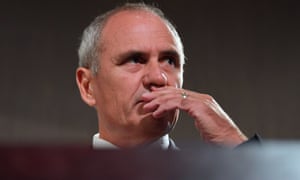
Ken Henry
Dr Ken Henry says the Australian National Outlook report
 aims to ‘help kickstart a national conversation about
where Australia is heading’. 
That is the conclusion of a major report bringing together the thinking of more than 50 leaders in business, academia, NGOs and the community sector, working with the CSIRO to model alternative futures for Australia. The report is described as a “clarion call” for the nation.

The Australian National Outlook 2019, two years in the making, aims to “help kickstart a national conversation about where Australia is heading”, says its co-chair, Dr Ken Henry, the chairman of the National Australia Bank and former secretary of the Treasury department.


Read the story from The Guardian by Gay Alcorn - “Call to arms: how can Australia avoid a slow and painful decline?

12 August, 2017

New York Mag’s Climate Disaster Porn Gets It Painfully Wrong

The New York magazine piece “The Uninhabitable Earth” by David Wallace-Wells selectively fetishizes natural science and is socially and politically hopeless.

The classic image of eco-apartheid,
 from the perspective of the sky, in São Paulo.
 
I’ll leave the science to Michael Mann, who lays it out on his Facebook page. Yes, obviously, absent any real action to reduce emissions we’re fucked. BUT: That is not going to happen. The actually realistic danger zone is a combination of too little decarbonization, too late, in the context of hardening inequalities of class, race, and genderin short, eco-apartheid. Those brutal inequalities, and the bullets that maintain them not molecules of methaneare what will kill people.

And that climate violence would not come because of an absence of emissions reductions. It is fully compatible with a huge reduction of emissions. Though of course, the less we slash emissions through a broad program of egalitarian economic intervention (or “democratic ecologies”), the more violence there is likely to be.


Read the piece on Jacobin by Daniel Aldana Cohen - “New York Mag’s Climate Disaster Porn Gets It Painfully Wrong.”

18 March, 2017

Meet Sherri Goodman, who in two words made the military care about climate change


That woman is Sherri Goodman, and she will be in Australia in early April. And the film about climate change and the military will be on ABC TV's 4 Corners next Monday night. 

The national security dimension of climate change receives little attention in Australia, but is the subject of intense focus overseas, particularly in the United States. Climate change interacts with other pre-existing problems to become an accelerant to instability in unexpected ways. Scarce resources, growing water scarcity, declining crop yields, rising food prices, extreme weather events and health impacts become catalysts for instability and conflict, especially in Asia. This has profound implications for Australia, economically and socially, quite apart from the climate change impact on Australia itself.


19 April, 2016

Politicians prioritize finances and jobs, and yet in ignoring nature, risk it all

The electioneering has begun. In a campaign set to be dominated by economic issues, the Coalition and Labor are locking horns over who can best manage our finances, protect jobs and make housing more affordable. The Greens predictably decry the major parties, including their cavalier climate-change policies.

These are important issues, but are they highest priority on the political agenda? An arguably even greater issue exists that nobody is seriously championing, but which impacts all of us, socially, environmentally and economically.

Our natural heritage – the plants, animals and other organisms that help define Australia’s identity – are in dire straits. Yet this biodiversity crisis is barely mentioned in political discourse, nor is it foremost in the public consciousness.

Read the thoughts of the Professor in Terrestrial Ecology at Deakin University, Don Driscoll and a Senior Lecturer in Ecology at the Centre for Integrative Ecology, School of Life and Environmental Sciences at Deakin University, Euan Ritchie on The Conversation - “Nature is neglected in this election campaign – at its and our own peril.”