Showing posts with label reliability. Show all posts

13 June, 2019

Coal unit failure a threat to Victorian energy security this summer

The head of Australia’s energy market operator said threats to the reliability of the electricity grid in Victoria were its main concern following AGL’s announcement that one of four generating units at the Loy Yang A power station will be out of action for seven months.
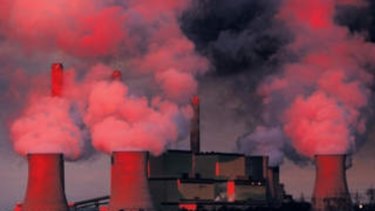
AGL says one generating unit at Loy Yang A will be out for repairs until December.
AGL says one generating unit at Loy Yang A
 will be out for repairs until December.
Failures and planned outages at multiple coal and gas-fired units in the Latrobe Valley played havoc with Victoria’s energy grid last summer, forcing the energy market operator to cut the power to hundreds of thousands of customers during two days of extreme heat in late January.AEMO chief executive Audrey Zibelman said the operator was working with AGL and the rest of the industry on plans to cover the loss of generating power at Loy Yang A, which provides about 30 per cent of Victoria’s electricity capacity.

Read the story from The Age by Adam Carey - “Coal unit failure a threat to Victorian energy security this summer.”

21 June, 2018

Why It Matters If Fracking Companies Are Overestimating Their ‘Proved’ Oil and Gas Reserves

Back in 2011, The New York Times first raised concerns about the reliability of America's proved shale gas reserves. Proved reserves are the estimates of supplies of oil and gas that drillers tell investors they will be able to tap. The Times suggested that a recent Securities and Exchange Commission (SEC) rule change allowed drillers to potentially overbook their “proved” reserves of natural gas from shale formations, which horizontal drilling and hydraulic fracturing (“fracking”) were rapidly opening up.
Questions about the reliability of shale gas reserves.
“Welcome back to Alice in Wonderland,” energy analyst John E. Olson told The Times, commenting on the reliability of these reserves after the rule change. Olson, a former Merrill Lynch analyst, is best known for seeing the coming Enron scandal 10 years before the infamous energy company imploded in 2000.

Today, those same rules have allowed shale drillers to boost their reserves of oil, as well as natural gas. As a result, these “proved” reserves, which investors and pipeline companies are banking on, could potentially be much less proven than they appear.

And the unprecented degree to which this is happening in the shale industry casts a shadow of doubt on the purportedly bright future of America's booming oil and gas industry.


20 March, 2018

We need to change how we control energy, AEMC says.

The nation's power grid has managed to retain enough generation capacity to keep the lights on as coal generators have closed but its reliability is still too weak because energy infrastructure was not designed for recent influx of solar and wind energy.
Australia has the supply to keep up with
demand, but our grid is not up to the task.
The situation is laid out in the Australian Energy Market Commission’s latest annual electricity market performance report to be released on Tuesday.

In the Reliability Panel report, the AEMC warned the east coast energy network could become unstable as it made the transition from coal to more gas and renewable energy generation unless action was taken to change how the grid functioned.


Read Cole Larimer’s story from The Age - “We need to change how we control energy, AEMC says.”

18 October, 2017

Why Turnbull’s plan could be disaster for renewables climate prices

On the face of it a twin-pronged system focusing on reliability and environmental outcomes could have appeal. But we just don’t know because the details of Malcolm Turnbull’s National Energy Guarantee (NEG), and even the basics of how it will work, have not been explained.

As one clean energy advocate said on Tuesday: “We’re still trying to understand whether we love or hate the NEG”. Part of that hesitation is based around the oft-made assumption that it might be better to have something, rather than nothing. But that remains to be seen.

The mainstream media certainly embraced it, but analysts see red flags all over the place – it is potentially bad news for renewables, bad news for emissions, and bad news for prices. It is potentially Turnbull’s energy trilemma turned upside down.

Most of all, the proposal appears to be the most ill-considered, poorly detailed and potentially useless policy that anyone can remember – the work of Australia’s so-called “energy mafia” hungry to defend the power of the incumbent oligopoly, commercial interests and their ideology.


Read the RenewEconomy story by Giles Parkinson - “Why Turnbull’s plan could be disaster for renewables climate  prices.”

10 October, 2017

Expert views make way for political expediency in climate debate

The patient's vital signs are not good. Power prices are high, and emissions haemorrhaging. Reliability and security of supply are in doubt. We need a treatment plan, and fast.
A Clean Energy Target would help make sure that
as ageing coal-fired power plants are retired,
 there is enough investment in renewables to replace them.
Such was the diagnosis of the national electricity market on Monday by Australia's chief scientist Alan Finkel, the man whose blueprint to improve the system was supposed to take the politics out of energy policy. So, how's that working out?

The answer is, pretty poorly. In his speech to the National Energy Summit on Monday, Environment and Energy Minister Josh Frydenberg gave the strongest hint yet that the prospect of any clean energy target was dead and buried, claiming the falling cost of renewable energy meant the subsidies were no longer necessary.

Cue the cycle of politicking and tail-chasing that has wasted more than a decade of Australian climate policy, frustrating the business community and leaving the public wondering: is any leader capable of stopping the bleeding?


Read Nicole Hasham’s comment in today’s Melbourne Age - “Expert views make way for political expediency in climate debate.”

02 May, 2017

After the flashy announcement, here's what's next for the Snowy Hydro expansion

It was Malcolm Turnbull's Big Idea, taking back the initiative amid mounting concerns over the reliability of the electricity grid and spiralling power prices.
Malcolm Turnbull is supportive of plans to expand the Snowy Hydro scheme. 
Turnbull, standing in front of the Tumut 3 power station deep in the Snowy Mountains, announced in March plans for the Southern Hemisphere's  biggest power-grid battery, capable of powering hundreds of thousands of homes and helping to stabilise the grid.

This would be Snowy 2.0, harnessing the iconic Snowy Mountain hydro scheme to create a giant battery that would move Australia's electricity grid into the new age of renewables by making solar and wind power more reliable. It would be, the Prime Minister declared, a "game changer”.

Turnbull has put $500,000 towards Snowy Hydro's detailed feasibility study into building the first stage, a 2000 megawatt project christened Snowy 2.0. By the end of the year we should know whether his vision will stack up. 


23 March, 2017

Victoria warned of power shortfall risk after Hazelwood shuts down

Doubts have been cast over
 Victoria's level of energy security. 
Victoria's energy security has been thrown into question, with the state facing an unprecedented 72 days of possible power supply shortfalls over the next two years following the shutdown of the Hazelwood plant next week.

Australia's electricity grid operator has warned that the looming shutdown of the ageing plant, which supplies up to a quarter of the state's power, could lead to breaches of the minimum energy reliability benchmark next summer.


Read Josh Gordon’s story in today’s Melbourne Age - "Victoria warned of power shortfall risk after Hazelwood shuts down.”
(Of course the shift from early energy sources - mostly animal, human, water and wind - to those afforded us by fossil fuels was not without it problems, or complexities, so why should the shift from fossil fuel powered energy to renewable energy be any different? - Robert McLean)