
Almost every day I read or hear commentators on diverse fields of human activity blithely talking about trends and conditions that are likely to play out in the future. Some of them are happy to extend their prognostications decades into the future and adopt a business-as-usual approach.
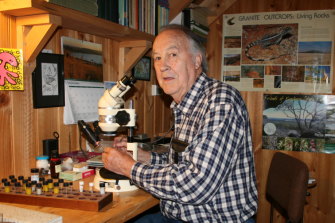 |
| Dr Ian Bayly at work in his private, post-retirement zooplankton laboratory. |
Very few of them display any overt awareness that humanity is facing the prospect of a climate-induced societal collapse in the near term and that consequently much of their commentary is likely to be incapable of fulfilment.
I recently read Losing Earth: the Decade We Could Have Stopped Climate Change by Nathaniel Rich. Which decade was he referring to? The 1980s. To be a bit more conservative, and allow for some reasonable degree of time-lag, my view is that the 1990s is a fairer nomination for when effective climate change mitigation could have, and should have, commenced.
Here I have some personal experience: for six years before my retirement at the end of 1995, I taught climate change science to a second-year class at Monash University.
Read the story from The Age by Ian Bayly - “A crying shame: humanity sleepwalking to disaster.”

No comments:
Post a Comment