Showing posts with label ambitious plans. Show all posts

05 April, 2020

The hidden link between your dinner and fighting climate change

If you stumble across the Isbells’ farm in the summer, it’s easy to see how green it is. Lush fields and a giant solar array hint at Mark Isbell’s commitment to sustainable rice cultivation. A chat with the man himself quickly reveals how deep that commitment runs. From water and energy use conservation to creative forms of methane reduction, Mark and his family’s rice are a testament to how America’s small, family-owned and -operated farms can implement sustainable farming practices while still making a living.
The hidden link between your dinner and fighting climate change.
Stories like this have garnered media and even political attention, sparking ambitious plans not only to continue funding farmers like Mark through grants and conservation payments, but also to transform the carbon stored in their fields and the methane they keep out of the atmosphere into credits that can be sold on the private market — payments for sequestered soil carbon. These kinds of bold environmental partnerships between government, agriculture and industry are undoubtedly important, but questions remain about whether or not capitalizing on agricultural carbon sequestration is the right approach.
Read the story from Medium by Emily Turkel - “The hidden link between your dinner and fighting climate change.”

08 December, 2019

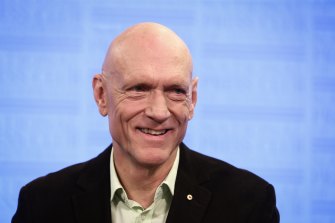
Peter Garrett urges Labor to reconnect with environmental movement, warns 'true believers are dying’

Midnight Oil frontman and environmental campaigner Peter Garrett has urged Labor to stare down the "self-interest" within its ranks and commit to ambitious plans to avoid the "catastrophe" of climate change.
Former Labor minister Peter Garrett says the party must stare down those within its ranks not committed to acting on climate change.
Former Labor minister Peter Garrett says the party must stare
down those within its ranks not committed to acting on climate change. 
Warning that the suburbs of western Sydney and Melbourne are being "crucified on the altar of inaction" and regional and rural communities were "hostage to climate damage", the former Labor minister said the party's true believers are "dying out" and a younger generation of voters will be "more radical and less forgiving" if it fails to act.

14 May, 2018

Costa Rica's New President Leads The Way With Fossil Fuel Ban

Costa Rica's newly elected President Carlos Alvarado has announced a nationwide ban on fossil fuels, part of his ambitious plans to create a decarbonized society.
"We have the titanic and beautiful task of abolishing
 the use of fossil fuels," said newly elected
 President Carlos Alvarado.
"Decarbonization is the great task of our generation and Costa Rica must be one of the first countries in the world to accomplish it, if not the first," said Alvarado, a former journalist and political scientist.

"We have the titanic and beautiful task of abolishing the use of fossil fuels in our economy to make way for the use of clean and renewable energies," he said in his inauguration speech Wednesday from the Plaza de la Democracy.
A crowd of some 2,000 people listened as their leader reiterated his campaign promises to reduce the fiscal deficit by 50 percent, increase white-collar crime-fighting initiatives, and efficiently distribute public finances to accomplish the country's goals.


13 April, 2018

Seas are rising too fast to save much of the Mississippi River Delta, scientists say

The state of Louisiana is proceeding with ambitious plans to redirect the Mississippi River and rebuild some of its rapidly vanishing wetlands — but even this massive intervention may not be enough to save the most threatened lands from fast rising seas, scientists concluded in a study published Wednesday.
This amplified color mosaic shows the Mississippi Delta in 2014. 
The study uses a methodology called “optical dating” to study how the river built an area called the Lafourche subdelta in coastal Louisiana, where the Mississippi dumped loads of sediment as much as 600 years ago, when it changed paths. The technology lets scientists identify the last time that long-buried sand was exposed to sunlight and, therefore, determine the rate at which the river naturally built up land by carrying sediment downstream.

“What we found was that, on average, it produced somewhere between 6 and 8 square kilometers of land per year, and the shoreline migrated seaward by somewhere between 100 and 150 meters per year,” said Torbjorn Tornqvist, a Tulane University geologist who was one of the study’s authors. “Those numbers in themselves I find pretty impressive.”


Read Chris Mooney’s story from The Washington Post - “Seas are rising too fast to save much of the Mississippi River Delta, scientists say.”