Showing posts with label coldest. Show all posts

09 February, 2020

Antarctica Sets Record High Temperature: 64.9 Degrees

Antarctica, the coldest, windiest and driest continent on Earth, set a record high temperature on Thursday, underscoring the global warming trend, researchers said.
Esperanza, Argentina’s research station on the northern tip of the Antarctic Peninsula, reached 64.9 degrees Fahrenheit, or 18.2 degrees Celsius, breaking the previous record of 63.5 degrees set on March 24, 2015, according to Argentina’s National Meteorological Service. The station has been recording temperatures since 1961.
The temperature at Esperanza, where it is summer, was comparable to the weather in Los Angeles and Huntsville, Ala., where the high temperatures were 64 on Thursday, according to the National Weather Service.
The Weather and Climate Extremes Archive, a committee of the World Meteorological Organization, will verify the temperature, the organization said in a news release.

Read the story from The New York Times by Derrick Bryson Taylor - “Antarctica Sets Record High Temperature: 64.9 Degrees.”

05 February, 2020

Farmer in Antarctica

Climate change is impacting Antarctica and that has global implications. Antarctica is the coldest, windiest and driest continent on Earth. It is a vast continent that has challenged explorers, captivated scientists and inspired dreamers through the centuries.  It is a place of beauty and mystery, covered with ice kilometres deep and home to some of the world’s most incredible creatures – orcas, sealions, penguins and whales to name a few.

Picture
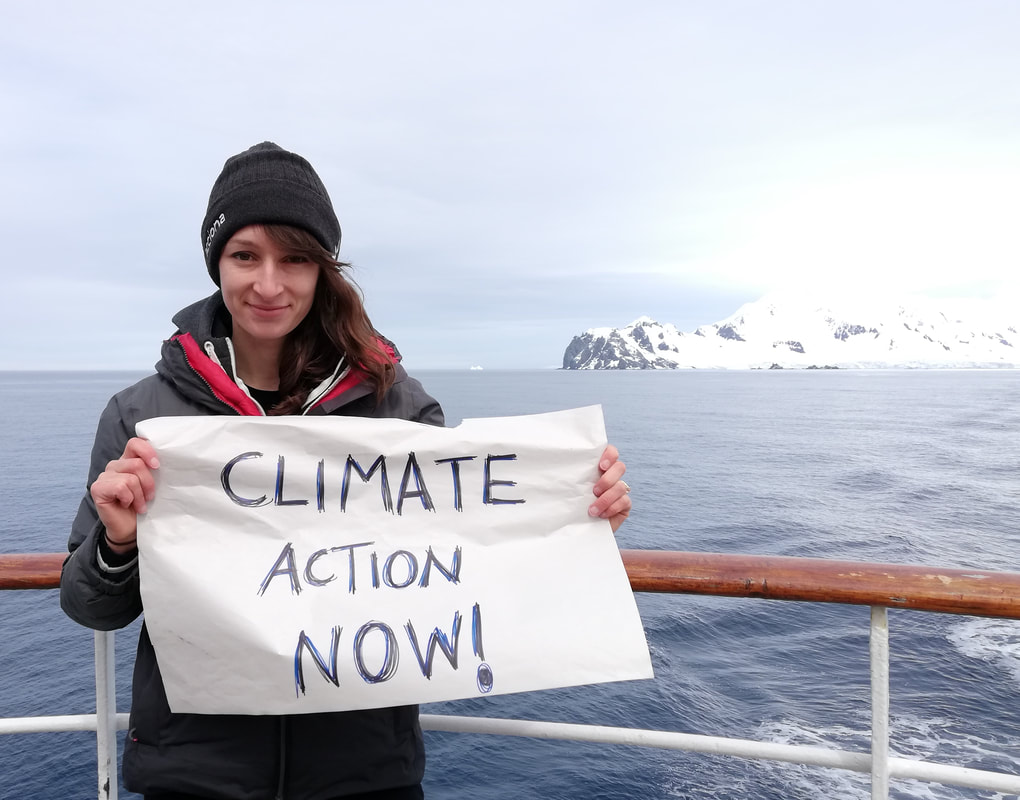
Anika Molesworth in Antarctica. 
Antarctica is also one of the regions of the world where the impacts of climate change are most apparent and pronounced. Temperatures here are rising double the rate of the global average. As oceans and air temperatures become warmer, the ice-covered land melts.This is raising sea levels, and 1m sea level rise displaces 100 million people.With huge global population numbers living along coastlines or in low lying inland regions, rising sea levels poses serious risk to people and ecosystems. Phytoplankton – the under recognized microscopic lungs of the earth that live underneath sea-ice – take up 50% of the CO2 we produce, and give us half the oxygen we breath. Small changes in Antarctica have big changes to the rest of the planet.


 Read the story from Climate Wise Agriculture - “Farmer in Antarctica.”