Showing posts with label development. Show all posts

09 February, 2020

Why Climate Change Is Fast Becoming a Medical Emergency

The move to Los Angeles back in the early fall of 2015 was supposed to be the extension of a love affair, that began a little over a decade ago, when I was so sure that my future as a development executive was securely waiting for my overdue arrival.
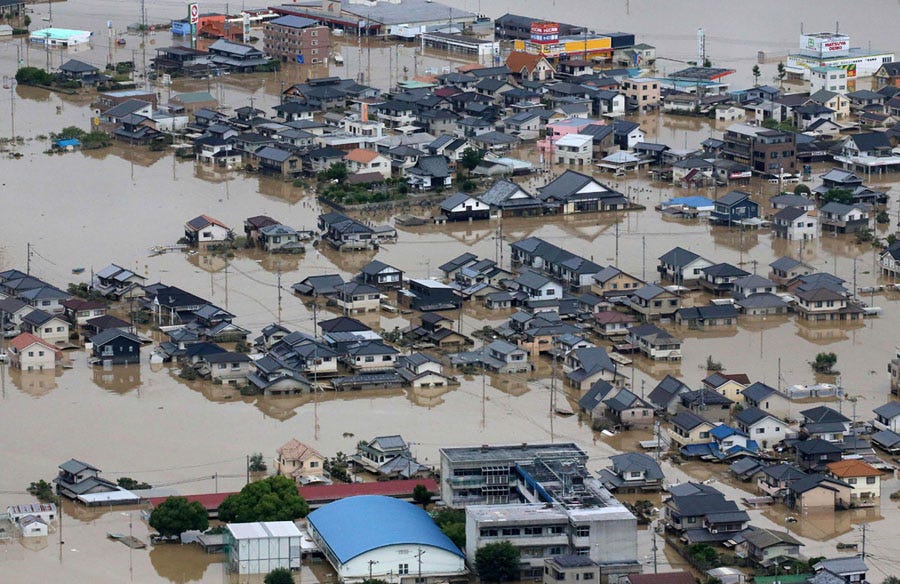
2018 Japan Floods.
The TV career didn’t happen, but what I did manage to do, was to cement a thriving relationship with a city that treated me kindly. Against my best wishes, I returned to New York City after only a couple of years, and that happened because like most abusive relationships, the victim always believes they need to do better in order to curb the blows.
It took me another a decade to finally give up my toxic relationship with New York, and beg L.A. for another chance with the hopes that I was still appealing enough to take back — despite being older and not necessarily wiser.
The second time around proved to be a major dud. The adjustment period was a lot more challenging, and the piled up years had turned me into someone who didn’t want to be stuck at the offices of The Hollywood Reporter at past midnight — staging a bunch of tweets about stuff that I used to give a shit about back in 2005.

Read the Medium story by Ezinne Ukoha - “Why Climate Change Is Fast Becoming a Medical Emergency.”

05 September, 2019

Not passive victims: Indigenous Australians respond to climate change

Climate change poses both direct and indirect threats to the socio-economic, institutional and environmental systems of the world’s Indigenous populations. Australia is no exception. Yet through the formation of political alliances and establishment of on-country initiatives Indigenous Australians have been leading the way in the development of climate adaptation responses.

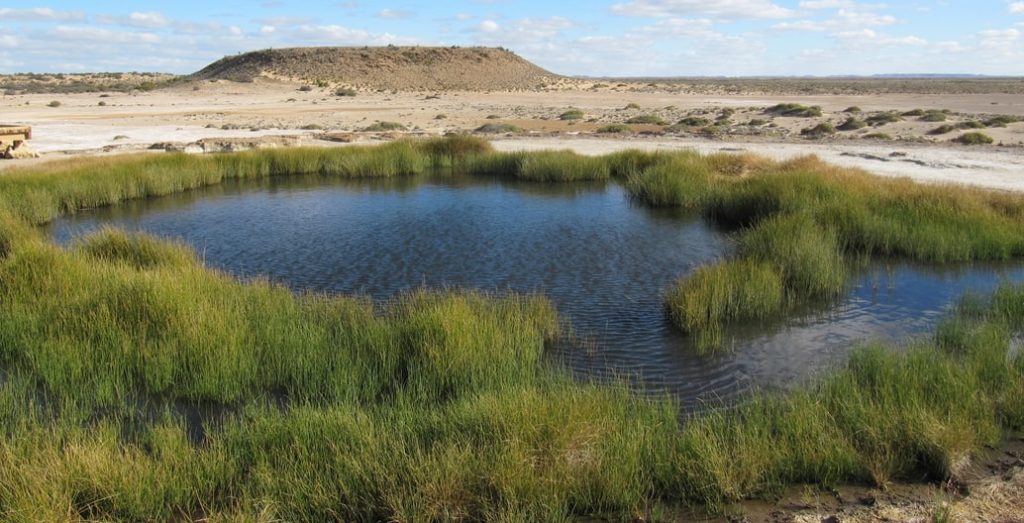
Under threat from climate change, the Bubbler is a natural spring and important cultural site for the Arabana people of the Kathi Thanda region. Photo: Melissa Nursey-Bray
Under threat from climate change, the Bubbler is a
 natural spring and important cultural site for the
Arabana people of the Kathi Thanda region.
Firstly, there are a range of climate issues that confront Indigenous people today. Of high priority is not just the biophysical impact on plants and animals, but how these impacts in turn will affect traditional sites, knowledge and culture. For example, sea level rise and associated flooding is having a big impact in the Torres Strait while the Arabana people of the Kathi Thanda-Lake Eyre have special sites, in particular one men’s site, which is threatened by erosion from more intense flooding. Rainforest-based peoples in North Queensland are seeing first hand how more intense cyclones are impacting fishing and other significant sites.


Read the Foreground story by Melissa Nursey-Bray - “Not passive victims: Indigenous Australians respond to climate change.”

18 July, 2019

Taller, faster, better, stronger: wind towers are only getting bigger

Former Australian Greens leader Bob Brown made headlines this week after he objected to a proposed wind farm on Tasmania’s Robbins Island. The development would see 200 towers built, each standing 270 metres from base to the tip of their blades. 
Wind towers are getting taller. 
Leaving aside the question of the Robbins Island development, these will be extraordinarily tall towers. However, they fit right in with the current trend for wind turbines. 

Wind turbines come in many designs, but the most common is the so-called “horizontal axis” kind, which look like giant fans on poles. This type of turbine is highly efficient at turning the energy in the wind into electrical energy.

Keen observers will have noticed that these turbines have been gaining in size over the years. In the 1990s, wind turbines typically had hub heights and rotor diameters of the order of 30m. Today, hub heights and rotor diameters are pushing well past 100m.


Read the story from The Conversation by a professor from the School of Mechanical and Manufacturing Engineering at the University 0of New South Wales, Con Doolan -  “Taller, faster, better, stronger: wind towers are only getting bigger.”

08 February, 2019

Rocky Hill mine plans quashed in Land and Environment Court

A new coal mine near Gloucester on the NSW mid-north coast has been refused by the Chief Justice of the Land and Environment Court, who ruled the development would increase greenhouse gas emissions at time when they urgently need to be cut.
Members of the community group Gloucester Groundswell attended the hearing.
Gloucester Resources Limited took the NSW Planning Minister to court over the matter after his delegate, the Independent Planning Commission, rejected the company's application for the Rocky Hill mine in late 2017.

The company argued the development would have created 170 jobs, with the mine expected to produce 21 million tonnes of coal over 16 years.


Read the ABC News story by Meredith Griffiths - “Rocky Hill mine plans quashed in Land and Environment Court.”

25 December, 2018

With the E-tron, Audi shows what an electric SUV can be

MASDAR CITY, A squeaky-clean planned city under development outside Abu Dhabi, grew from the sand with a single vision: help the United Arab Emirates wean itself off its own vast oil reserves. The 10-year-old micro-metropolis serves as an incubator for clean-technology companies. It incorporates the latest design and construction strategies to minimize its energy consumption. It runs solely on renewable energy. So it’s only fitting that Audi chose it as the starting point of the first media drives in the all-new E-tron electric SUV.
Audi’s designers speckled some flashy trim on the
exterior to signify the E-tron’s EV status, but
nothing too edgy: This SUV is meant to be a functional
 car people will actually want to buy when it goes
on sale in early 2019, not just a statement.
Our route through the UAE proved a mix of smooth, blemish-free stretches of asphalt (sadly regulated by speed cameras), a serpentine ascent up a 4,000-foot mountain, and a landscape of high dunes split by dirt roads laced with loose sand. Open blacktop was a breeze, with smooth cruising thanks to fine-tuned aerodynamics, extensive sound-deadening, and naturally muted motors. The mountain twisties validated the high-torque thrust provided by those same dual electric motors, though the car’s body roll limited the fun. And the all-wheel-drive system managed the wind-swept sand bars effortlessly.


04 August, 2018

The five things we can't answer about the National Energy Guarantee

The National Energy Guarantee will face one of its last major tests in August, yet despite nearly a year of development, there are still a number of unanswered questions.
Will the policy work?

The Energy Security Board, which includes the main energy regulators, has spent the past eight months coming up with a scheme it says will reduce power prices, bolster grid stability and meet a "pro-rata" reduction in carbon emissions in line with Australia's Paris climate pledges.

The board thinks it has created a scheme that will meet its goals without generating a carbon price that would be political Kryptonite to the Coalition party room. Others think a shadow price will soon emerge.

The refusal of the board to release the modelling that spits out the stated results - such as helping to cut household prices by $550 a year over the decade starting from 2021 - undermines confidence the guarantee will work as projected.


Read the story from The Age by Cole Latimer and Peter Hannam - “The five things we can't answer about the National Energy Guarantee.”

15 May, 2018

UDV push on climate

UDV members from across Victoria descended on the Melbourne Cricket Ground for the 42nd UDV annual meeting and conference.

Ashlee Hammond delivers a presentation
at the UDVannual meeting after being
appointed as UDV manager following eight
 months as acting manager.
A number of functions were held throughout the May 4 event, with members passing a number of resolutions on the day.

Members voted not to support calls for a prescribed code of conduct within the industry, in what would have been a strengthening of the current voluntary code, without adopting the Australian Competition and Consumer Commission’s recommendations

Ashlee Hammond delivers a presentation at the UDV annual meeting after being appointed UDV manager following eight months as acting manager. to institute a mandatory code of conduct.

Issues regarding water markets, research and development and branch participation were also voted on.

In a significant step, a resolution regarding the UDV taking a strong stand regarding climate change was passed.

The resolution referred to increased research, development and investment to allow for adaptation to climate change on farm to minimise its impact on farmers.

Story from Country News - “UDV push on climate.”

27 March, 2018

BMBF Project Puts Automated Electric Vehicle on the Road

The German Ministry of Education and Research (BMBF) funded project UNICARagil aims to rethink vehicles and their development processes. The goal is a disruptive, modular and agile vehicle architecture and the prototypical implementation of four different application cases from automated family taxis to mobile package delivery stations.
As early as 2013 TUM’s Visio.M drove its rounds remotely operated.
Autonomous electric vehicles will be an essential component of future mobility: they will form the basis for sustainable and intelligent road transport, novel mobility and transportation concepts, improvements in traffic safety and a boost in the quality of life in urban environments.

However, requisite vehicle concepts require a significantly more centralized and efficient data processing and transmission in motor vehicles and, consequently, a departure from established architectures and processes.


Read the Science and Technology Research News story - “BMBF Project Puts Automated Electric Vehicle on the Road.”

22 March, 2018

India, France come together to reiterate their climate commitment

NEW DELHI: India and France came together to reiterate their commitment to provide leadership to slow down global warming and transition to a sustainable and low carbon development pathway to economic growth and development. As the founding conference of the International Solar Alliance got underway in New Delhi, co-hosts Prime Minister Narendra Modi and French President Emmanuel Macron left little room for doubt that concrete action would be the defining principle of the alliance. 
India and France have emerged as proactive leaders on climate
action, even as United States has retreated from global action.
“Now let’s get to work”, French President Macron told leaders at the founding conference of the International Solar Alliance. Macron called on the leaders from the ISA member countries to use the opportunity of the summit make concrete announcements that would pave the way for rapid deployment of solar energy. 

Read The Economic Times story by Urmi Goswami - “India, France come together to reiterate their climate commitment.”


(France and India appear intent on powering their respective countries with renewable energy sources, therefore removing fossil fuel powered generators from their energy infrastructure, leaving the proposed massive Adani Queensland coal mine as a stranded asset and as such  a financial catastrophe for the Indian Adani company, as it will be for Australia, along with being an ethical, moral, and environmental embarrassment - Robert McLean)

15 March, 2018

Cities change how much it rains and where storms hit

Urban development changes storm patterns and rainfall amounts, two new papers suggest.


The research highlights the need for urban planning and infrastructure design that considers how the landscape will affect the weather.

In two separate papers, teams led by Dev Niyogi, Indiana state climatologist and professor in the agronomy and earth, atmospheric, and planetary sciences departments at Purdue University, studied storm patterns over the coastal megacity of Mumbai, India, and the mountainous city of San Miguel de Tucumán, Argentina, to determine how urban development affected storms in those regions.

The researchers expected to see that Mumbai’s added heat and buildings significantly disrupted storms. But they expected to see little impact in San Miguel de Tucumán since the terrain around the city is rugged, which likely makes the storms turbulent before they reach the city.


Read the Futurity story by Brian Wallheimer from Purdue University - “Cities change how much it rains and where storms hit.”

30 January, 2018

Away from the public gaze, serious threats to the environment keep rising

Threats to the Australian environment get reported in bursts – a contested development decision or a particular conservation campaign can thrust an issue into the headlines and on to the nightly news bulletins for weeks before a deal is crunched and a “solution” heralded.

Our environment is always under threat, especially when we divert our gaze.
But the “solutions” are often illusory and the actual threats keep rising, away from the scrutiny of the political and news cycles.

As the last five-yearly and independent “state of the environment report” found: “The main pressures facing the Australian environment today are the same as in 2011: climate change, land use change, habitat fragmentation and degradation, and invasive species,” with interactions between them amplifying the threats.

It noted that in a few cases (such as air quality and poor agricultural practices) the pressures had eased, but in most (such as grazing, invasive species, habitat destruction, coalmining and urban growth) they had worsened.

After 30 years of environment reporting, on and off, it’s evident that the “deals” to end headline-grabbing environmental battles often aren’t enduring solutions at all, with the scrapping continuing away from the national public gaze.


Read the story by Lenore Taylor from The Guardian  - “Away from the public gaze, serious threats to the environment keep rising.”

14 January, 2018

How Much Does Climate Change Cost? Try $1.5 Trillion (and Counting)

The Trump administration, and its allies in Congress, are fighting a losing war. They continue to press forward for the development of oil, gas, and coal when the rest of the world understands the implication of that folly. Global warming is the most pressing issue for our time. Period.
The thing is governments really have two choices when it comes to managing the impact on its people from global warming: spend money on trying to reduce the problem or spend money on cleaning up the catastrophes.
Firefighters clear debris from a mudslide in Los Angeles,
California on January 9, 2018. The deadly rain storm claimed
 the lives of 13 people in Santa Barbara County. Flash
flooding also occurred in the recently burned areas
of Ventura and Los Angeles counties.
The Trump administration is on the hook for the catastrophe. A report released Monday by The National Centers for Environmental Information pegged the total cost this year at $1.5 trillion, including estimates for Hurricanes Harvey, Irma, and Maria. (And that doesn’t even begin to count the human toll, lost lives, lost jobs, lost opportunity.)

I witnessed firsthand the impact of Hurricane Maria on the island of Dominica last month. We keep hearing stories about the power grid being down (similar to Puerto Rico) and you think, Why? It’s been months. Why aren’t the lights on? Then you see nearly every electrical pole on the island sideways. The entire grid needs to be rebuilt (or better, rethought) and that’s decades of infrastructure. So the figure of $1.5 trillion is far short of what will be needed. Nearly every electrical line, every other house, the damage was so widespread it’s impossible to overstate. And that’s just one island. Multiple the effect across the region. The planet.


Read Mark Trahant’s story on Yes! Magazine - “How Much Does Climate Change Cost? Try $1.5 Trillion (and Counting).”

17 December, 2017

Energy transition in China and Australia

They expected the industrial era to end with the burning of the last coal.

Image result for ENERGY TRANSITION IN CHINA AND AUSTRALIA
Increasing awareness of the health implications
 of the carbon particles in the air, which can
cause heavy smog, is one of the internal drivers
 for China’s transition away from fossil fuels. 


Modern economic development has been built on intense use of fossil energy. Leading nineteenth and early twentieth century thinkers focusing on the future of human civilisation and the economy, from Jevons to Weber, thought that the benefits of the modern industrial economy depended on the availability of fossil energy to continue.

Australian pioneer of development economics Colin Clark noted in his seminal Conditions of Economic Progress in 1940 that we would need to find other sources of energy to allow modern economic development to continue after we had returned to the air as much fossil carbon as was consistent with stable atmospheric conditions.

Clark suggested that sustainable substitutes would be found for fossil energy, and that we seek them in the fast-growing Australian eucalypt or new technology built on recent developments in silicon physics.


Read the Pursuit story by Professor Ross Garnaut from the University of Melbourne - “Energy transition in China and Australia.”

09 September, 2017

What You Need to Know About Climate Change

In this episode of the Waking Up podcast, Sam Harris speaks with Joseph Romm about how the climate is changing and how we know that human behavior is the primary cause. They discuss why small changes in temperature matter so much, the threats of sea-level rise and desertification, the best and worst case scenarios, the Paris Climate Agreement, the politics surrounding climate science, and many other topics.

Hurricane Irma.
Joseph Romm is one of the country’s leading communicators on climate science and solutions. He was Chief Science Advisor for “Years of Living Dangerously,” which won the 2014 Emmy Award for Outstanding Nonfiction Series. He is the founding editor of Climate Progress, which Tom Friedman of the New York Times called “the indispensable blog.” In 2009, Time named him one of its “Heroes of the Environment,” and Rolling Stone put him on its list of 100 “people who are reinventing America.” Romm was acting assistant secretary of energy in 1997, where he oversaw $1 billion in low-carbon technology development and deployment. He is a Senior Fellow at American Progress and holds a Ph.D. in physics from MIT. He is the author of Climate Change: What Everyone Needs to Know.


Listen to Sam Harris in discussion with Joe Romm - “What You Need to Know About Climate Change.”

10 August, 2017

What would the perfect cycling city look like?

Velotopia is as circular as the topography has allowed, for the usual reason that citizens are always clamouring to live near the civic centre.

Housing and cyclists in the green suburb of Vauban, Freiburg, Germany.
Development has been restricted to level ground and city limits have been restricted to a diameter of 15km. That ensures average commuting distances of less than 7km and average trip times of less than 30 minutes by bike.

The 15km limits define an area of 177 sq km. Development control guidelines are designed to ensure that at least 30,000 people live in every square kilometre, the average density across Manhattan (including the parks).

No disciples of Le Corbusier, Harvey Corbett, Robert Moses or Norman Bel Geddes have been to Velotopia. That means there are no highways and no racks of car-parking stations. Neither have any disciples of Ebenezer Howard been there to suggest that development be clustered around satellite towns with train connections back to the core.


Read a story by Steven Fleming on The Guardian - “What would the perfect cycling city look like?

21 March, 2017

World will blow through Two Degree CO2

On the low estimate for 1.5C degree change, the world is about 14 months away from using up the permitted CO2 emissions. On the low estimate for 2C degree change, the world is less than ten years away from using up the permitted CO2 emissions.


China added 5% more power generation in 2016. This was 240 TWh more to 5920 TWh. Almost half of this was coal or other fossil fuel power.

India, Africa and south Asia will be developing and many of them will depend upon coal power for their development.

Japan, Germany and many other developed nations are building more coal power. These are new plans for the 2020s or already happened a few years ago when the population freaked out about nuclear power. Nuclear power does not emit CO2. Under most assumptions a few life cycle analysis shows nuclear is about ten to twenty times less emitting than coal.


09 January, 2017

Shadow boxing: fighting for the right to sunlight

Collingwood's Jenny Port: "The issue has been
 around for so long and … yet nothing happens."
When Jenny Port and her partner spent around $4000 putting solar panels on their Collingwood home a couple of years ago, they thought it highly likely apartments might one day be built behind them.

The land behind their house was, after all, a car park ripe for development.

"We were quite happy to see it go," says Ms Port, an arts worker, who was philosophical when a proposal arrived for a six-storey apartment block on the car park site.

It was when another proposed development, this one for 16 levels to the north-east of her house, threatened to completely obliterate any access to solar power, she wondered whether there were any rules to protect her.

There weren't.

Read the story in today’s Melbourne Age by Clay Lucas - “Shadow boxing: fighting for the right to sunlight.”