Showing posts with label last decade. Show all posts

22 February, 2020

Bushfires and Climate Change

In the last decade, the incidence, severity and scale of bushfires has rapidly increased internationally. Australia is among the most fire-prone countries in the world.  In fact, bushfires increased in frequency by 40% in the five years to 2016.
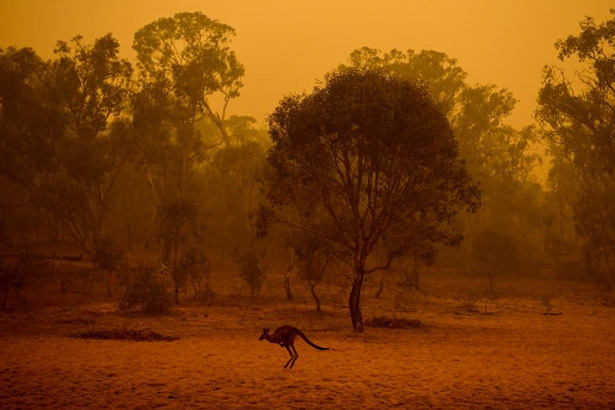
This growth in bushfires reflects the international failure to adequately respond to climate change by reducing greenhouse gas emissions. Australia in particular has one of the weakest targets amongst developed countries, despite its relative wealth and institutional capacity to respond.
The 20 warmest years on record have been in the past 22 years. Scientific evidence unequivocally links human-caused climate change to the increasing risk of frequent and severe bushfires in the Australian landscape, with a rise in bushfires predicted a decade ago.
As of 22 January 2020, the 2019–2020 bushfires have emitted 400 megatonnes of carbon dioxide into the atmosphere, equivalent to 75% of Australia’s average annual carbon emissions.

Read the story from, the Melbourne Sustainable Society Institute by Associate Professor Janet Stanley - “Bushfires and Climate Change.”

08 July, 2018

Costa Rica Becomes the First Nation to Ban Fossil Fuels

Sustainability has become the focus of the world over the last decade, and many countries have made great strides in their efforts to combat climate change. Japan has achieved nearly zero waste in select towns, and over 40% of Denmark’s citizens commute by bicycle to work.
Costa Rica President Carlos Alvarado has announced
 his country would be banning fossil based fuels altogether.
Today, Costa Rica took steps to eclipsing even these amazing countries in terms of sustainability. President Carlos Alvarado announced they would be banning fossil based fuels altogether. This makes Costa Rica the first country in the world to completely decarbonize.

“Getting rid of fossil fuels is a big idea coming from a small country. This is an idea that’s starting to gain international support with the rise of new technologies,” Costa Rican economist Monica Araya said.


16 October, 2017

Network costs the main driver of electricity prices, consumer watchdog finds

A huge increase in electricity network costs - driven by regulation and over investment - has been the number-one cause of rising household power bills over the last decade
.
Energy operators have over-invested, leading to the "gold plating" of poles and wires.
A lack of competition in both generation and electricity retail markets, the recent closures of coal-fired power stations and the growing cost of environmental schemes have also contributed to "severe" price rises since 2007 that have put homes and businesses under "unacceptable pressure”.

These are the preliminary findings of a major Australian Competition and Consumer Commission inquiry ordered by the Turnbull government.

Treasurer Scott Morrison will release the ACCC's report into the National Electricity Market on Monday, setting the stage for another week in Parliament set to be dominated by energy policy.


Read Adam Gartrell’s story in today’s Melbourne Age - “Network costs the main driver of electricity prices, consumer watchdog finds.”