Showing posts with label sea levels rose. Show all posts

07 November, 2019

Scientists looked at sea levels 125,000 years in the past. The results are terrifying

Sea levels rose 10 metres above present levels during Earth’s last warm period 125,000 years ago, according to new research that offers a glimpse of what may happen under our current climate change trajectory.
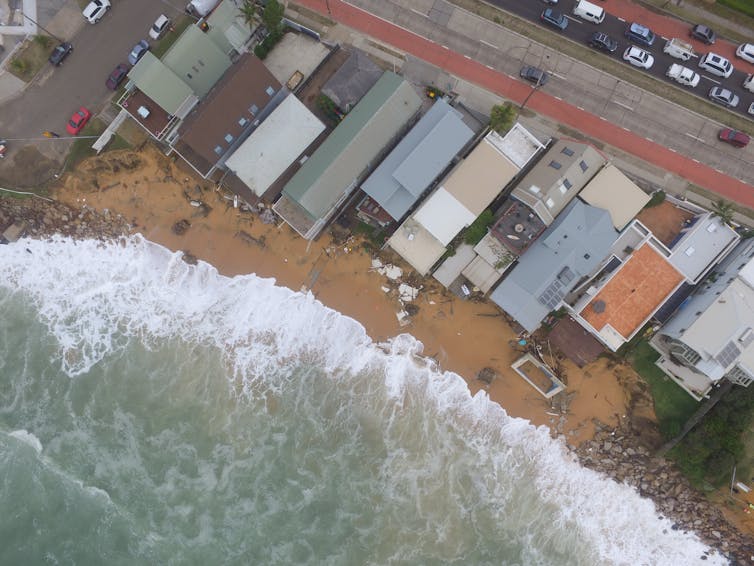
Aerial footage showing devastation caused by severe storms at
Collaroy on Sydney’s northern beaches in June 2016.
Our paper, published today in Nature Communications, shows that melting ice from Antarctica was the main driver of sea level rise in the last interglacial period, which lasted about 10,000 years.
Rising sea levels are one of the biggest challenges to humanity posed by climate change, and sound predictions are crucial if we are to adapt.
This research shows that Antarctica, long thought to be the “sleeping giant” of sea level rise, is actually a key player. Its ice sheets can change quickly, and in ways that could have huge implications for coastal communities and infrastructure in future. 

31 August, 2018

Climate change could render many of Earth’s ecosystems unrecognizable

After the end of the last ice age — as sea levels rose, glaciers receded and global average temperatures soared as much as seven degrees Celsius — the Earth’s ecosystems were utterly transformed.
The Thomas Fire, shown here advancing toward
La Conchita, Calif., in December, burned more
than 250,000 acres in Southern California. More
 severe wildfires are among the ways climate
change will alter Earth's ecosystems, scientists say. 
Forests grew up out of what was once barren, ice-covered ground. Dark, cool stands of pine were replaced by thickets of hickory and oak. Woodlands gave way to scrub, and savanna turned to desert. The more temperatures increased in a particular landscape, the more dramatic the ecological shifts.

It’s about to happen again, researchers are reporting Thursday in the journal Science. A sweeping survey of global fossil and temperature records from the past 20,000 years suggests that Earth’s terrestrial ecosystems are at risk of another, even faster transformation unless aggressive action is taken against climate change.


Read The Washington Post story by Sarah Kaplan - “Climate change could render many of Earth’s ecosystems unrecognizable."