Showing posts with label socio-economic. Show all posts

05 September, 2019

Not passive victims: Indigenous Australians respond to climate change

Climate change poses both direct and indirect threats to the socio-economic, institutional and environmental systems of the world’s Indigenous populations. Australia is no exception. Yet through the formation of political alliances and establishment of on-country initiatives Indigenous Australians have been leading the way in the development of climate adaptation responses.
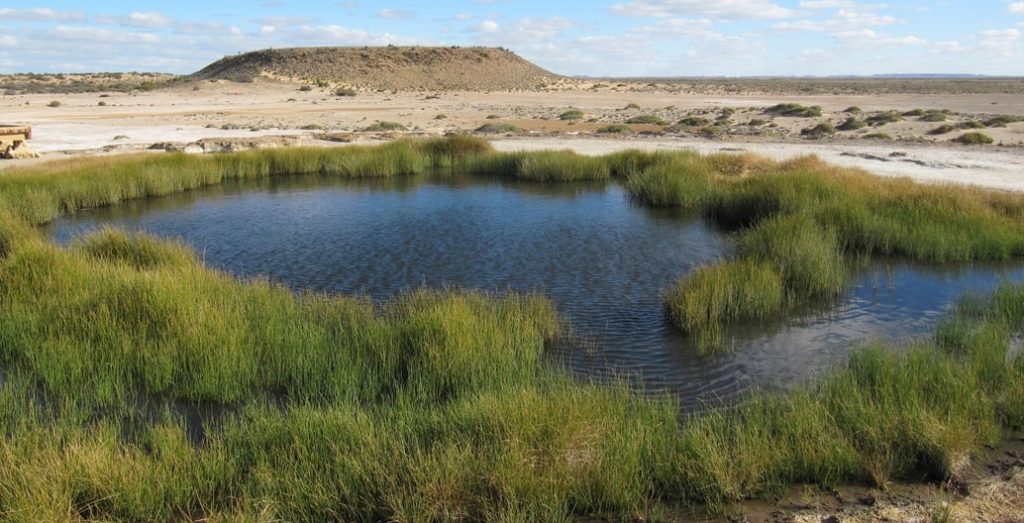
Under threat from climate change, the Bubbler is a natural spring and important cultural site for the Arabana people of the Kathi Thanda region. Photo: Melissa Nursey-Bray
Under threat from climate change, the Bubbler is a
 natural spring and important cultural site for the
Arabana people of the Kathi Thanda region.
Firstly, there are a range of climate issues that confront Indigenous people today. Of high priority is not just the biophysical impact on plants and animals, but how these impacts in turn will affect traditional sites, knowledge and culture. For example, sea level rise and associated flooding is having a big impact in the Torres Strait while the Arabana people of the Kathi Thanda-Lake Eyre have special sites, in particular one men’s site, which is threatened by erosion from more intense flooding. Rainforest-based peoples in North Queensland are seeing first hand how more intense cyclones are impacting fishing and other significant sites.


Read the Foreground story by Melissa Nursey-Bray - “Not passive victims: Indigenous Australians respond to climate change.”

13 February, 2017

Facing the water facts.

Shadow Water Minister,
Tony Burke.
The consequences of the 2016 flood flows should now make it blatantly obvious to the Murray-Darling Basin Authority and even to Shadow Water Minister Tony Burke that the extra 450Gl of environmental water simply cannot be delivered with neutral or beneficial socio-economic impacts, nor can it be recovered mainly through on-farm efficiency measures, due to the vastly diminished critical mass of irrigation water left in the irrigation districts.

As Minister Joyce has stated, the reality is that sending an additional 450Gl down the river without hurting people cannot be done, and there is not ‘‘a hope in Hades’’ of recovering that water under the specified legal requirements.

As a result of major flooding in September-October 2016 in the Murrumbidgee, Murray and Mid Goulburn, flows to South Australia were of the volume or in excess of the volume being proposed by the MDBA under the Constraints Management Strategy — that is, more than 60000Ml/day for more than five weeks.


Read the Country News story - “Facing the water facts.”