
“In Australia, rain hasn’t fallen on the eastern half of the country for a decade. Most of the land is now desert. Canberra, long since abandoned, is home only to the occasional band of kangaroos, which some people argue is no change at all … Along what remains of the eastern seaboard, moth-eaten as it is by the rising oceans, only the very wealthy remain, mostly elderly, living under enormous synthetic bubbles ... Petrol is now $20 a litre. Water half that or more, [and] comes by tanker and by trans-continental aqueduct. Air, on most days still too toxic to breathe, is filtered through special solar-power pores in the bubble’s skin.”
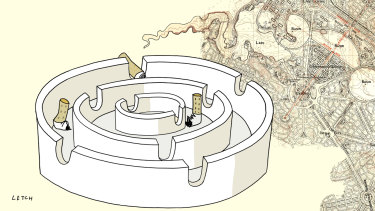 |
| Illustration: Simon Letch |
I wrote that in 2006, for my book Blubberland: The Dangers of Happiness. Then, it seemed a distant warning. Now it’s freakily plausible. As we cough our way through the Black Summer of 2020, watching endless footage of houses and fire-trucks aflame, of engine blocks melted and firestorms rampaging through the heavens, as we wonder whether this is summer redefined, we should also rethink how we make our cities.
Read the story from The Age by Elizabeth Farrelly - “Australia’s burn-me cities: urban sprawl and our new climate of fire.”

No comments:
Post a Comment