Showing posts with label rain. Show all posts

16 February, 2020

Storm Dennis prompts 'life-threatening' flood warnings in south Wales

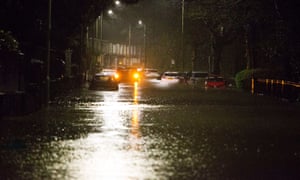
Storm Dennis shut down roads and flooded railway lines on Sunday morning as it lashed large parts of the country with rain and strong winds.
The River Taff at Pontypridd, South Wales, near Cardiff which has flooded its banks and homes in the town.
The River Taff at Pontypridd, South Wales, near Cardiff
which has flooded its banks and homes in the town.
The situation was said to be “life-threatening” in South Wales, where the Met Office issued a red warning due to heavy rainfall and flooding risk.
“It’s quite an extreme move but we have seen widespread falls across the whole region,” forecaster Greg Dewhurst said.
Severe flood warning were issued for the Scottish Borders and for the River Neath in South Wales, while local media reported the River Taff had burst its banks at Pontypool.

09 February, 2020

Australia’s burn-me cities: urban sprawl and our new climate of fire

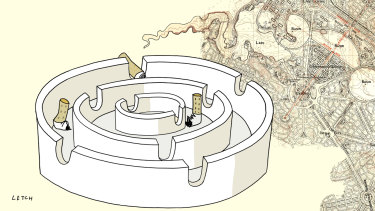
“In Australia, rain hasn’t fallen on the eastern half of the country for a decade. Most of the land is now desert. Canberra, long since abandoned, is home only to the occasional band of kangaroos, which some people argue is no change at all … Along what remains of the eastern seaboard, moth-eaten as it is by the rising oceans, only the very wealthy remain, mostly elderly, living under enormous synthetic bubbles ... Petrol is now $20 a litre. Water half that or more, [and] comes by tanker and by trans-continental aqueduct. Air, on most days still too toxic to breathe, is filtered through special solar-power pores in the bubble’s skin.”
Illustration: Simon Letch
I wrote that in 2006, for my book Blubberland: The Dangers of Happiness. Then, it seemed a distant warning. Now it’s freakily plausible. As we cough our way through the Black Summer of 2020, watching endless footage of houses and fire-trucks aflame, of engine blocks melted and firestorms rampaging through the heavens, as we wonder whether this is summer redefined, we should also rethink how we make our cities.

Read the story from The Age by Elizabeth Farrelly - “Australia’s burn-me cities: urban sprawl and our new climate of fire.”

23 July, 2019

Future Drought Fund that formed centrepiece of Scott Morrison's summit passes Lower House

Rain is still not forecast for drought-stricken communities, but there is Federal Government money on the horizon for next year.
The fund will pay out $100 million next financial
year and the same again in 2021.
Parliament has cleared the way for a new Future Drought Fund to be established, to help people prepare for and respond to drought from next year.
The Future Drought Fund was the centrepiece of Prime Minister Scott Morrison's 2018 drought summit.
Money for that fund, which is modelled on the Medical Research Future Fund, will come from the Building Australia Fund, which has sat dormant since the 2014-15 financial year.

13 July, 2019

Tropical Storm Barry is part of an alarming trend driven by climate change, experts say

Parts of the South, including much of Louisiana, are bracing for potential catastrophic levels of rain this weekend as Tropical Storm Barry draws near.
The National Hurricane Center (NHC) said the storm could strengthen to hurricane levels by Friday night or Saturday morning. But experts cautioned on Friday that the real danger associated with Barry is from the rains the storm will bring: A torrential downpour is set to fall on an area already saturated with water.
“If they push it high enough, it’ll overtop the levees,” Darryl Malek-Wiley, an environmental justice organizer in New Orleans, told ThinkProgress in advance of the storm.
Barry is expected to make landfall on Saturday, bringing between 10 and 20 inches of rain to the region.
Read the story from ThinkProgress by E.A. Crunden - “Tropical Storm Barry is part of an alarming trend driven by climate change, experts say."

28 November, 2018

One dead as ‘horrendous’ rain hits Sydney

One person is dead, two police officers have been injured and almost 130 flights cancelled after a month’s worth of rain was dumped on Sydney in just two hours.
Floodwaters in Lewisham on Wednesday morning.
A series of thunderstorms battered the NSW coast from Newcastle down to Wollongong on Wednesday morning, causing havoc for commuters and emergency services.

The weather bureau warned more rain and hail was likely later in the day, as authorities urged people to think about alternatives for their afternoon commute or school pick-up.


Read The New Daily story - “One dead as ‘horrendous’ rain hits Sydney.”

11 May, 2018

Here’s how a complex low-pressure system sent temperatures plummeting

New South Wales, Victoria, Tasmania and South Australia are currently affected by a massive complex low pressure system, dropping temperatures and bringing rain, hail, wind and snow.
The complex low weather system currently swirling over south-eastern Australia.
While complex low pressure systems like this come along every year or so, some Australians may be feeling whiplash after a particularly warm autumn.

Typically, as Victoria and Tasmania head into winter we see cold fronts that move from west to east, generating rain and thunderstorms. This weather system started off like that, but developed into a complex low that will stay with us for the rest of the week.


Read the piece on The Conversation by a Senior Meteorologist, Australian Bureau of Meteorology, Adam Morgan - “Here’s how a complex low-pressure system sent temperatures plummeting.”

09 May, 2018

Melbourne to endure hail, thunder and a month's worth of rain in two days

A month's worth of rain is set to fall in Melbourne over the next two days, with thunderstorms and hail likely to accompany the downpour.
Melbourne is set for a downpour, with a month's
 worth of rain forecast for Thursday and Friday
.
The Bureau of Meteorology is predicting up to 15 millimetres of rain for Thursday, with another 25 to 80 millimetres expected on Friday - almost up to double the average May rainfall of 56 millimetres.

Senior forecaster Rod Dickson said a powerful cold front arriving on Thursday could produce hail, and will see a good dump of snow of down to 900 metres in the state's alpine areas.


Read the story by Simone Fox Koob from The Age - “Melbourne to endure hail, thunder and a month's worth of rain in two days.”

15 February, 2018

Australian weather forecasters say autumn will be dry and warm

A dry and warmer-than-average autumn has been forecast for nearly all of Australia, worrying farmers in southern states hoping for rain after a hot summer.

The chance of above-median maximum
temperatures forecast for the Australian autumn.
The Bureau of Meteorology’s latest outlook, released on Thursday, has predicted higher temperatures across the country – apart from eastern New South Wales and the upper Northern Territory.

Rainfall is also forecast to be lower than usual in much of central Queensland, the southern NT, north-west Victoria and parts of Western Australia. The bureau’s initial autumn report said these areas had a 70% chance of below-median rainfall.

Agata Imielska, a climatologist from the bureau, said the dry season was a result of high-pressure systems and the weakening of the La Niña system in the Pacific Ocean.


Read the story by Naaman Zhou on The Guardian - “Australian weather forecasters say autumn will be dry and warm.”

29 January, 2018

Hunter Valley farmers question NSW Government's drought strategy amid worsening dry conditions

It has been more than a year since farmers in the New South Wales Upper Hunter Valley have received a decent drop of rain.
Paddocks near Denman in the NSW Upper Hunter Valley show the impact of dry times.
Dams across the district have completely dried up and cattle producers have little choice but to hand-feed their stock, as once green pastures become a barren wasteland.

According to Bureau of Meteorology mapping, some pockets of the Upper Hunter are experiencing a one in 20-year rainfall deficiency.

As the impacts of the dry conditions worsen, landholders are sceptical about the State Government's decision to do away with drought declarations; a process that in the past triggered the release of certain assistance measures, including transport subsidies.


28 January, 2018

More than a month's worth of rain as Wangaratta 'cops it’

More than a month's worth of rain has fallen in an hour just outside Wangaratta in the state's northeast on Saturday.
Wangaratta copped a month of rain in a day on Saturday. 
The Bureau of Meteorology has issued a severe thunderstorm warning for parts of the state's northern country and northeast, with flash flood warnings in place for Euroa and Wangaratta. 

Senior forecaster Richard Carlyon said heavy rainfall hit Wangaratta Airport, about eight kilometres outside the city centre, from about 8pm.

"Wangaratta's copped the most rain," he said.

Read the story from the Melbourne Age - “More than a month's worth of rain as Wangaratta 'cops it’.”


(Sudden downpours such as that experienced at Wangaratta bringing rain at either near record or never before seen levels will become more common as climate change tightens its grip. Long dry periods followed by sudden and heavy downpours erode the dry earth, runs off dry ground quickly before soaking into the thirsty earth and so adds little to wetting of the soil - Robert McLean)

01 December, 2017

Melbourne weather: When the rain is likely to hit your area hardest

Melbourne is set to be lashed with more than 100 millimetres of rain – almost double its December average rainfall – over Friday and Saturday alone, with thunderstorms and hail likely to accompany the downpour.
Melbourne's skyline under rain clouds on Friday morning.
A severe weather warning has been issued for all of Victoria as the bureau prepares for what could be the state's most significant rain event in more than 20 years.

It is difficult for weather forecasters to give a precise hour-by-hour timeline of when rainfall is likely to hit any one suburb.

"Showers and thunderstorms can bubble up very quickly during a rain event like this", says Keris Arndt, senior forecaster at the Bureau of Meteorology 


Read the story by Liam Mannix in the Melbourne Age - “Melbourne weather: When the rain is likely to hit your area hardest.”

Why don’t our cities cope with heavy rain?

It’s officially the first day or summer but you wouldn’t know it in Victoria as the state braces itself for a deluge of rain.  Although this opening of the heavens might be giving your plants a good water, extreme rainfall events can actually cause major flooding, car accidents, property damage and even loss of life. And we know that as our climate changes we’ll see more severe storms and rain events and lengthier droughts.
As heavy rain hits, how do our cities deal with it?
While our research can’t prevent extreme events from happening, it can help protect people from their effects.

“Planning cities to cope with extreme rainfall events is critically important to minimise property loss, reduce danger to lives, and reduce any negative effects on the natural environment, especially waterways,” said Dr Simon Toze from our Adaptive Liveable Cities team.

Our research, based on water and future resilient cities, includes finding environmental-friendly solutions for long-term sustainability and water supply, preventing contaminants, as well as reducing discharge of water and wastewater while protecting human health.


Read the CSIROscope story by Amy Edwards - “Why don’t our cities cope with heavy rain?

Victoria weather: Why south-east Australia is expecting a tropical deluge

South-east Australia is bracing for more than a quarter of a metre of rain in a single weekend, a tropical downpour part of the same extraordinary weather system that has brought heatwaves from Melbourne to Hobart and cool, wet weather in Queensland.


Three weeks ago a high-pressure system settled between Australia and New Zealand.

Normally high-pressure systems clear within the week, but forecasters such as the Bureau of Meteorology's Dr Blair Trewin watched in amazement as the system refused to budge.

"It is very unusual to have such a blocked situation, particularly in spring. It is something you see more often in late summer or early autumn," Dr Trewin said.

"But even then it would be unusual to have something last this long.”

Meteorologists call these slow-moving systems 'blocking highs' because they block fresh weather coming through.


Read the ABC News story by Kate Doyle and Ben Deacon - “Victoria weather: Why south-east Australia is expecting a tropical deluge.”

30 November, 2017

Melbourne weather: Victoria on alert for worst floods in over 20 years

Record-breaking rain is bearing down on Victoria, with forecasters expecting "major flooding" of all Melbourne's rivers as the state enters "uncharted territory”.

"Half the inhabitants of Melbourne have probably never seen something like this," Scott Williams, senior forecaster at the Bureau of Meteorology said.

"This is a vast, intense, high impact event for this state.”

Tim Wiebush, deputy chief officer of the State Emergency Service, said Victorians should get ready for the rain.

"This a major heavy rainfall event that we haven't seen for quite some time and people need to be alert to the potential for flash flooding and riverine flooding," he said.


Read the story in the Melbourne Age by Anna Prytz and Tom Cowie - “Melbourne weather: Victoria on alert for worst floods in over 20 years.”

09 August, 2017

Weather fluctuates

A heavy storm with strong winds, hail and rain has hit the Balkans and elsewhere in Europe as the weather changed following a week of record-high temperatures in the region.

Temperatures dropped significantly in some areas yesterday, bringing relief after reaching more than 40°C last week.
People cool off at a lake in Romania amid a
heat wave. Two teenagers drowned while
 bathing in a river in the country.
Slovenia’s STA news agency reported the storms ‘‘caused havoc’’ across the country.

Thousands of households were left without electricity as wind and hail flooded dozens of houses, collapsed trees and damaged cars and crops.

In Serbia, sudden heavy rains hit a mountainous region in the west on Monday before spreading to other parts of the country.

On Sunday, two men were killed in separate incidents in northern Italy when strong winds toppled trees which crushed them.

In other incidents, a hiker slipped to her death from a muddy path and a lightning strike killed a man walking in a forest.

Meanwhile, officials in neighbouring Romania retrieved the bodies of two teenage boys who drowned while bathing in a river to cool off during the heatwave.

Officials in the north-east county of Neamt said they pulled out the bodies of a 15-year-old and a 16-year-old. They had been swimming in the Siret River.

Romanian authorities issued a flood warning for parts of western Romania on Monday after heavy rain followed a weeklong heatwave.

Officials say at least two people died last week.

The National Hydrology Institute issued a ‘‘yellow warning’’ for the Mures River in western Romania, saying heavy rainfall Escaping from the heat: could produce torrents and flooding.
In Croatia’s Istria Peninsula, stormy winds on Sunday uprooted trees and damaged roofs. Temporary traffic restrictions were imposed in some areas along the Adriatic coast.

A wildfire broke out on Monday in the coastal Makarska area of central Croatia despite the cooling trend, engulfing pine trees and low shrubbery and halting traffic.

Authorities briefly stopped traffic on the main road along the coast, sending travellers to smaller routes.

Dozens of wildfires have erupted in Croatia and elsewhere in Europe during an extremely hot and dry summer.

Meteorologists say the heatwave return later in the week.


Story from the Shepparton News  -   “Weather fluctuates.”

20 March, 2017

Melbourne weather: Month's worth of rain expected by Wednesday

A month's worth of rain is set to fall in Melbourne and other parts of Victoria by Wednesday, with a wider severe weather warning issued for the state.


Add caption
Thunderstorms swept over Melbourne's north and areas around Sunbury and Whittlesea on Monday night.

In Strath Creek, north of Melbourne, 54 millimetres of rain fell in just 30 minutes around 7pm.
Widespread rain and isolated thunderstorms are expected to develop across most of the state overnight, as a low-pressure trough over South Australia moves across northern Victoria.


05 May, 2013

Declaring a drought started demands intelligence and prescience


It takes an intelligent and an almost prescient person to be able to declare when a drought started.

However, right now Australia is remarkably dry and with most of the country enduring what many have described as a “severe” lack of rain, others are suggesting that a new drought is threatening.

The idea that drought is advancing is explained in an ABC story: Drought tightens its grip across Australia”.

So are we in a drought? It appears so and that combined with other complications such as the world’s chaotic economy, we should be readying our communities for rather trying times ahead.