Showing posts with label coronavirus. Show all posts

03 May, 2020

World energy agency sees renewables making big gains as COVID-19 fades

Lockdown measures taken to stop the new coronavirus have caused a ‘staggering’ drop in energy demand, with renewables being the most resilient as demand for clean power increases, according to the world’s energy watchdog.
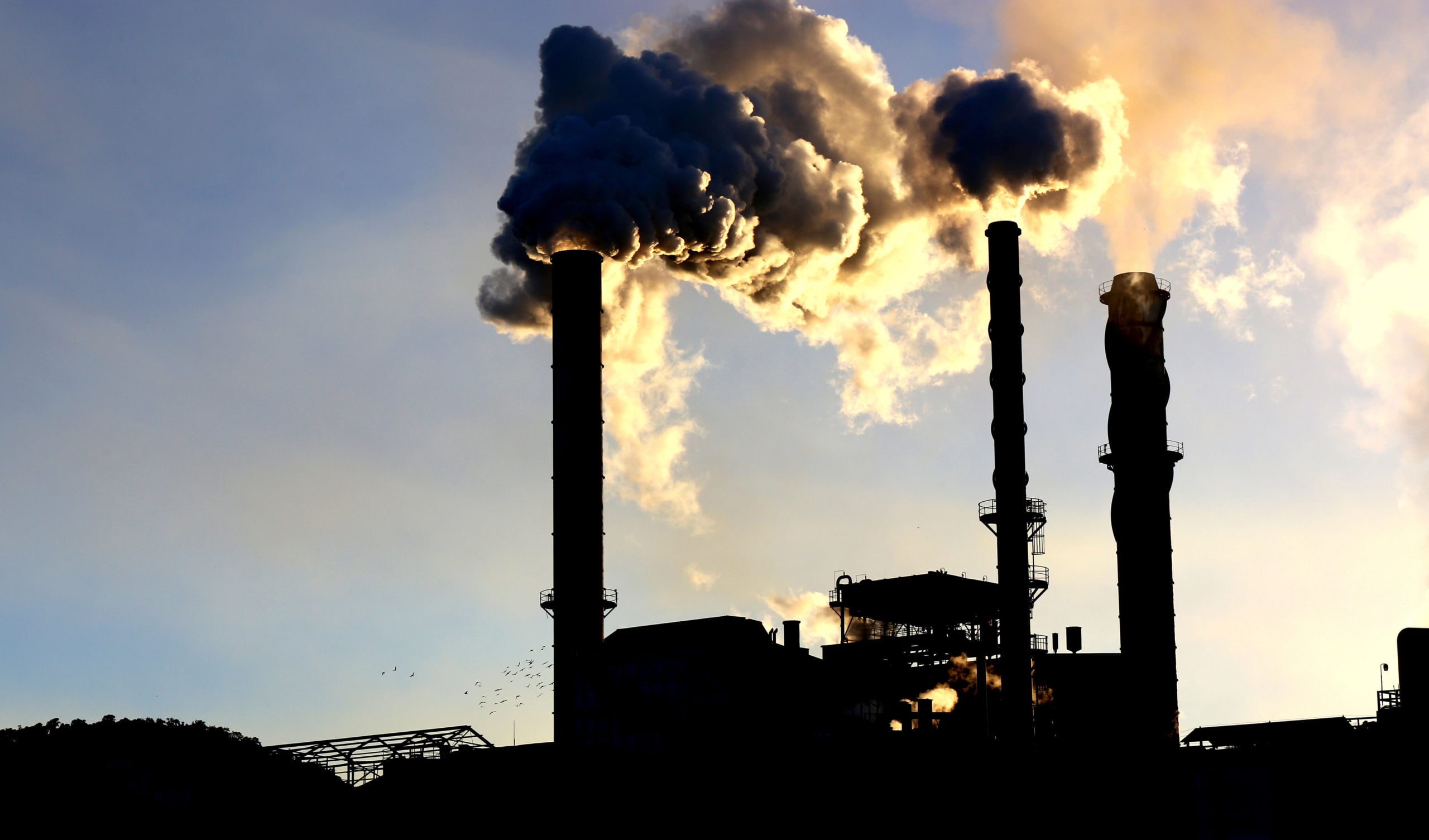
Emissions are set to fall as energy demand
slumps during the coronavirus pandemic.
Roughly one-third of the world’s population in some form of lockdown to stop the spread of COVID-19, a report from the International Energy Agency showed.
There is expected to be a 6 per cent decline in energy demand over the next year, making it the biggest drop since World War II.
The IEA said the drop would trigger multi-decade lows for the world’s consumption of traditional power, such as oil, gas and coal while renewable continued to grow.
Read the story from The New Daily by Cait Kelly - “World energy agency sees renewables making big gains as COVID-19 fades.”


14 April, 2020

Coronavirus tipped to trigger record fall in global emissions

Global carbon emissions are tipped to fall 6 per cent this year, more than during any previous economic crisis or war, led by a plunge in fuel consumption as the coronavirus hits economic activity and travel.
Emissions from global aviation are estimated to fall by up to 350 million tonnes by the end of the year.
Emissions from global aviation are estimated to fall
by up to 350 million tonnes by the end of the year.
But experts say that won't be enough to achieve the Paris Agreement's ambition of limiting global warming to as close to 1.5 degrees as possible.
Climate change publisher Carbon Brief expects reductions in factory output and travel as countries try to control the spread of coronavirus will cut 2 billion tonnes from worldwide emissions, which hit a record 36.8 billion tonnes last year.
"The coronavirus crisis could trigger the largest ever annual fall in CO2 emissions in 2020, more than during any previous economic crisis or period of war," Carbon Brief says.
Read the story from The Age by Mike Foley - “Coronavirus tipped to trigger record fall in global emissions.”

11 April, 2020

Perth records hottest April day ever as Easter beach crowds observe coronavirus measures

Perth has sweltered through its warmest April day on record, with police continuing to warn beachgoers about the importance of social distancing amid another eight WA cases of coronavirus.
Three police officers walk along Cottesloe Beach in uniform with beachgoers nearby on the sand.
Police patrolled Cottesloe Beach on Easter Saturday
to enforce physical distancing measures.
The temperature in the city reached 39.5 degrees Celsius just before 2:00pm, breaking the previous record of 37.6C set on April 9, 1910.
Bureau of Meteorology (BOM) duty forecaster Max Strack said warmer weather in the state's north-western Gascoyne region had been pushed south by a trough off the west coast.
Read the ABC News story by Garrett Mundy and James Carmody - “Perth records hottest April day ever as Easter beach crowds observe coronavirus measures.”

01 April, 2020

This is what the coronavirus pandemic can teach us about tackling climate change

AT THIS FRIGHTENING stage of the crisis, it’s difficult to focus on anything else. But as the International Agency has said, the effects of coronavirus are likely to be temporary but the other global emergency – climate change – is not.
The coronavirus is likely to be temporary, but the climate crisis won't be.
Stopping the spread of coronavirus is paramount, but climate action must also continue. And we can draw many lessons and opportunities from the current health crisis when tackling planetary warming.

Read the story from Australian Geographic by Natasha Chassagne - “This is what the coronavirus pandemic can teach us about tackling climate change.”

23 March, 2020

Meet the Climate Science Deniers Who Downplayed COVID-19 Risks

On January 30, 2020, the World Health Organization (WHO) declared that the outbreak of novel coronavirus 2019, which causes the disease COVID-19, was officially a “public health emergency of international concern.” At the time, there were cases confirmed in 19 countries and deaths in China had reached 170.
U.S. President Donald Trump was among those questioned the coronavirus.
The very next day, the American Council on Science and Health (ACSH) published an article titled, “Coronavirus in the U.S.: How Bad Will It Be?”
“Is coronavirus worse than the flu?” it began. “No, not even close.”
“It already has spread from person-to-person in the U.S., but it probably won't go far,” ACSH added. “And the American healthcare system is excellent at dealing with this sort of problem.”
ACSH is one of several organizations promoting climate science denial that are now spreading misinformation on the coronavirus, with potentially deadly consequences.

Read the story from DeSmog by Sharon Kelly - “Meet the Climate Science Deniers Who Downplayed COVID-19 Risks.”

17 March, 2020

Can the changes brought on by coronavirus help tackle climate change?

STOCK MARKETS AROUND the world had some of their worst performance in decades this past week, well surpassing that of the global financial crisis in 2008. Restrictions in the free movement of people is disrupting economic activity across the world as measures to control the coronavirus roll out.
The Coronavirus has driven people indoors
and led them to energy-intense pursuits.
There is a strong link between economic activity and global carbon dioxide emissions, due to the dominance of fossil fuel sources of energy. This coupling suggests we might be in for an unexpected surprise due to the coronavirus pandemic: a slowdown of carbon dioxide emissions due to reduced energy consumption.

Read the story from Australian Geographic by Glen Peters - “Can the changes brought on by coronavirus help tackle climate change?”

05 March, 2020

Science vs politics

Contrast the prime minister’s response to the coronavirus outbreak with his response to the climate emergency of drought, heat and bushfire that Australia faced over summer. Responding to COVID-19, the Morrison government has gotten out in front of the World Health Organization’s declaration of the pandemic, flagged the possible use of emergency provisions in the biosecurity laws, and held numerous press conferences in a fortnight with the PM alongside the health minister and chief medical officers. The government is now developing a fiscal stimulus plan to counter the virus’s impact, which Treasurer Josh Frydenberg this morning said would begin with a “b” for billions, rather than millions.
The Prime Minister, Scott Morrison, with the Health Minister,
 Greg Hunt, and Australia's Cheif Medical officer,
Professor Brendan Murphy.  Compare that to Australia's
 recent bushfire crisis and not once did the PM appear
 publicly with a climate scientist, a scientist who
 could have helped explain the forces behind the blazes.
The prime minister’s response to the climate-forced “black summer”, on the other hand, was late and fumbling. There were no press conferences with the PM standing next to climate scientists. And a hinted-at evolution of the government’s climate policies was soon abandoned, after the first sign of a backlash from the hard right. It is not because the prime minister has learnt from his mistakes, however; it is because on COVID-19 he is free to act on the basis of the best scientific advice, but on climate change he isn’t.

Read the story from The Monthly by Paddy Manning - “Science vs politics.”

30 January, 2020

Dealing with climate change good for the budget: Morrison

Prime Minister Scott Morrison has re-cast the government's efforts to deal with climate change as protection of the budget bottom line as it prepares for a hit to the nation's finances from the summer's bushfires and the outbreak of the coronavirus.
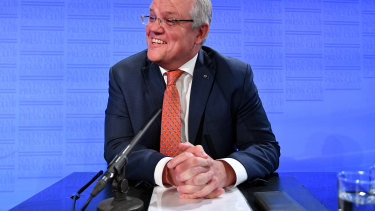
Scott Morrison has re-cast spending on climate change mitigation as a way to protect the budget bottom line.
Scott Morrison has re-cast spending on climate change
mitigation as a way to protect the budget bottom line.
With new research showing the coronavirus will hurt the Australian economy through to the middle of the decade, Mr Morrison said there could be a financial bonus from spending on efforts to adapt and become more resilient to climate change.
The government, which has forecast the first budget surplus since 2007-08, has earmarked $500 million this financial year to dealing with the fallout from the bushfires. There are already signs the fires have hit parts of the economy with the key December retail sales figures expected to show a fall in consumer expenditure.


Read the story from The Age by Shane Wright - “Dealing with climate change good for the budget: Morrison.”