Showing posts with label decade ago. Show all posts

06 December, 2019

The great dividing rage of Australian politics.

The failure of Labor policy on climate change a decade ago this week has led to a bitter but predictable argument over the blame for an upheaval that shapes Australian politics to this day. The rise and fall of Australian leaders, the success and failure of political parties, the progress and setbacks on climate change policy – all can be traced to the decisions in the Senate to veto the Carbon Pollution Reduction Scheme in December 2009.

Illustration: Michael Mucci
The vote followed the fall of Malcolm Turnbull as leader of the Liberals, the rise of Tony Abbott on a mission to kill a price on carbon, the struggle by Kevin Rudd as prime minister to secure a deal and the crucial decision of the Greens to reject a workable scheme in the confidence – fatally misguided – they would gain a better solution over time.
Parliament staged a flashback when Penny Wong, the Labor leader in the Senate, moved a motion to praise the CPRS and condemn those who blocked the bill. When the vote came, it was eerily similar to the one a decade earlier. Labor sat on one side of the chamber. The Liberals, Nationals and Greens sat on the other.
The result was a reminder of the unchanging dynamics in Australian politics – and especially the permanent competition between Labor and the Greens.

Read the opinion piece from The Age by David Crowe - “The great dividing rage of Australian politics.”

17 October, 2019

Volvo’s First Electric Car Kicks Off a Plan to Cut Emissions.

When Volvo decided a decade ago that it wanted to make a push on safety, the automaker created a plan to eliminate deaths and serious injuries in its vehicles by 2020. Though it admitted earlier this year that the company wouldn’t get there—putting some blame on drivers’ “bad behavior”—today’s Volvos offer a bevy of innovative safety systems. They work to mitigate injuries when cars go off the road, issue distracted driving alerts, and even watch for moose. Now the Swedish automaker (owned by China’s Geely) is setting its sights on another ambitious goal—the carbon footprint.
Volvo truck
The smooth cover in place of a grille is one of the few
 changes to the exterior of the Volvo XC40 Recharge,
compared with the conventional model.
By 2025, Volvo aims to reduce its emissions by 40 percent, targeting manufacturing processes, operations, and even the shipping of new vehicles from its factories. The cars themselves will play a part too. In Los Angeles on Wednesday, Volvo showed off its first all-electric car, a battery-powered version of its XC40 small SUV, dubbed the XC40 Recharge.

Read the story from Wired by Eric Adams - “Volvo’s First Electric Car Kicks Off a Plan to Cut Emissions.”

11 August, 2019

We’ve been arguing about climate policy for five elections: how many more before we get it right?

A decade ago I visited a dusty shanty town in India’s capital New Delhi to interview a remarkable Australian family.
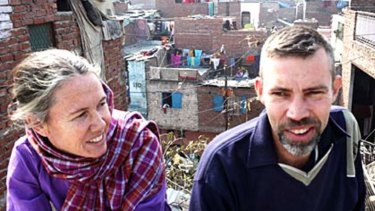
Mark and Cathy Delaney on the roof of their house in a Delhi slum in 2009
Mark and Cathy Delaney on the roof of their house in a Delhi slum in 2009.
Mark and Cathy Delaney had left Brisbane suburbia to settle among the urban poor and explore a different way of living.
Their sons Tom, now 22, and Oscar, now 17, were born in India and have spent much of their lives there.

19 July, 2019

Drought and climate change are driving high water prices in the Murray-Darling Basin

Water prices in the southern Murray-Darling Basin have reached their highest levels since the worst of the Millennium drought more than a decade ago. These high water prices are causing much anxiety in the region, and have led the federal government to call on the Australian Competition and Consumer Commission to hold an inquiry into the water market. 
The receding waters of Lake Pamamaroo, in western
 NSW, in February 2019. Reduced water supply, due to
 lower rainfall and higher temperatures, has been the
 main cause of increasing water prices.
Inevitably, whenever an important good becomes more expensive – be it housing, electricity or water – there is a rush to identify potential causes and culprits. In the past few years high water prices have been blamed on foreign investors, corporate speculators, state government water-sharing rules, new almond plantings and the Murray-Darling Basin Plan.

While some of these factors have had an effect on the market, they are in many ways a distraction from the simpler truth: that high water prices have mostly been caused by a lack of rain.


Read the story from The Conversation by a Senior Economist with the Australian Bureau of Agricultural and Resource Economics and Sciences (ABARES), Neal Hughes - “Drought and climate change are driving high water prices in the Murray-Darling Basin.”

24 January, 2019

Adelaide now hottest capital city on record as temperatures soar throughout SA.

Adelaide has hit a sweltering 46.6 degrees Celsius, surpassing the previous record set in Melbourne a decade ago to officially become the hottest capital in the country.
The BOM forecast for Adelaide is "very hot and sunny".
Earlier today, Adelaide topped its 1939 heat record after hitting 46.2C.

The temperature then climbed up to 46.6C, topping the previous capital city record of 46.4C set in Melbourne in 2009.

So far, 22 locations have hit record temperatures including Adelaide Airport, Minlaton, Noarlunga, Snowtown and Port Lincoln.


Read the ABC News story by Sarah Scopelianos and Camron Slessor - "Adelaide now hottest capital city on record as temperatures soar throughout SA.”

27 December, 2018

Farewell, Chevy Volt: an oral history of the plug-in hybrid

THE DEATH OF the Chevrolet Volt was a quiet one. It came in early December amid news that General Motors was cutting 14,000 jobs, closing three assembly plants, and also ending production of the Chevy Cruze and Impala, the Buick LaCrosse, and the Cadillac CT6. It made sense: Sales have been slowing, Americans aren’t buying compact cars or sedans anymore, and GM is repositioning itself for a future that includes both bigger vehicles and many more electrics.
A decade ago, the plug-in hybrid Chevrolet Volt was
 the signal to the country and the world that General
 Motors might have run out of money, but it still had
ideas and engineering talent.
A decade ago, the Volt, a plug-in hybrid, was the signal to the country and the world that General Motors might have run out of money, but it still had ideas and engineering talent. But it was ultimately eclipsed by GM’s successful launch of the Bolt EV—the $37,500 all-electric car that beat Tesla’s Model 3 to market.


Read the Wired story by Alex Davies - “Farewell, Chevy Volt: an oral history of the plug-in hybrid.”

10 June, 2018

Boston fails in promise to plant 100,000 trees

A decade ago, Mayor Thomas M. Menino stood with other local officials in the Geneva Cliffs Urban Wild in Dorchester and vowed that Boston would plant 100,000 new trees by 2020, expanding the city’s tree canopy by 20 percent.
A stump marks where a tree was removed on the Commonwealth Avenue mall.
With climate change a growing concern, cities across the country made similar pledges, a simple way to soak up carbon emissions and curb energy use, among many other benefits. That same year, New York City set an even loftier goal to plant 1 million trees by 2017.

New York met its goal — two years early. Boston, however, has fallen woefully short. Not only has the city abandoned its goal for this decade, but it has barely kept up with tree mortality.


Read the story by David Abel from The Boston Globe - “Boston fails in promise to plant 100,000 trees.”

22 December, 2017

Healthcare Institutions across U.S. Treating Climate Change as a Top Priority

The Cleveland Clinic started thinking “green” more than a decade ago, as sustainability and energy efficiency were just starting to gain traction in serious conversations about climate change. Since then, the Ohio medical center’s environmentally conscious practices have become part of its culture, with everyone getting involved.


They are recycling, turning off lights and computers, planting trees in the community, and buying Energy Star-certified equipment, from MRI and ultrasound machines to kitchen appliances. They are reducing water usage through low-flow fixtures, cutting waste, and controlling operating room air to ensure it’s clean and fresh during surgery, but not squandered when the OR is empty.
Equally impressive: the facility aims to become carbon neutral within the next ten years. They hope to accomplish this by increasing their renewable energy sources, and expanding all of their existing efficiency and emission-reducing programs.


Read the Nexus Media story by Marlene Cimons - “Healthcare Institutions across U.S. Treating Climate Change as a Top Priority.”