Showing posts with label energy companies. Show all posts

16 March, 2020

Planning applications for UK clean energy projects hit new high

The number of new renewable energy projects applying for planning permission reached a four-year high in the UK last year as energy companies raced to meet the rising demand for clean electricity.
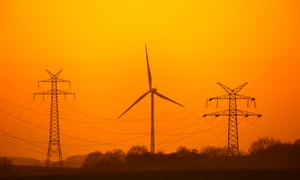
There were 269 planning applications for new wind, solar and bioenergy projects in 2019
There were 269 planning applications for new wind, solar
 and bioenergy projects in 2019, up from 204 the year before,
 according to px Group
There were 269 planning applications for new wind, solar and bioenergy projects in 2019, up from 204 the year before, according to an analysis of government data by energy consultancy PX Group.
The jump in applications last year was the biggest annual increase in recent years and 75% higher than the number of annual planning submissions made three years ago. There were just 154 submissions in 2016, rising to 185 in 2017.
The consultancy said there was a growing appetite among energy companies for new renewable projects to help cut carbon emissions and reach the UK’s climate goals.

Read the story from The Guardian by Jillian Ambrose - “Planning applications for UK clean energy projects hit new high.” 

11 January, 2020

We Can’t Slow Climate Change Without the Energy Companies

There is a real danger that the climate debate is deteriorating into a game of name-calling, with oil and gas companies all too often portrayed as opponents of climate progress. But polarizing the debate in this fashion will not get us any closer to solving the problem. We can achieve far greater and faster emissions reductions if environmentalists and energy companies work together.


Most oil and gas companies recognize the threat of climate change and want to be part of the solution. As a sign of their seriousness, five of the largest — BP, ConocoPhillips, ExxonMobil, Shell and Total — have joined a broad coalition, convened by the Climate Leadership Council, which I run, in backing a concrete plan to cut carbon dioxide emissions in the United States by half by 2035. These oil and gas companies are not only lending their names to this environmentally ambitious solution; they are putting their money and lobbying muscle behind it.

This marks a turning point for American climate policy and the politics surrounding the issue, because the energy majors are an indispensable part of any successful clean-energy transition. It is important to understand why the industry’s technological, economic and political support is so essential in achieving climate progress.


Read the opinion piece from The New York Times by Ted Halstead - “We Can’t Slow Climate Change Without the Energy Companies.”

29 August, 2019

Energy usage data to give consumers edge with power companies

Consumers will be able to demand their power usage data from energy companies under a federal government initiative aimed at helping customers shop around for better deals.
The consumer data right will enable consumers to access their detailed historical energy usage data and then pass that on to other energy companies to get more competitive energy rates.

Read the story from The Age by Nick Toscano - “Energy usage data to give consumers edge with power companies.”

16 May, 2019

New York Rejects Keystone-Like Pipeline in Fierce Battle Over the State’s Energy Future

In a major victory for environmental activists, New York regulators on Wednesday rejected the construction of a heavily disputed, nearly $1 billion natural gas pipeline, even as business leaders and energy companies warned that the decision could devastate the state’s economy and bring a gas moratorium to New York City and Long Island.
Clean Water Clam, whose founding family has been
harvesting clams near the Raritan Bay for four generations,
fears that the pipeline would irreparably harm its business.
The pipeline was planned to run 37 miles, connecting natural gas fields in Pennsylvania to New Jersey and New York. Its operator, the Oklahoma-based Williams Companies, pitched it as a crucial addition to the region’s energy infrastructure, one that would deliver enough fuel to satisfy New York’s booming energy needs and stave off a looming shortage.

But environmental groups said Williams was manufacturing a crisis to justify a project that would rip apart fragile ecosystems, handcuff New York to fossil fuels and hobble the state’s march toward renewable resources.


Read the story from The New York Times by Vivian Wang and Michael Adno - “New York Rejects Keystone-Like Pipeline in Fierce Battle Over the State’s Energy Future.”

04 April, 2019

Woodside boss backs foreign carbon permits as Scott Morrison dubs it a 'Borat tax

The head of one of Australia's largest energy companies has strongly backed the use of international carbon permits in a direct rebuke to the position of Prime Minister Scott Morrison, who mocked the idea in Parliament on Wednesday.
Woodside chief Peter Coleman.
Woodside Energy chief executive Peter Coleman used the world's largest LNG industry event to warn gas producers risked losing relevance if they were not seen as "significant contributors" to the reduction of carbon emissions.


Read the story from The Age by Cole Latimer and Michael Koziol - “Woodside boss backs foreign carbon permits as Scott Morrison dubs it a 'Borat tax’.”

13 August, 2018

Consumers aren't the big winners out of National Energy Guarantee

As with any major policy change, it’s worth asking who benefits from the National Energy Guarantee. Among the obvious answers are Prime Minister Malcolm Turnbull, Environment and Energy Minister Josh Frydenberg and the big three energy companies – AGL, Origin and Energy Australia.
Josh Frydenberg and Malcolm Turnbull.
For Turnbull and Frydenberg, the stakes are clear: a political win they can campaign on before the election.

However, the real winners are the big three. Last week, AGL recorded a 27 per cent increase in annual profit to $1 billion. In light of the oligopoly that exists in Australia’s electricity market, it’s reasonable to assume similar performance from AGL’s competitors. The driving force behind these profits is of course the increases in electricity prices that are hurting consumers.

One of the reasons for rising electricity prices is lack of competition, particularly in the wholesale electricity market, of which the big three control 46 per cent. As it stands, the NEG coupled with Turnbull’s low targets for emissions cuts does nothing to provide incentives for new generation to enter the market and compete.


Read the comment from The Age by Nicky Ison - “Consumers aren't the big winners out of National Energy Guarantee.”

29 November, 2016

Coal station closures inevitable, start planning: Labor and Greens

The Hazelwood power station
will close in March.
Many of Australia's coal-fired power stations will shut in coming years no matter what the government does, but a national plan will be needed to ensure the lights stay on and price rises are limited while they are replaced with cleaner models, Labor and the Greens say.

A Senate inquiry into the retirement of coal plants heard that many energy companies, unions, community and environment groups agreed closures were inevitable and want the federal government to introduce policies to help manage the shift.

Businesses making this case included AGL, the owner of the most coal-fired power generation capacity in the country.

The Greens-Labor dominated interim committee report says: "The question is not if coal fired power stations will close, but how quickly and orderly these closures will occur and what supporting policies if any will be in place to help manage the process.

Read Adam Morton’s story in today’s Melbourne Age - “Coal station closures inevitable, start planning: Labor and Greens.”

03 October, 2015

Energy infrastructure faces extreme weather threats - Energy Council warns


T

he world’s energy infrastructure is at risk from the extreme weather expected to result from climate change, a group of prominent energy companies has warned.

Energy systems, including fossil fuel power stations, distribution grids, and the networks that reach to people’s homes, are all at risk from effects such as flooding, severe storms and sea level rises, according to a new report from the World Energy Council, which brings together energy companies, academics and public sector agencies.

When energy systems fail, the knock-on effects on other aspects of modern infrastructure - from water and sewage to transport and health - can be catastrophic.