Showing posts with label frustrated. Show all posts

18 March, 2020

Why don’t more people care about climate change?

I often find myself upset and frustrated by other people’s reaction, or lack of reaction, to climate change. When the topic is brought up in the lunchroom or over dinner, I can see the eyes glazing over and sense the complete lack of engagement with this issue. It seems as though there is no ‘appropriate’ setting to discuss climate change — it’s always deemed too serious or depressing. This makes me feel reluctant to bring it up at all, and leaves us all ignoring the issue, pretending it’s not there.
"Upset and frustrated" that more people don't care about climate change.
All the people in my life are good people. They are educated, intelligent and have morals. But it never fails to amaze me how these same people refuse to connect on a meaningful level with issues such as climate change. They don’t talk about it, and if they do, it’s quickly brushed off as someone else’s problem. Worse still, displaying any ‘eco behaviours’ in front of them often leads to comments which discount the value of that behaviour, branding it as pointless.
It’s not as though the facts aren’t there for us all to see: the global scientific community has been warning us for years about the potentially catastrophic impacts of climate change, which are linked to our intensive use of fossil fuels. The Intergovernmental Panel on Climate Change has warned of “severe, widespread, and irreversible impacts” if carbon emissions are not halted fast.

Read the Medium story by Fiona McVitie - “Why don’t more people care about climate change?

29 July, 2019

Why this south-east Queensland council declared a 'climate emergency'

Frustrated by stagnant policy at the federal level, Australian communities are looking elsewhere for responses to climate change.
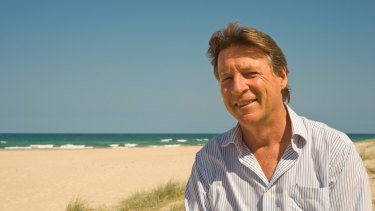
Noosa council declared a climate emergency to send a strong message, according to the mayor.
Noosa council declared a climate emergency to
send a strong message, according to the mayor.
Businesses, communities and, increasingly, local governments are stepping up to the plate.
As the closest tier of government to the people, it’s our responsibility to listen to the concerns of residents, and they are demanding a healthy and resilient future for their children and grandchildren.
The concerns of our communities are not being heard by the national decision-makers. Local governments have no choice but to act as climate advocates for their communities and thus take matters into their own hands.

Read the story from the Brisbane Times by Tony Wellington  -  “Why this south-east Queensland council declared a 'climate emergency'.”

08 March, 2019

How Greta Thunberg’s Lone Strike Against Climate Change Became a Global Movement

At the end of a record-hot summer in Sweden last August, then-15-year-old Greta Thunberg decided she would not be going back to school. Frustrated by the lack of attention paid to the existential threat of global warming — not least by politicians campaigning for upcoming elections — she set up outside the Swedish parliament with a water bottle, her rucksack filled with books and snacks and a homemade sign announcing her “School Strike for Climate.” “I tried to bring people along to join me,” she says — she’d been inspired by the Parkland, Florida, students who walked out of class to protest gun violence — “but no one was really interested, and so I had to do it by myself.”
Greta Thunberg at a nature reserve outside Stockholm in January.
Thunberg wasn’t alone for long. By the end of the first week, her strike had drawn coverage from Sweden’s biggest newspapers. As reporters flocked and she handed out fliers bearing the message “You grownups don’t give a shit about my future,” supporters dropped by to join the homespun protest on their lunch breaks. After three weeks of missed classes, Thunberg finally went back to school — mostly. She still strikes every Friday.

Read the story from Rolling Stone magazine by Kate Aranoff - “How Greta Thunberg’s Lone Strike Against Climate Change Became a Global Movement.”

19 June, 2017

Why you're about to pay through the nose for power

It was a rare moment of triumph for a Prime Minister frustrated in his dealings with a difficult Senate.
Former PM Tony Abbott - the responsibility
 for rising power prices is his
Just on three years ago, a jubilant Tony Abbott — having just secured agreement to vanquish the carbon tax, the handbrake on the Australian economy — appeared on national television.

Australian households would be $550 a year better off with the removal of the "toxic" carbon tax, he declared. Gas prices would fall 7 per cent.

Electricity prices would drop 9 per cent. Everyone would be a winner, he told 7.30's Leigh Sales.
"Because the price of power is a component of just about every price in the economy. When the price of power falls, other prices should go down as well," he said.

Yep, it should. Except when it doesn’t.


Read the ABC News story - “Why you're about to pay through the nose for power.”

03 April, 2015

RET frustrations creating delays and divisiveness


F

rustrations with decisions on the Renewable Energy Target are creating both delays and divisiveness.

A story in today Sydney Morning Herald by Lisa Cox - “'Frustrated' renewable energy industry makes another plea to major parties” – says, “An increasingly agitated renewable energy industry has issued another plea to the government and opposition to end the stalemate over Australia's renewable energy target.”

The procrastination of all involved, particularly the Abbott Government, is simply wasting time that the world, and by implication Australia cannot afford.

Naturally, the blame game is in full swing and sadly while this finger pointing continues, Australia is doing little to sustain and build it renewable energy industry.