Showing posts with label take action. Show all posts

27 January, 2020

Climate and the Coalition’s new denialism

Prime Minister Scott Morrison has become adept at evading questions on climate change and its links to bushfires, and judging by his satisfied expression as he fronted up for ABC’s 7.30 recently, he remains confident he has a form of words that, like armour, journalists will be unable to penetrate. To date, he has been largely proved right.
“It is, and always has been, the policy of our government to understand the need to take action on climate change and the impact that has on the world’s broader weather systems and climate systems,” Morrison told presenter Michael Rowland.
Always has been? This is debatable, even if you set aside that his party removed Malcolm Turnbull twice on the eve of emissions deals – the carbon pollution reduction scheme and the national energy guarantee – to prevent them; killed the emissions trading scheme and the climate change portfolio; tried to kill the renewable energy target and the Clean Energy Finance Corporation; defunded the Climate Council; supports Adani’s massive proposed coalmine; has no significant emissions-reduction or energy policy; and is populated with climate deniers.

Read the story from The Saturday Paper by Nick Feik - “Climate and the Coalition’s new denialism.”

(To read the whole story you need to subscribe to The Saturday Paper)

24 December, 2019

So, what do we do now that we know we are probably screwed?

Science does not blink. The special report issued by the IPCC in October 2018 is unequivocal in its warnings. We are out of time to take action to reduce fossil fuel emissions. We must engage in steep and immediate reductions in emissions if we are to keep the global average temperature from exceeding 2˚C by the early part of the second half of this century. The popular discourse about how many years we may have remaining to take this action is immaterial to whether we might achieve this. Given the current administration’s aggressive repression of science and the denial of the need to address this gravest threat to civilization since we wandered out of Africa, it is very unlikely that we will mount such a massive global effort with the necessary urgency.
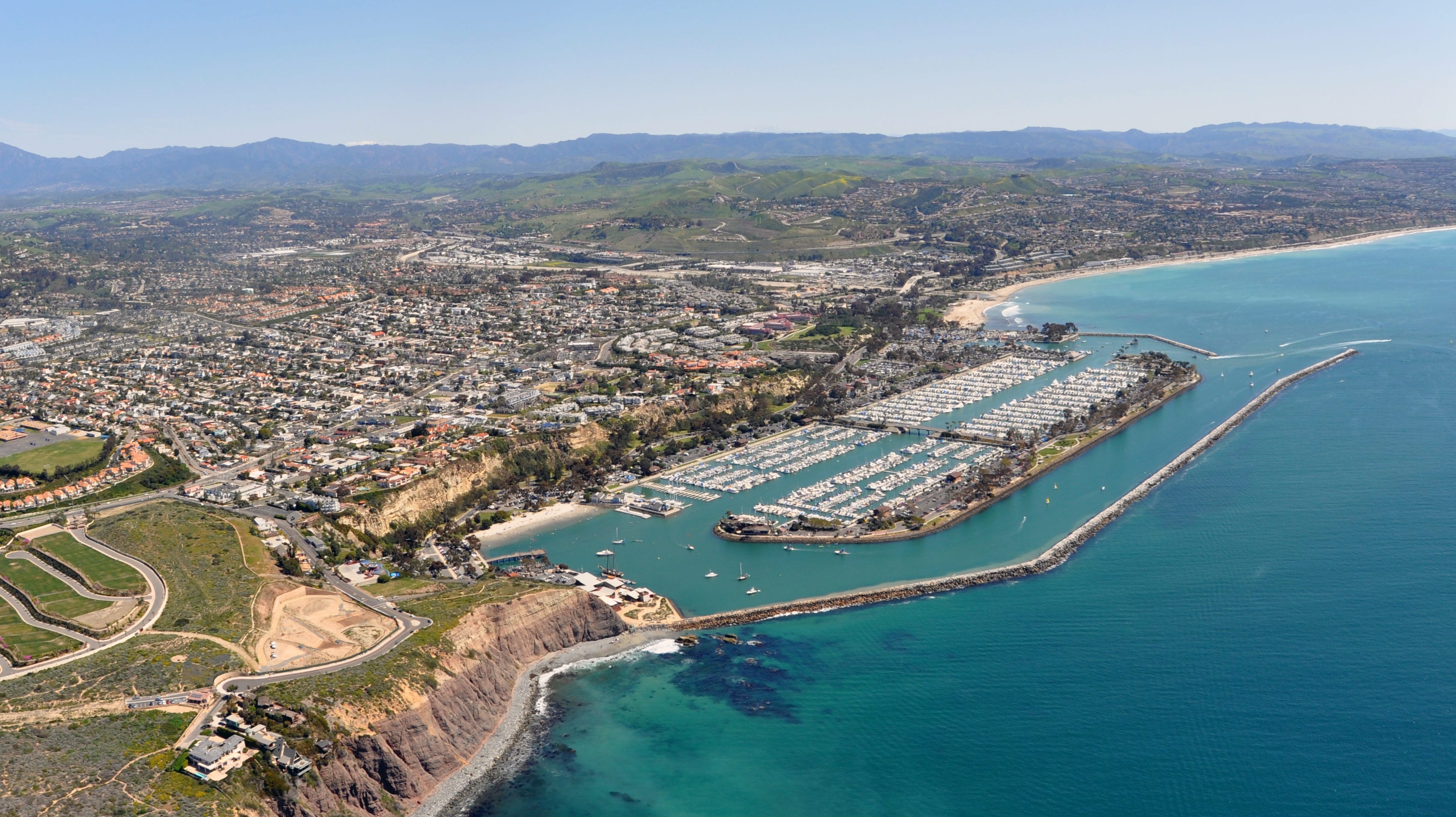
Dana Point a coastal city in California
which is now facing rapid sea level rise.
But, certainly despair is premature. There are now many countries, mostly small ones, that are committed to zero carbon emissions in the near term. Despite political resistance by utilities and the fossil fuel lobby, renewable energy is developing rapidly in Europe and some states of the US. Innovation in grid management and power storage have removed the often ridiculous arguments that renewables are unreliable because wind and sunlight are intermittent. My colleagues point to progress in the largely commercial renewable energy sector and declare that we will be mostly carbon free by 2050.


Read the Medium story by Stephen Mulkey - “So, what do we do now that we know we are probably screwed?”

26 October, 2019

‘Together, we are unstoppable': Greta Thunberg addresses thousands at Vancouver climate rally

Swedish climate activist Greta Thunberg addressed thousands of demonstrators at a rally in downtown Vancouver on Friday, an event billed as a post-election push for Canadian leaders to take action on the climate crisis.
Teen activist Greta Thunberg attends a climate strike in
 Vancouver on Friday, marching through the downtown streets. 
"The people in power are still acting as if there was no tomorrow," Thunberg, 16, told to the cheering crowds.

"We young people are telling them to stop doing that, to stop ignoring the consequences of their actions and inactions."
Vancouver police estimate about 10,000 people gathered outside the Vancouver Art Gallery to hear Thunberg speak. 
The teenage activist began her weekly school climate strikes in her native Stockholm more than a year ago, and her following has grown in recent months.

26 July, 2019

The farmers fighting climate change

Farmers are traditionally a politically conservative group. Perhaps that is partly because they operate in such a volatile environment. However, the same factors that make farmers vulnerable to the elements is driving them to take action on climate change in the absence of leadership from the federal or state governments. The conversation around climate change in rural communities has not always been open, but that is changing. The shift was evident last year when the President of the National Farmers Federation Fiona Simson told the National Press Club that “tiptoeing” around the issue of climate change was not helping farmers or rural communities, and called for action.

Farmers are traditionally a politically conservative group.
The conversation is now shifting with the undeniable changes in weather patterns. Even though there are rural and regional Australians who appear to reject climate science, research has shown that they may be rejecting the label ‘climate change’, while still acknowledging its existence on the farm by recognising and seeking to respond to the changing weather patterns they are facing.


Read the story from Foreground by Cat McGuaran - “The farmers fighting climate change.”

27 January, 2019

India calls for cautionary approach to link climate change.

UNITED NATIONS: India has called for adopting a cautionary approach on linking climate change to security and giving the UN Security Council the right to take action to address it, saying overly militarised solutions to problems which require non-military responses bring the "wrong actors" to the table. 

Rising sea levels are threatening coastal
towns and cities across the globe
A "mere decision of the Council" to takeover enforcement of climate change action would disrupt the 2105 Paris Agreement and multilateral efforts to find solutions, India's permanent representative Syed Akbaruddin told the Security Council on Friday. 

He was speaking at the UN Security Council's open debate on 'Addressing the impacts of climate-related disasters on international peace and security' 

"Climate Change is an unprecedented challenge to global civilisation," he said. 


Read the story from The Economic Times - “India calls for cautionary approach to link climate change.”

05 November, 2018

Supreme Court refuses to block young people’s climate lawsuit against U.S. government

The Supreme Court on Friday night refused to halt a novel lawsuit filed by young Americans that attempts to force the federal government to take action on climate change, turning down a request from the Trump administration to stop it before trial.
Willamette University student Arabella Wood, right,
rallies with others in Eugene, Ore., on Oct. 29, 2018,
to support a climate change lawsuit brought by 21
young people against the federal government in 2015.
On Nov. 2, the U.S. Supreme Court refused a federal
government request to disallow the lawsuit.
The suit, filed in 2015 by 21 young people who argue that the failure of government leaders to combat climate change violates their constitutional right to a clean environment, is before a federal judge in Oregon. It had been delayed while the Supreme Court considered the emergency request from the government.

Justices Clarence Thomas and Neil M. Gorsuch would have stopped the suit. The other justices did not indicate how they voted on the government’s request.


Read The Washington Post story by Robert Barnes and Brady Dennis - “Supreme Court refuses to block young people’s climate lawsuit against U.S. government.”

05 September, 2018

‘Global cataclysm': 200 scientists and artists sign letter warning of looming disaster

Political leaders should take action to avoid the “global cataclysm” facing mankind, according to a letter signed by 200 people, including some of the world's most famous actors, artists and scientists. 

Urging them to act “firmly and immediately” in the face of the “greatest challenge in the history of humanity”, the letter penned by actress Juliette Binoche and astrophycist AurĂ©lien Barrau said: “We are living a global cataclysm. Global warming, drastic decrease of living spaces, collapse of biodiversity, pollution of soil, water and air, rapid deforestation: all the indicators are alarming."

Published in French newspaper Le Monde, it added: “At the current rate, in a few decades, there will be almost nothing left. Humans and most living species are in a critical situation.”