Showing posts with label growing number. Show all posts

15 December, 2019

How do you transform an entire economy?' The firm taking on the climate funding problem


A growing number of governments, including of every Australian state, Britain and the European Union, have set targets of net-zero greenhouse gas emissions by 2050. Few have mapped how to get there.
Martijn Wilder
Martijn Wilder, a former Baker & McKenzie
 lawyer turned founding partner of
Pollination Capital Partners, whose aims
including redirecting capital that has been
committed but not to climate solutions.
It is a similar story in the corporate sector. Businesses are under increasing pressure from investors and shareholders to back up claims they are committed to the goals of the Paris agreement. Take BHP, one of the world’s 20 big emitters: it has set a mid-century net-zero emissions target but is yet explain how it will reach it, and plans to invest more in oil and gas than climate solutions.

Martijn Wilder, long-time head of Baker & McKenzie’s global climate law and sustainable-finance practice and a founding board member of the Clean Energy Finance Corporation, has seen up close the divide between the decision-making that goes into setting targets and establishing rules at United Nations climate talks and that drives spending decisions. Having moved in both diplomatic and investment circles, he found people in each who wanted to tackle the climate crisis but had little comprehension of how the other worked.

Read the story from The Guardian by Adam Morton - “‘How do you transform an entire economy?' The firm taking on the climate funding problem.”

03 November, 2019

Residents in regional communities fighting the bottled water industry for groundwater

As the drought bites deeper, residents in a growing number of rural communities are fighting to stop local groundwater being taken to satisfy Australia's thirst for bottled water.


A woman in a blue shirt and long white dress kneels before a water pump, with a concerned look on her face.
Tanya Bregnesdal's bore is running low for the first
time since it was put down more than 20 years ago.
At Tamborine Mountain in Queensland's Gold Coast hinterland, some locals are angry that bore water supplies are being used to supply bottled water companies. 
"We watch the water tankers go up and down the road," local Tanya Bregnsdal said.
She believes the bottled water industry is to blame for her bore running dry.
Read the ABC News story by Jess Davis and Rachel Carbonell - “Residents in regional communities fighting the bottled water industry for groundwater.”

08 September, 2019

Should we call climate change an emergency?

The term Climate Emergency has appeared in public discourse with remarkable speed and is now increasingly the language of not just the climate movement, but also a growing number of cities, states, parliaments and Universities. Yet it is not without its critics who argue the language of emergency may have unintended consequences by providing license for potentially dangerous interventions in the climate system, such as solar geoengineering. This article briefly reviews where the term came from, its current influence, risks and prospects.
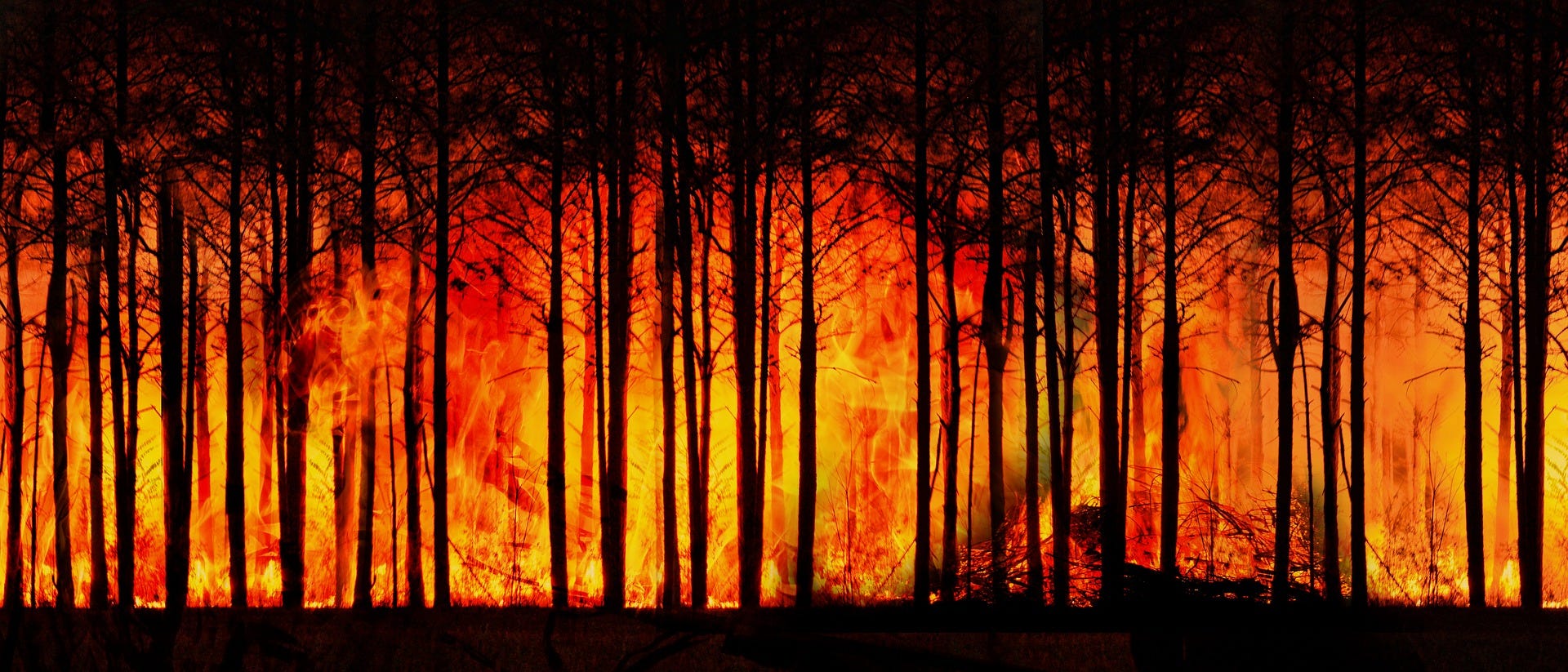
Climate change is increasing the frequency and
severity of forest fires,  which seems frighteningly
 relevant in view of the considering the many bushfires
troubling parts of northern New South Wales and
south-eastern Queensland.
None of what follows reduces the urgency and seriousness of the climate crisis. In 2018 the Intergovernmental Panel on Climate Change (IPCC) released their most blunt report to date, stating that to stay under 1.5ºC requires the world economies to reach net zero emissions by 2050. Some researchers have since argued that climate change is happening faster than the IPCC has anticipated, potentially breaching the 1.5ºC temperature threshold by 2030. With still rising emissions, and bereft of a politically viable plan to date, current projections point to a 3ºC plus world before the end of this century, with the high risk of crossing climate thresholds from which we may not be able to escape. This is the risk, but not yet the unavoidable future; the world still has capacity to ensure a less dangerous future climate.
There are at least two distinctive views on the language of emergency, one rooted in concerns that incremental change is too slow and therefore the language around climate change had to change. The second is the assessment by some scholars that dangerous geoengineering technologies may be implemented to reduce global warming in the event emergency action is deemed necessary.

Read the Medium story by Simon Kerr - “Should we call climate change an emergency?

20 December, 2018

Intensifying climate change protests 'could rival Vietnam War activism’

Mass protests of the scale held during the Vietnam War are just around the corner for people concerned about climate change, environmentalists have warned, as a growing number of activists turn their attention to those who fund fossil fuel industries.
Intensifying climate change protests could rival
 those challenging Australia's involvement in
the Vietnam War in the1960s
Activists on Sunday disrupted Labor's national conference in Adelaide to oppose oil drilling in the Great Australian Bight and the Adani coal mine in Queensland — two proposals considered "lightning rods" for unilateral climate protests.

It happened weeks after thousands of school students defied Prime Minister Scott Morrison and marched on capital cities to demand significant action to reduce carbon emissions — surprising authorities with the number of participants involved.


Read the ABC News story by Malcolm Sutton - “Intensifying climate change protests 'could rival Vietnam War activism’.”

08 July, 2017

Ecokit's modular prefab cabins are sustainable and arrive flat packed

U.S. cities aren’t the only ones with an affordable housing crisis. Take Australia, whose major metros are routinely some of the most unaffordable in the world and where a growing number of young people are renting and living longer with parents.

Flat pack, affordable and sustainable.
Just as how skyrocketing housing costs have fueled interest in alternative dwellings like tiny houses and prefabs stateside, they’ve also inspired designers Down Under to find new solutions through architecture. One such idea currently under development is Ecokit, an energy-efficient prefab kit house that can be built by two people in a few weeks.

Three years in the making, the Ecokit house is a modular, flat-packed design built from thermal-insulated panels and eco-friendly materials. The exterior looks something like a small, modern barn with a gabled roof, slanted side walls, covered deck, and solar roof system that the company claims can generate both electricity and hot water. Renderings for the interior show an open-plan living and dining area, with a bedroom on the ground level and another in the mezzanine.