Showing posts with label higher. Show all posts

08 October, 2019

Governments took the hard road on clean energy – and consumers are feeling the bumps

More than two years on from the sudden closure of Victoria’s Hazelwood coal power station, quite a mess remains. It is clear the federal government’s market interventions have not worked. Electricity prices are higher and supply is tight. Consumers are not happy
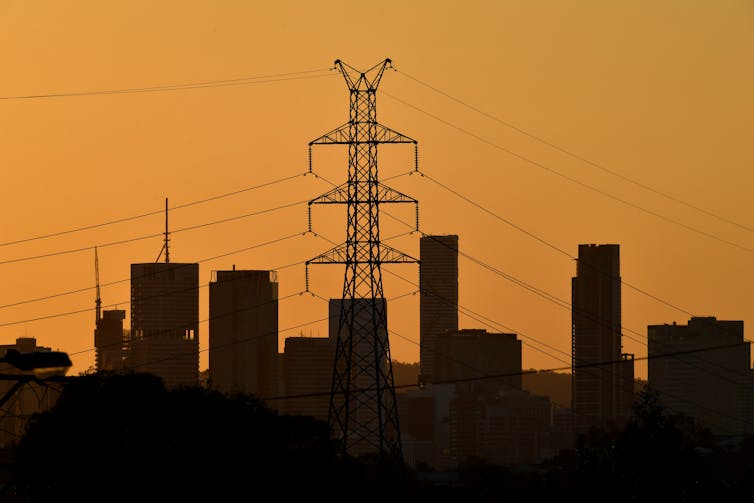
A high-voltage electricity transmission tower in Brisbane. A new
 report says governments are hindering the clean energy transition.
In the face of this, federal and state governments have felt pressured to act – especially after several severe blackouts attracted fever-pitch media coverage and prompted a national debate about electricity reliability. But their approach has been ad hoc and has made things worse in the long run. 
Australia is in the midst of a great energy transition. The nation’s entire coal fleet will close over the next few decades, and the government must urgently improve its policy response or electricity consumers will continue to suffer. We propose a solution that ensures coal plants close in an orderly way.

Read the story from The Conversation by an Energy Fellow from the Grattan Institute, Guy Dundas -  “Governments took the hard road on clean energy – and consumers are feeling the bumps.”

06 May, 2019

Australians more worried about climate change than most other nations: poll

The level of concern about climate change in Australia is higher than the international average, new polling shows.
Opinion polls show concern about climate change is growing in Australia.
A 28-nation survey by Ipsos which asked respondents to rate their top three environmental concerns found climate change, air pollution and dealing with waste are the three biggest worries.

The level of concern about each of those issues has grown since last year.


Read the story from The Age by Matt Wade - “Australians more worried about climate change than most other nations: poll.”

23 May, 2018

A Warming Climate May Produce More Drug-Resistant Infections

A person’s chances of acquiring a drug-resistant infection may be higher if she lives in a warmer area.
MRSA bacteria, colored scanning electron micrograph (SEM).
A study appearing today in Nature Climate Change from researchers at the University of Toronto (U.T.) and Boston Children’s Hospital links the emergence of drug-resistant bacteria to a hotter climate. Researchers found a 10-degree Celsius increase in daily minimum temperature was associated with a small increase in resistance in common pathogens, including those that develop into methicillin-resistant Staphylococcus aureus (MRSA), the root of many persistent and sometimes deadly hospital infections. “This is a very important and timely study stemming from meticulously collected and arranged records of antibiotic resistance,” says Elena Naumova, an epidemiologist at Tufts University who was not involved in the work. “What’s great about this study is that they really broaden the concept of antibiotic-resistance patterns.”

Scientists have long observed bacteria in the laboratory grow and reproduce more quickly at warmer temperatures. And increased growth can cause a hike in resistant strains when DNA mutations crop up during reproduction. Bacteria can also swap DNA with one another and spread resistance via a process called horizontal gene transfer, which also increases at higher temperatures. Now scientists are asking if this phenomenon also occurs outside the laboratory.


Read the story by Monique Brouillette from Scientific American - “A Warming Climate May Produce More Drug-Resistant Infections.”

03 March, 2018

Cheap gas is gone' - stark warnings over gas shortage

Consumers and businesses will face higher gas prices as long as southern states ban gas exploration.
A hold on onshore development in NSW and Victoria is pushing up gas prices.
In sharp commentary on the issue on Wednesday Australian Competition and Consumer Commission fingering moratoriums on gas exploration in NSW and Victoria as exacerbating a tight supply situation.

Read Cole Latimer’s story in The Age - “’Cheap gas is gone' - stark warnings over gas shortage.”


(Energy, particularly that derived from fossil fuels, is at the nexus of climate change and so rather than figuring out how we can find and use gas, at a cheaper price, we should be exploring ways and means of living without using gas at all - Robert McLean)

25 September, 2017

Climate crunch: Australia to fail on Paris commitments without massive renewable switch

Australia will fall short of its Paris carbon reduction targets signed under Tony Abbott unless it lifts its renewable energy production to levels higher even than Labor's plan for 50 per cent green energy reliance by 2030.
Chief Scientist Alan Finkel proposed a clean energy
target which would lock in a 28 per cent reduction
 in energy-related emissions by 2030. 
The first assessment by the Australia Institute's new Climate and Energy Program, to be released on Monday, has found that unless a higher burden is placed on the more expensive process of carbon reductions in other sectors – agriculture, transport and manufacturing – then the electricity generation sector will need to aim for a renewable energy target of at least 66 per cent by 2030, and possibly as high as 75 per cent.

That is, a power generation sector where the fossil fuel component is reduced to perhaps a quarter of the size it is now.

Power generation currently accounts for 35 per cent of total emissions, which is twice as much as the next biggest contributor, fuel combustion and transport, at 18 per cent. 


Read the story by Mark Kenny in today’a Melbourne Age - “Climate crunch: Australia to fail on Paris commitments without massive renewable switch.”

17 August, 2017

Weather bureau says Australia set for a dry spring with above average temperatures

Australia is set for a warm and dry spring with above average temperatures expected for most parts of the country.

The Bureau of Meteorology says that Australia
will have a warm and dry spring.
After a string of balmy winter weeks, the chance of higher spring daytime temperatures are greater in the north and south-east of the country, the Bureau of Meteorology’s climate outlook for September to November said on Thursday.

Rainfall was likely to be below average for western parts of Australia during spring and September was likely to be drier in south-west Australia. However, parts of southern Queensland would see a wetter September.

The bureau said that higher sea surface temperatures around the Australian coastline were most likely to be affecting this outlook.

Robert Pipunic, a senior hydrologist at the BoM, said cooler waters off the coast of Western Australia have left little moisture in the air to drive any rainfall, while warmer seas off the east coast would push temperatures higher.


13 March, 2015

The stakes could not be higher


The stakes could not be higher.


In December 2015, the Government of France will host the 21st Conference of the Parties (COP21) of the United Nations Framework Convention on Climate Change (UNFCCC) in Paris.

Twenty-three years after the signing of the Framework Convention, greenhouse gas (GHG) emissions are still rising fast, dangerously disrupting the climate system, and posing a grave threat to sustainable development in all countries.

Avoiding highly dangerous climate change will require sustained efforts and profound changes in the world’s energy systems, land-use patterns, and socio-economic development trajectories.

The global agreement reached at COP21 in Paris must be a decisive turning point for the world’s efforts to fight climate change. COP21 will be the last chance to adopt a global agreement that makes it possible to secure a safe climate.

25 May, 2014

El Nino suggests world is entering a new warming phase


The certainty this year of another El Nino suggests that the world maybe entering a new warming phase.

“Scribbling for economic, social and environmental justice”, robertscribbler has
warned that “Global sea surface temperature increase to extraordinary +1.25C anomaly as El Nino tightens grip on Pacific”.

It reports that the increase is already higher than the 1979-2000 average.