Showing posts with label professor. Show all posts

04 January, 2019

Surviving Climate Change in Italy

On a cold, wet afternoon in February 2014, Andrew Mathews stood on a mountain in Tuscany and looked out over the valley below. An environmental anthropologist and a professor at the University of California, Santa Cruz, Mathews had gone there to see chestnut forests that were growing in the Monti Pisani, a mountainous region west of Florence, Italy. The air smelled of rotting leaves, and many of the trees were hundreds of years old.
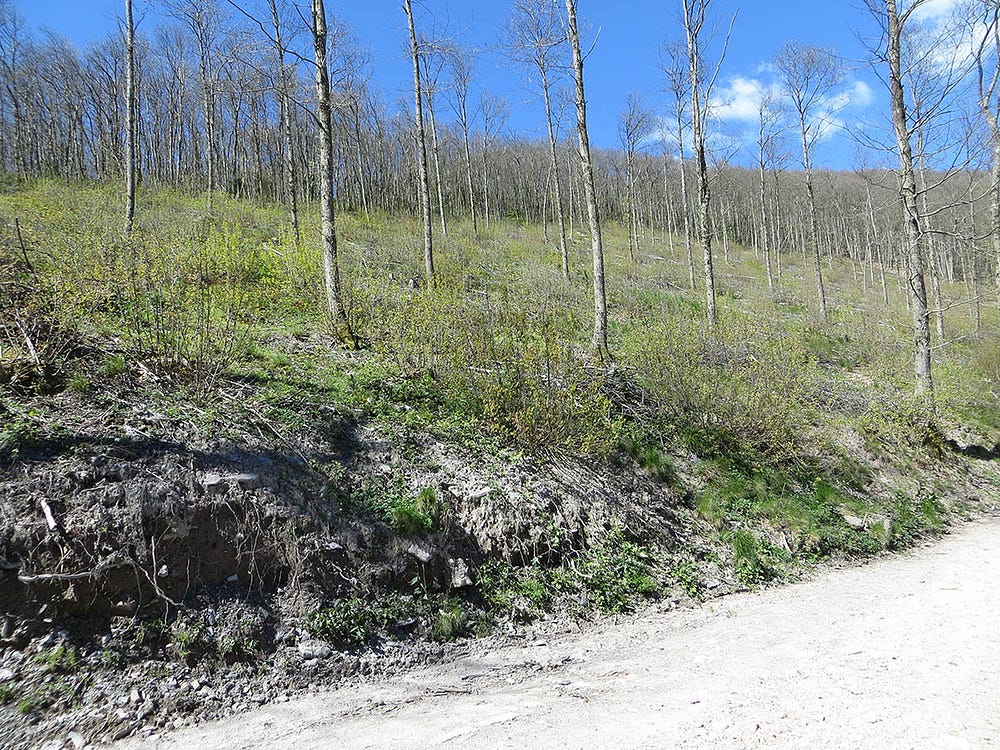
These chestnut trees in the Monti Pisani were cut back
two years before this photo was taken. The practice
of coppicing helps create shorter trees that are less
likely to fall over in high winds.
“It wanted to be spring, but it wasn’t quite there,” Mathews recalled when we spoke, “and the leaves hadn’t really come in on the trees yet. Everything was still pretty bare.”
The chestnuts’ presence told a story of human history: For centuries, peasants in the region had harvested the nuts and cared for the trees. They would cut back branches and trunks, using the wood to heat their homes, and rake up leaf litter from the forest floor. In the early 1900s, chestnuts were a major food source for approximately half a million people in Italy, Mathews said.


Read the Sapiens story by Dana J. Graef - “Surviving Climate Change in Italy.”

18 February, 2018

Effects of climate change already present in Regina: University of Regina Professor

According to University of Regina professor Dave Sauchyn, the effects of climate change will look very similar to this winter — only worse.
Climate change will likely bring warmer, drier weather to Saskatchewan.
“A lot of what’s unfolding, scientists have been predicting for decades,” Sauchyn said.

Those predictions include the world warming by two degrees, and increased precipitation from the warmer oceans.

Unfortunately, that precipitation will likely only come to regions near large bodies of water. For the landlocked province in the heart of Canada, it likely means a drier future.


13 January, 2018

Great Barrier Reef tourism spokesman attacks scientist over slump in visitors

A Queensland tourism representative has called one of the Great Barrier Reef’s leading researchers “a dick”, blaming the professor for a downturn in tourism growth at the state’s greatest natural asset.
 A leading scientist has been accused of exaggerating the damage to the Great Barrier
 Reef, which a tourism representative said had hurt the region’s multibillion-dollar tourism industry. 
Col McKenzie, the head of the Association of Marine Park Tourism Operators, a group that represents more than 100 businesses in the Great Barrier Reef, has written to the federal government asking it to stop funding the work of Professor Terry Hughes, claiming his comments were “misleading” and damaging the tourism industry.

But the Australian Conservation Foundation said tourism representatives and operators like McKenzie should stop blaming scientists for reporting what was happening to the reef and start targeting major polluters to ensure change.

Read the story by Amy Remeikis from The Guardian - “Great Barrier Reef tourism spokesman attacks scientist over slump in visitors.”


(Each of us needs to do all we can to support the likes of Professor Terry Hughes and disarm those with vested interests - Robert McLean)

04 October, 2017

Humans experimenting with climate's 'playing nice’

Like “rats inside the experiment,” Neils Bohr Institute glaciology professor Jorgen Peder Steffensen says of us humans when he considers the risks of a sudden reconfiguration of global circulation which could, among other things, cause long-term drying across America’s breadbasket states.


“That’s going to impact the entire world,” Steffensen cautions in recognizing that the 11,000 years of the interglacial period since the last ice age “has been unreasonably stable. And we don’t know why” or how long that stability may persist.

Steffensen, in exceptionally eloquent and straightforward language, acknowledges that models consistently point to a gradual global increase in temperatures as a result of the continue widespread combustion of fossil fuels and increased emissions of carbon dioxide. “But that’s assuming the climate plays nice,” he says.


Read/watch the Yale Climate Connections story - “Humans experimenting with climate's 'playing nice’.”

10 May, 2017

Clive Hamilton is an Australian author and public intellectual. 

Since 2008 he has been Professor of Public Ethics at Charles Sturt University in Canberra.

He writes in his latest book - “Defiant Earth: The fate of humans in the Anthropocene”:  


So the specific human activities that gave us the Anthropocene are rooted in technological industrialism, the susceptibilities behind the refusal to change course are not, I have written elsewhere thew various psychological “coping strategies” we use to evade, deflate, and deny the discomforting facts of climate change. They are not merely psychological proclivities. These forms of resistance are culturally embedded and socially organized - from the power of corporations to promote doubt to the fetish of economic growth, to faith in the technofix, or the short-termism of political structures, and the innate self-absorption of consumerism. Even so, evasion and denial remain human qualities, as we have known at least since the Book of Job.  

05 August, 2016

Ed Hawkins puts a new spin how we think about climate change

Ed Hawkins spends his days doing, you know, climate science. A professor at the University of Reading in the UK, he has published widely on the overturning circulation in the north Atlantic Ocean, as well as trends for sea ice in the Arctic and how to predict future temperatures, among other topics. And he contributed to the most recent mega-report of the United Nations’ Intergovernmental Panel on Climate Change (IPCC), which everybody cites for pretty much everything in this area.

He’s now famous, though, for something quite different. This: