Showing posts with label tree cover. Show all posts

30 March, 2020

‘Probably the worst year in a century': the environmental toll of 2019

Record heat and drought across Australia delivered the worst environmental conditions across the country since at least 2000, with river flows, tree cover and wildlife being hit on an “unprecedented scale”, according to a new report.
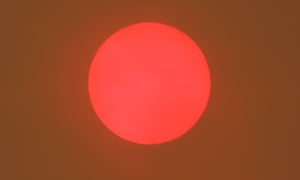
The sun glows red during the ACT bushfires
The sun glows red during the ACT bushfires, one of
the events that contributed to a disastrous 2019
 for the environment in Australia.
The index of environmental conditions in Australia scored 2019 at 0.8 out of 10 – the worst result across all the years analysed from 2000.
The year delivered unprecedented bushfires, record heat, very low soil moisture, low vegetation growth and 40 additions to the threatened species list.
The report’s lead author, Prof Albert van Dijk of the Australian National University’s Fenner school of environment and society, told Guardian Australia 2019 was “probably the worst in a century or more” for the environment.

Read the story from The Guardian by Graham Readfearn - “‘Probably the worst year in a century': the environmental toll of 2019.”

22 August, 2019

Amazon fires: the world's lungs are filling with smoke

The fate of the Amazon is intertwined with the fate of the world. If 20 to 25 per cent of its tree cover is cut down, scientists estimate, the basin’s capacity to absorb carbon dioxide would be severely compromised, taking out of operation one of the world’s largest carbon sinks.
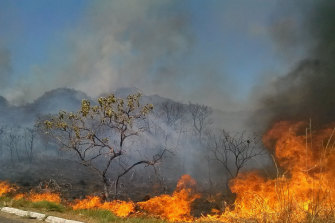
A bushfire burns near Brasilia, Brazil. A state of emergency was declared for the federal district due to the number of fires in it and in surrounding states. 
A bushfire burns near Brasilia, Brazil. A state of
emergency was declared for the federal district
due to the number of fires in it and in surrounding states. 
Accelerating rates of deforestation to make way for cattle, soy farming, and gold mining means this tipping point could be reached within a decade.
The Amazon basin plays a critical role in stabilising the global climate. It is vast, spanning almost 7.8 million square kilometres and incorporating 40 per cent of the world’s tropical forests, 20 per cent of its fresh water supply, and producing 20 per cent of the air we breathe. Through a process called evapotranspiration, it also influences the planet’s cloud cover and circulation of ocean currents.
But the Amazon basin is in trouble, particularly the nearly five million square kilometres of it located in Brazil. Deforestation rates there were almost 50 per cent higher between August 2018 and July 2019 compared with the same period a year before. The country’s far-right president, Jair Bolsonaro, has made the opening up of the Amazon to massive resource extraction a central pillar of his government’s economic agenda.


Read the story from The Age by Robert Muggah - “Amazon fires: the world's lungs are filling with smoke.”

29 July, 2019

Melbourne’s green spaces are being lost in rush to build more housing

Melbourne has lost almost 2000 hectares of tree cover in the past five years as suburban backyards are cleared for new housing.
Members of the Upfield Urban Forest group: Anna Sinn,
Greta and Esme Holroyd, Tamar Hopkins and Gerard Morel.
 They are photographed in the Urban Forest near Brunswick station. 
The amount of urban forest that was removed between 2014 and 2018 is roughly equal in size to Reservoir, Melbourne’s largest suburb by area.
The eastern suburbs, long celebrated for their leafiness, experienced the greatest loss of greenery in that time, accounting for more than two-thirds of Melbourne's total tree canopy loss, researchers at RMIT University found.
By contrast, the western suburbs have enjoyed a small recent recovery in green growth, although this has been from a much lower base and has mostly occurred on public land.

Read the story from The Age by Adam Carey - “Melbourne’s green spaces are being lost in rush to build more housing.”

22 December, 2018

Study: The More Trees We’re Surrounded By, The Lower Our Stress Levels

Lining city streets with trees reduces physiological symptoms of stress in humans. The thicker the tree cover, the lower the stress levels, study finds.
More trees, less stress, and lower temperatures.
We all know that a walk in nature can help slow the maddening pace of modern life and bring us back into the moment, but a recent study tells us just how many trees are necessary to keep us calm.

Researchers put people in stressful situations and then showed them 3-D videos of various “city”scapes, each with different densities of tree cover.

The thicker the tree-cover, the lower the subjects’ stress levels dropped.


03 February, 2016

Growing more trees means cutting down some: Cris Brack

Planting more trees in our cities is a no-brainer, isn’t it? The federal government certainly thinks so, having last month unveiled a plan to increase the amount of tree cover in Australia’s cities.

Tall trees with luxuriant canopies provide a wide range of benefits to sweltering urbanites. They reduce the urban heat island effect, take up carbon dioxide from the air, reduce wind, muffle traffic noise, help to retain rainwater, attract wildlife, improve human health, and they look nice.

To take an example, Canberra’s 400,000 trees – all planted in the past century or so – now deliver benefits worth up to A$15 million per year.

Read the piece by the Associate Professor Forest measurement and management at the Australian National University, Cris Brack, on The Conversation - “Our cities need more trees, but that means being prepared to cut some down.”